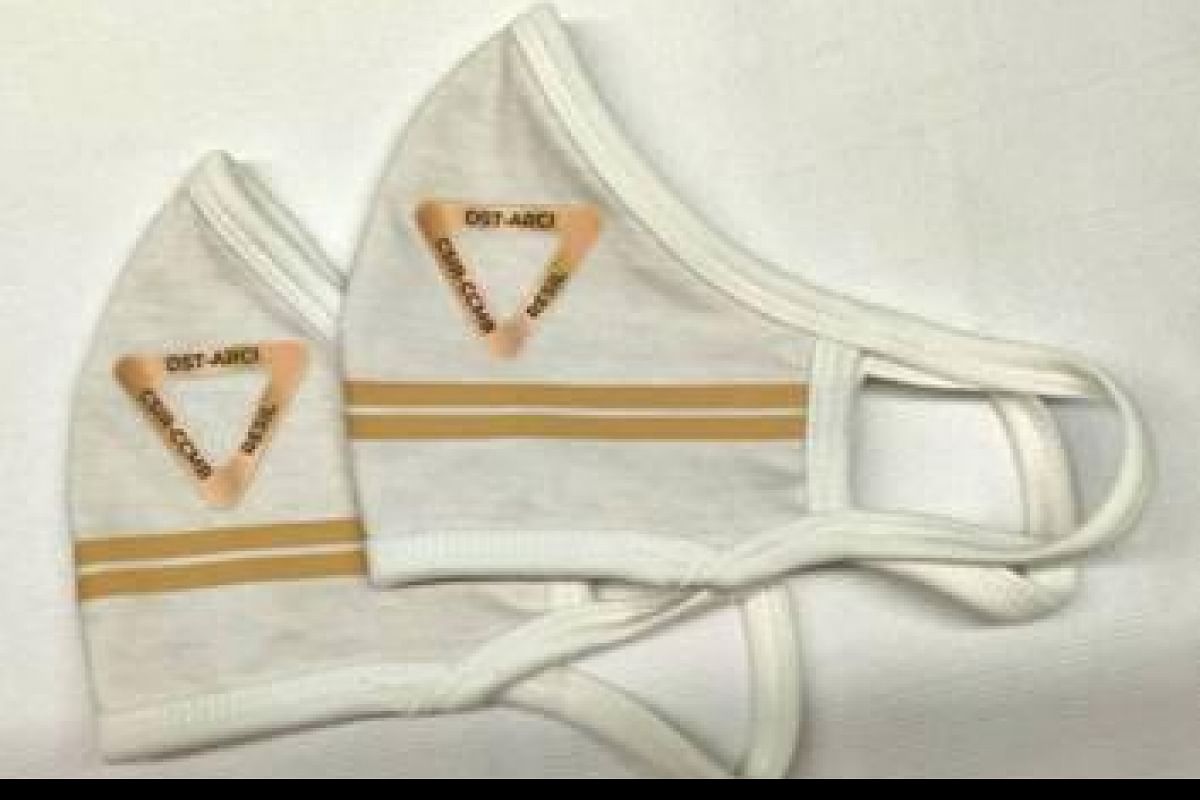
New Delhi: A team of Indian Scientists in collaboration with an industry partner have developed a self-disinfecting ‘Copper-based Nanoparticle-coated Antiviral Face Mask to fight against the COVID-19 pandemic. The mask exhibits high performance against the COVID 19 virus as well as several other viral and bacterial infections, is biodegradable, highly breathable and washable.
Public mask-wearing is most effective in reducing the spread of the virus COVID-19 caused by SARS-CoV-2, an enveloped positive-sense single-stranded RNA virus, where the mode of transmission is via respiratory particles that are mainly airborne.
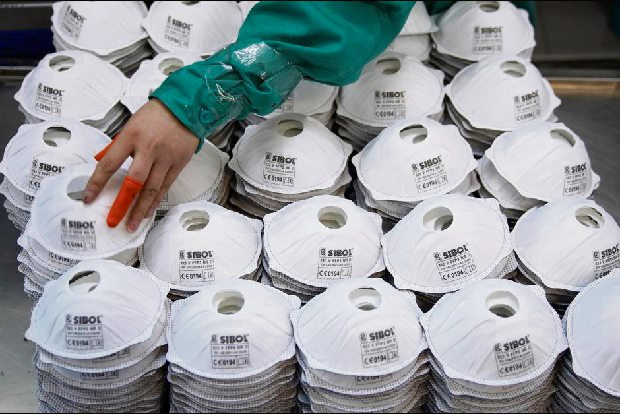
With the science around the use of masks to impede transmission is advancing rapidly, the Indian market is selling expensive masks that neither exhibit antiviral nor antibacterial properties. Hence, it is very difficult to control the transmission by wearing the conventional mask particularly in densely populated places like hospitals, airports, stations, shopping malls and so on where the virus load is very high. In the present scenario, where mutations in coronavirus causing the COVID-19 pandemic are fast emerging, it is an urgent necessity to develop a low-cost antiviral mask.
To this end, Scientists at International Advanced Research Centre for Powder Metallurgy and New Materials (ARCI), an autonomous R&D Centre of Department of Science and Technology (DST), Govt. of India, in collaboration with the Centre for Cellular & Molecular Biology (CSIR-CCMB) and Resil Chemicals, a Bengaluru based company have developed the self-disinfecting ‘Copper-based Nanoparticle-coated Antiviral Face Masks’ under the DST sponsored Nano-Mission project, to fight against the COVID-19 pandemic.
ARCI developed copper-based nanoparticles of around 20 nanometres by a Flame Spray Pyrolysis (FSP) processing facility. FSP process involves conversion of solution precursors into nanopowders by high temperature pyrolytic decomposition. Stable nanoparticle suspension were obtained by optimizing the solid loading and pH. A uniform layer of this nano-coating on the cotton fabric with good adhesion was achieved using a suitable binder. The coated fabric exhibited an efficacy of more than 99.9% against bacteria. CSIR-CCMB tested the efficacy of this fabric against SARS-CoV-2 for their disinfection properties and reported 99.9% disinfection, as evident from the standard results. Prototype masks having different designs such as single layer and triple layers with nanoparticle coated fabric as outer layer have been demonstrated. A single layer mask is especially useful as a protective antiviral outer mask over a regular mask.
Their Industrial partner Resil Chemicals Bengaluru is now producing such double layer masks on large scale. The present-day face masks only retain the viruses by filtering and do not kill them and hence, are prone to transmission if the masks are not properly worn or disposed. Simple multi-layer cloth masks present a pragmatic solution for use by the public in reducing COVID-19 transmission in the community and wearing these self-disinfecting cloth masks is definitely one of them.
Additionally, a huge concern is expressed around the globe regarding the disposal of used masks. Most of the conventional masks effective against COVID-19 are for single-use and are not bio-degradable, creating serious environmental concerns and waste-management issues. The present antiviral mask which is made from cotton fabric that is biodegradable would eliminate that problem too besides making it highly breathable and washable.
Leave a Reply