The environment we inherited was pure; the one we’re leaving behind is battered. This piece traces how everyday choices, industrial greed, and policy failures have triggered a crisis that threatens future generations — unless we act decisively now.
By Tariq Ali Dar
There was a time, not too far in the past, when nature and humanity lived in quiet harmony. The air was crisp, the skies a clear shade of blue, and rivers sparkled as they wound through fertile valleys. Fields stretched endlessly, sustaining communities without strain. Birds, untouched by pollution or habitat loss, filled the air with song. Life moved with the seasons’ rhythm, predictable and generous. This was the natural world our elders inherited — a world that supported life without demanding heavy compromises.
Today, that landscape feels almost mythical. Industrial expansion, unplanned cities, deforestation, and reckless consumerism have pushed the environment to the edge. The skies are often suffocated with smog, water bodies choke under plastic and industrial discharge, and once-productive farmlands are being swallowed by concrete. Nature, which once nourished us, is now signalling distress. What sustained generations in the past now stands threatened by the choices of the present.
This crisis extends far beyond damaged landscapes. It directly endangers human life. The rise in respiratory diseases, frequent waterborne infections, sweltering heat waves, flash floods, untimely rains, and prolonged droughts are not unrelated coincidences. These are symptoms of a warming planet — warnings that climate change is not a looming threat but an unfolding emergency. Science has long cautioned us about these consequences; now, they are playing out in real time.
Amid this grim scenario, voices of resistance continue to emerge. Environmental activists like Dr. Muzaffar Raja have been at the forefront, fighting to safeguard what little remains of our ecological balance. From opposing illegal mining to exposing rampant encroachments on forest and river land, Dr. Raja has consistently taken his concerns to authorities. His activism serves as a reminder that environmental protection is not a passive pursuit but a courageous, often lonely battle. It requires not just awareness but grit and an unshakeable sense of duty.
But the burden of responsibility cannot be placed on activists, courts, or governments alone. Ordinary citizens play an equally significant role — though it is a role we often refuse to acknowledge. Every piece of plastic thrown into a stream, every unnecessary electric light left on, every wetland encroached upon “just a little,” contributes to a collective disaster. Blaming the government is easy; introspection is harder. The truth, however uncomfortable, is this: we are both the perpetrators and the sufferers of environmental degradation.
If nature is collapsing, it is because we have pushed it too far. And if humanity is suffering, it is because nature is pushing back.
Reversing this decline requires collective, sustained action. Small, everyday changes matter. Planting trees, reducing plastic consumption, conserving water, using energy responsibly, and opting for eco-friendly alternatives may seem insignificant on an individual level. But multiplied across communities and generations, these actions create powerful ripples of change. Environmental protection is not an abstract ideal; it is a necessary commitment woven into the survival of our future.
The window for change is narrowing. We still have a chance to restore ecological balance, but that opportunity is slipping. If we refuse to act today, nature will respond tomorrow — and its response may not be forgiving. Climate change is not waiting for political cycles or public debates. It moves on its own timeline, and once certain thresholds are crossed, recovery may be impossible.
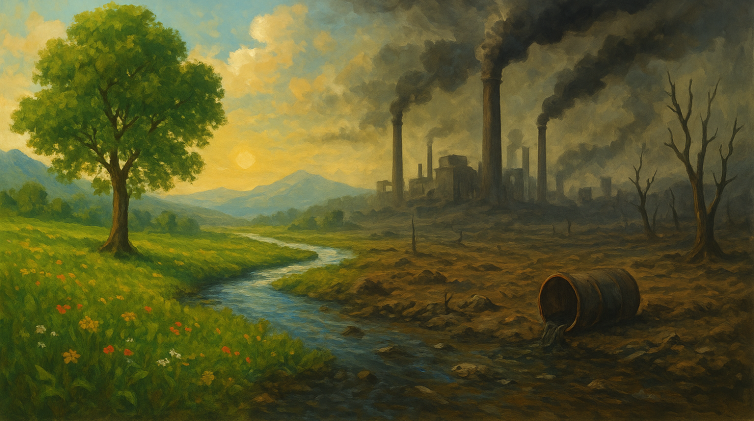
The environment our elders knew was a gift — pure, balanced, and sustaining. What we have today is a reflection of human greed, short-sightedness, and neglect. If decisive action is not taken immediately, future generations may grow up without experiencing something as basic as clean air or safe drinking water. And the harshest part is that their suffering will not be due to their mistakes, but ours.
We stand at a turning point. The environmental crisis is no longer a remote concern; it is woven into our daily lives, our health, our economy, and our collective future. The question is not whether we can afford to act — it is whether we can afford not to.
The responsibility is shared, the stakes are high, and the time is running out. The choice we make today will determine not only the fate of the planet but the legacy we leave behind.
The views expressed in this article are solely those of the author and do not necessarily reflect the opinions or views of this newspaper. The author can be reached at [email protected]
Leave a Reply