How simple symbols became powerful tools for expression, inclusion, and understanding in a rapidly changing world.
By Aubaid Ahmed Akhoon
Since the dawn of civilization, signs have been the quiet companions of human progress—silent but deeply persuasive forces that shaped how people communicated, learned, and even felt. Long before written alphabets or structured languages existed, human beings scratched symbols onto stone walls, carved shapes into wood, or drew lines on the ground to say something, warn someone, or simply leave a trace of their presence. These early markings weren’t mere decorations; they were tools of survival, connection, and storytelling. From those primitive strokes, the world slowly discovered a universal language that crossed boundaries without needing translation.
Ancient signs were often astonishingly simple—just a mark pointing toward water, an animal drawn to signal danger, or a symbol carved into rock to guide travelers. In Egypt and Mesopotamia, entire systems of pictographs and hieroglyphics evolved into complex visual languages. A single symbol could represent an object, an action, or an idea. They spoke across generations and distances, reducing the gap between spoken words and recorded memory. For the first time in human history, ideas could be preserved and passed on without depending solely on the fragility of speech. This early reliance on visual meaning-making built the foundation for the elaborate global signage ecosystems we live with today.
As civilizations expanded and cities grew busier, signs became the connective tissue of public life. In ancient Greece and Rome, bustling marketplaces and teeming roads depended on simple visual markers that everyone could understand, regardless of literacy. Shopkeepers hung carved wooden signs showing bread, tools, or wine jugs to attract customers. Officials used inscriptions to announce civic decisions, warnings, and laws. A glance could tell a traveler which road led to Athens or which stall sold olives. These signs didn’t just inform; they shaped the rhythms of commerce, politics, and community.
Centuries later, the world underwent a seismic shift with the arrival of the printing press in the 15th century. It is impossible to overstate how dramatically this invention changed the story of signs. Suddenly, information no longer had to be carved by hand or painted one by one. Printed signs, posters, and notices could spread rapidly, reaching far more people than ever before. Typography—the art and science of arranging letters—emerged as a powerful tool for clarity and persuasion. Political movements, cultural revolutions, and commercial enterprises all found new life in printed signs. Billboards began sprouting on roadsides, posters became staples of public squares, and the printed word grew into a formidable force that shaped opinions and mobilized crowds.
Yet signs have not only been about information; they have also been about emotion. Calligraphy, the art of elegant writing, became a deeply expressive medium across Asia, the Middle East, and parts of Europe. In the flowing strokes of Arabic calligraphy or the disciplined grace of Chinese brush writing, signs transformed into art forms that conveyed feeling as much as meaning. A single curve or flourish could capture the mood of the writer. Calligraphy made signs personal—an embodiment of culture, identity, and emotion that turned writing into a deeply human experience.
For millions of people in the deaf and mute communities, signs became something even more profound—a lifeline. Sign language evolved not simply as a substitute for spoken words but as a rich, layered, visual language in its own right. With gestures, expressions, and body movements, individuals could communicate everything from everyday needs to complex emotions and abstract ideas. As formal sign languages like ASL and BSL developed, they enabled structured education, cultural formation, and social inclusion. Beyond language itself, visual signage—emergency symbols, flashing alerts, and accessible cues—became essential to making public spaces safer and more inclusive. In this way, signs helped create a world where communication could be equitable, regardless of one’s ability to hear or speak.
In the classroom, especially for young children, signs quietly carry perhaps one of their most important responsibilities. Early childhood educators have long understood that before children fully grasp written text or spoken nuance, they connect deeply with images. Picture cards, visual labels, charts, and symbols help children process information faster and remember it longer. A small sign with a picture of a sun can teach a child the concept of “day,” just as a label on a toy shelf can help them organize and make sense of their surroundings. These small visual cues nurture early literacy and cognitive development, laying mental scaffolding for more advanced learning. Signs, in this context, become tools of discovery, anchors of memory, and bridges to understanding.
As the world modernized, signs made their way into the pulse of public spaces with renewed vigor. The Industrial Revolution accelerated urban life, and with it came an explosion of signage. Streets grew crowded, factories hummed with workers, and cities needed structure—clear directions, safety warnings, traffic signals. The arrival of neon in the late 19th century turned signs into glowing beacons that reshaped nighttime cityscapes from New York to Tokyo. By the mid-20th century, commercial billboards, traffic signs, storefront displays, and massive advertising hoardings became integral to the architecture of urban life.
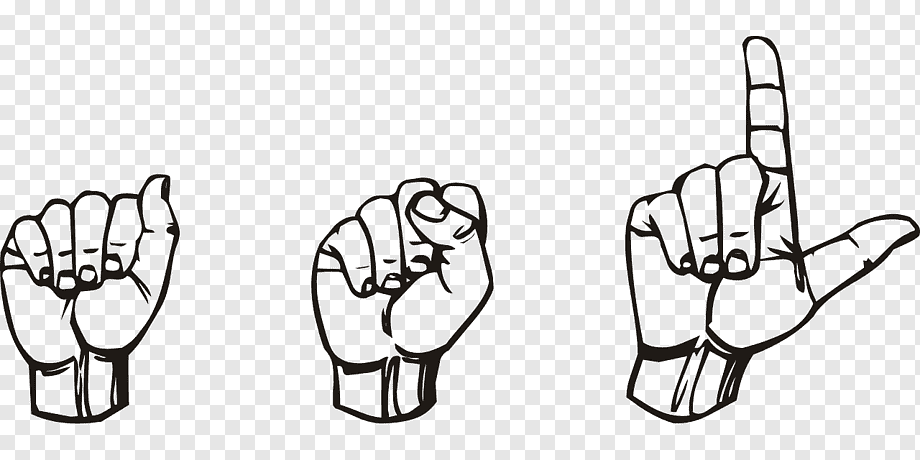
Then came the digital age, pulling signs into a new era of immediacy and interactivity. LED screens, scrolling displays, electronic billboards, and touch-enabled signage transformed communication into something fluid and real-time. A sign could now change by the second—informing commuters about weather updates, traffic changes, or breaking news. Signs became something more than static markers; they became dynamic storytellers woven into the everyday rhythm of life.
Today, digital symbols have evolved further in the form of emojis—tiny images that have become universal markers of emotion in the online world. In a way, they echo the spirit of calligraphy: quick, expressive, and deeply personal. A single emoji can soften a message, express joy, convey frustration, or bridge cultural differences. It’s a reminder that even in our most technologically advanced moments, the instinct to communicate visually remains one of the most human things about us.
Across millennia, signs have evolved, adapted, and transformed, but their purpose has remained remarkably consistent: to connect people. For deaf and mute communities, signs are not just aids but the foundation of language itself. For children, they are early stepping stones to knowledge. For societies, they are tools for order, creativity, and shared understanding. From the quiet precision of calligraphy to the glow of neon lights, from ancient pictographs to expressive emojis, signs reflect who we are, how we communicate, and how we make sense of a world that is constantly changing. They remind us that even in silence, meaning can be loud—and that the simplest symbol can carry the weight of human experience.
The views expressed in this article are solely those of the author and do not necessarily reflect the opinions or views of this newspaper. The author can be reached at [email protected]
Leave a Reply