
The annual Urs in Ladhoo blends spirituality, tradition and Kashmir’s saffron season, creating a unique cultural moment.

By Er Aausyf ibn Farooq
As winter settles over the Valley and saffron fields glow in their late-autumn bloom, the village of Ladhoo Pampore in Pulwama is preparing for one of its most deeply rooted spiritual gatherings — the annual Urs of Alamdar-e-Kashmir, Sheikh ul Alam (RA). Scheduled from 25 to 27 November 2025, the three-day commemoration is expected to draw devotees from across Kashmir and beyond, all seeking to honour the life, teachings and enduring spiritual legacy of one of the region’s most revered Sufi mystics.
Sheikh ul Alam — known for his poetry, asceticism and profound spiritual insight — continues to shape the cultural and devotional landscape of Kashmir centuries after his lifetime. His message, built on compassion, humility and the quest for divine truth, remains central to Kashmiri spiritual traditions. For many, remembering him is not just an act of reverence but a reaffirmation of an identity deeply intertwined with Sufi heritage.
Ladhoo holds a particularly significant place in the saint’s spiritual journey. It was here that Sheikh ul Alam is believed to have spent 12 years in seclusion inside a cave overlooking the village. That cave, still preserved as a sacred site, draws a steady stream of pilgrims year-round. Its most remarkable feature — a handprint engraved in stone — is regarded by devotees as a symbol of divine blessing and the saint’s extraordinary spiritual communion. The presence of this relic gives the Urs in Ladhoo a sense of intimacy and immediacy rarely found elsewhere.
Preparations for the Urs began weeks in advance, with the village’s narrow lanes, shrine complex and surrounding orchards being readied for the large gatherings that accompany the annual event. According to shrine officials, the celebrations will formally begin on the evening of 25 November with Khatmat, Naat Khawani and Manqabat recitations, filling the air with devotional poetry and collective prayers. These gatherings will continue through the evenings until the Isha prayer on 28 November, creating a rhythm of remembrance that devotees say brings serenity and spiritual renewal.
Adding a rare layer of cultural resonance this year is the Urs’s overlap with the saffron harvest season. In Ladhoo — part of Kashmir’s famed saffron belt — the fields at this time of year shimmer with gold and violet, lending a distinctive glow to the event. For many locals, this coincidence feels symbolic: a merging of divine remembrance with nature’s own celebration. It is common for pilgrims to combine spiritual visits with tours of saffron fields, turning the Urs period into a blend of devotion, cultural exploration and seasonal festivity.
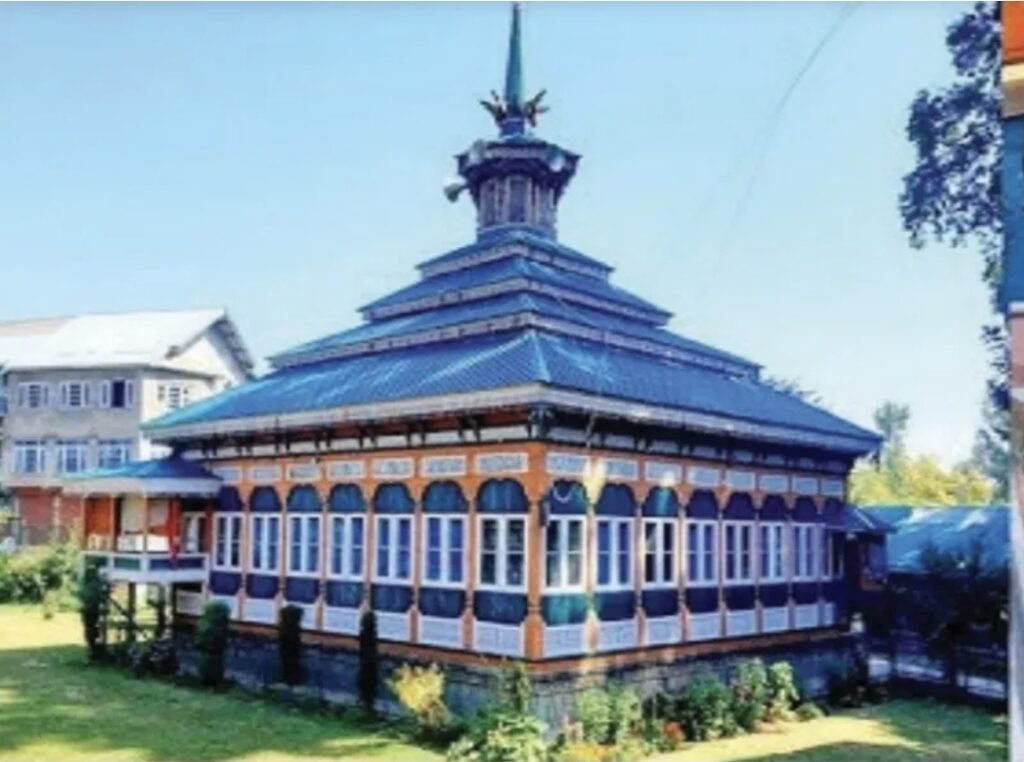
Beyond its religious significance, the Urs is also an occasion for social bonding. Families gather for communal prayers, vendors line the roads with traditional foods and handicrafts, and the village becomes a meeting point for people who return year after year. For many Kashmiris, attending the Urs is a way of reconnecting not only with the saint’s message but with a shared cultural memory — one that has endured through centuries of change.
The Shrine Administration Committee has extended an open invitation to devotees and visitors, urging them to take part in what it describes as a spiritually enriching and culturally meaningful experience. With the serene landscape of Ladhoo providing a contemplative backdrop, the Urs stands as a reminder of Kashmir’s long and living tradition of Sufi devotion — one that continues to draw people into its fold, offering moments of peace, reflection and communal harmony.
The views expressed in this article are solely those of the author and do not necessarily reflect the opinions or views of this newspaper. The author can be reached at
Leave a Reply