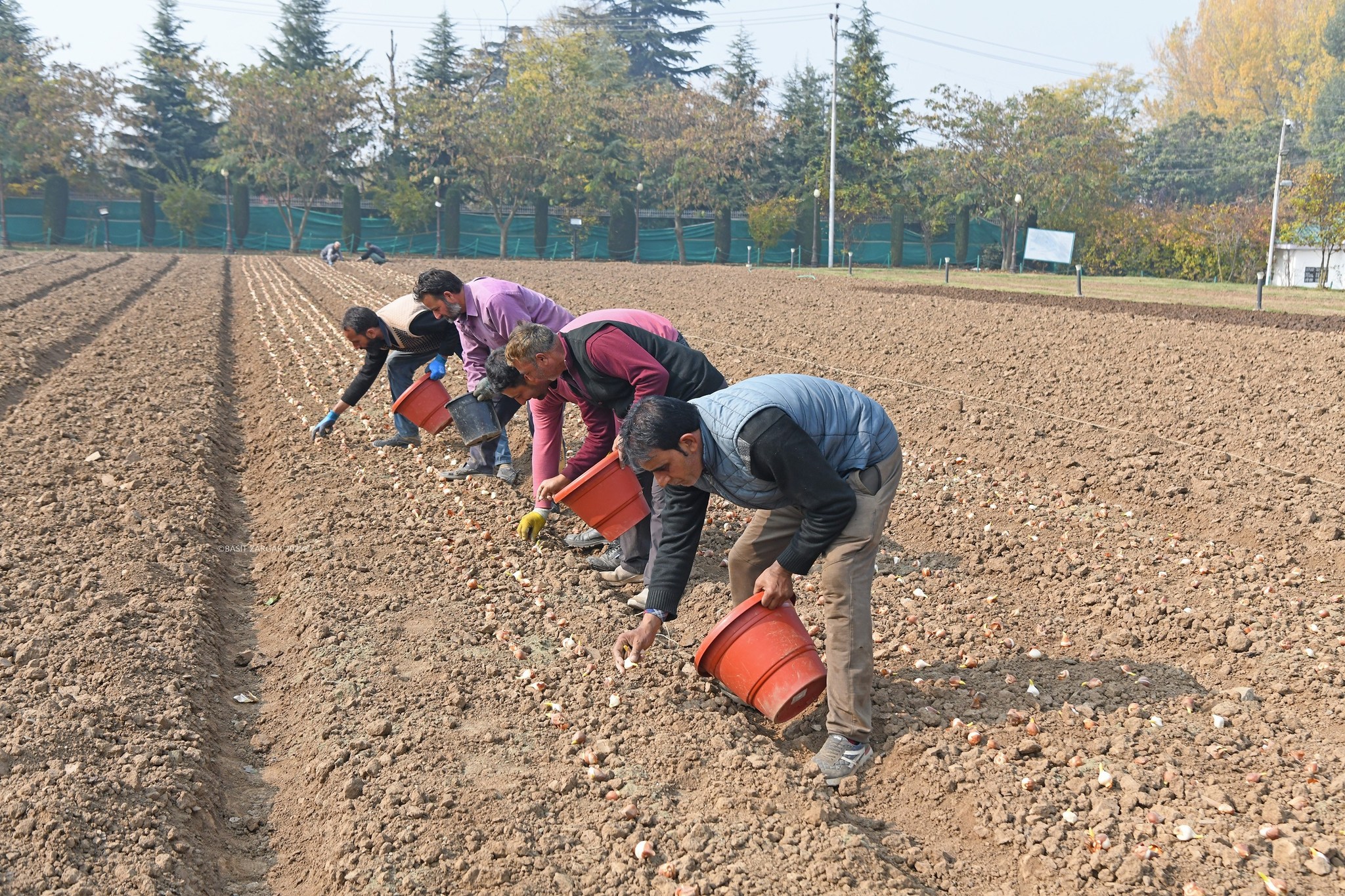
Floriculture teams begin sowing as the first batch of Holland bulbs arrives, setting the stage for another vibrant tulip season in Kashmir.
By Chasfeeda Shah
As Kashmir slips deeper into winter and soil temperatures tumble across the Valley, the Floriculture Department is already in spring mode. Preparations at the Indira Gandhi Memorial Tulip Garden — Asia’s largest and one of Kashmir’s biggest tourist magnets — are in full swing. Sitting beneath the Zabarwan Range with Dal Lake shimmering at its feet, the garden is gearing up for another blockbuster season in 2026.
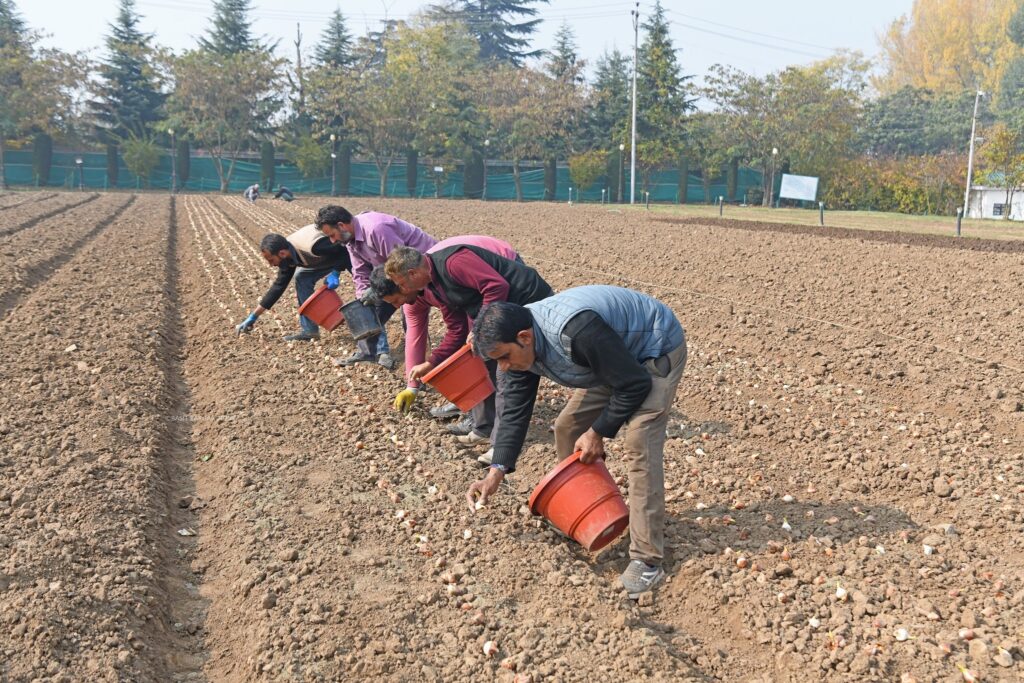
Imran Ahmad, Assistant Floriculture Officer while speaking to a local news agency, confirmed that the annual bulb-planting cycle has begun despite the cold. Workers have already started sowing the bulbs available locally with the department, while the fresh consignments imported from Holland — considered the global heart of tulip cultivation — are scheduled to land soon.
“Two lots of tulip bulbs are expected to reach from Holland,” Ahmad said. “The first lot will be arriving this week, while the second will come by next month.”

Kashmir has been importing bulbs from the Netherlands for more than a decade, not only to expand the garden’s bloom capacity but also to introduce new colour palettes and floral shapes. Ahmad said this year is no different: “We get new varieties every year. Eight lakh bulbs will be imported from Holland this year as well.” In addition to the new consignment, the department already has nearly three lakh bulbs in stock, ensuring a strong foundational base for planting.
A Garden Built on Precision
Despite the winter chill, bulb plantation cannot wait. Tulip bulbs require specific soil temperatures and precise depth planting so they can remain dormant through winter and burst into colour in spring. Teams have been working section by section, preparing beds, improving drainage, and ensuring the layout matches the planned colour schemes for 2026.
“We are expecting a good tulip show this year as well, with a colour variety of 25 to 30,” Ahmad said. The new varieties from Holland are expected to enrich the already famous spectrum — from classic reds and sunny yellows to exotic fringed, parrot, and double-layer blossoms.
For the Floriculture Department, planning begins months in advance. The display is not just an arrangement of flowers; it’s a tourism product that must meet expectations. Each year, the Valley’s tourism season unofficially begins when the garden opens its gates — and each year, the bar gets a little higher.
Record-Breaking Tourist Footfall
The 2025 season proved to be historic for the Tulip Garden, which has come a long way since its inauguration in 2007. The garden welcomed 8,55,125 visitors between March 26 and April 24, 2025 — the highest ever recorded in its 18-year history.
The numbers surpassed previous seasons by a substantial margin, bolstered equally by local residents, domestic travellers from across India, and an impressive stream of international tourists. The contact between Kashmir’s slow winter tourism and the bustling spring may have helped widen the season’s appeal, but officials largely attribute the success to the garden’s evolving scale and design.
With more than 1.7 million tulips in bloom across terraces carved into the mountainside, the 2025 season was a sensory overload — long ribbons of orange, white, purple, and pink stretching across the landscape with snow-dusted peaks in the backdrop.
The garden remained open for exactly 30 days last season, closing on April 24 as the bloom phased out due to warmer temperatures and rainfall. Despite the short duration, the footfall broke all previous records, reaffirming the garden’s role as a flagship attraction for Kashmir’s tourism economy.
A Seasonal Economy
Every year, the Tulip Garden acts as a seasonal trigger for Kashmir’s tourism sector. Hotels begin filling up weeks before the opening date, houseboats see higher occupancy, shikara operators extend working hours, and handicraft sellers and taxi unions gear up for the annual wave of visitors.
The record footfall in 2025 brought visible economic benefits to Srinagar’s hospitality and service sectors — something the administration hopes to amplify in 2026. Tourism officials say a strong tulip season often sets the pace for a successful summer, as early visitors share images and videos across social media platforms, drawing more tourists in subsequent months.
Looking Ahead to 2026
With the preparatory work underway and Holland shipments en route, officials are cautiously optimistic. Weather remains the biggest unknown: early blooms, sudden spells of rain, or temperature spikes can shorten the display period. Yet the planting strategy, selection of varieties, and careful maintenance practices have improved significantly in recent years.
The Floriculture Department is also exploring additional attractions for the upcoming season — curated selfie points, extended evening hours on select days, and improved mobility services for elderly visitors. While final decisions are still in the pipeline, the intent is clear: keep the Tulip Garden evolving, not just expanding.
Back at the site, teams continue to work quietly, setting the stage beneath bare winter trees. The rows stretching across the foothills of the Zabarwan are empty for now, but come spring, they will once again erupt into a choreographed burst of colour — a display that draws hundreds of thousands to the Valley and signals the arrival of Kashmir’s most photographed season.
And if early preparations are anything to go by, the 2026 bloom is shaping up to be another record-chaser. (With inputs from KNO)
Leave a Reply