We are living in what can best be called the age of the photocopy. Like a page copied again and again from an already fading original, our ideas, words and expressions are losing sharpness
By Abid Hussain Rather
We like to believe that we are living in the smartest age humanity has ever known. We talk proudly about artificial intelligence, instant access to information and endless digital creativity. We assume that machines are making us sharper, quicker and more productive. But beneath this confidence lies a troubling question that we rarely ask honestly: are we becoming wiser, or are we simply repeating what already exists until the original meaning slowly disappears?
We are living in what can best be called the age of the photocopy. Like a page copied again and again from an already fading original, our ideas, words and expressions are losing sharpness. On the surface, everything looks abundant. There are millions of articles, videos, opinions and creative works flooding our screens every day. But abundance should not be mistaken for depth. The more content is duplicated, the more originality gets diluted.
The idea is easy to understand. Take a page with a clear image and make a photocopy. The first copy looks almost perfect. Copy that copy, and the image becomes slightly dull. Repeat the process many times and the page turns dark and blurry, until the original picture is barely visible. This is not a fault of the machine; it is simply how copying works. The same thing happens to ideas. Artificial intelligence does not create knowledge from nothing. It depends entirely on human-made material—books, essays, research, art, conversations and lived experience. Trouble begins when machine-generated content becomes so common that it starts feeding other machines. Intelligence then begins copying itself. Instead of progress, the result is slow intellectual decline.
Experts have begun warning about this process, using terms like “model collapse” or “knowledge degeneration.” In simple terms, it means that when machines learn mainly from other machines, depth begins to vanish. Emotional richness weakens. Small mistakes, which often lead to new ideas and discoveries, are smoothed out. What remains is content that looks polished and correct but feels empty. It may be grammatically sound and factually average, yet it lacks insight, feeling and originality.
One of the most worrying effects of this trend is the loss of diversity. Artificial intelligence works by finding patterns. It prefers what is common, popular and frequently repeated. Rare ideas, unusual views, minority voices and uncomfortable questions are quietly pushed aside because they do not fit neatly into the algorithm. Machines are drawn to the middle ground, not the edges. But history has always been shaped by those edges. Great thinkers, writers, scientists and artists were rarely safe or ordinary. Their ideas often sounded strange or dangerous at first. In a system that only promotes what is most predictable, such ideas would struggle to survive.
We are already seeing signs of this sameness. Music often follows the same formulas. Articles repeat familiar arguments. Films feel predictable even before they start. Everything is carefully optimized, yet very little surprises us. When creativity becomes predictable, culture stops growing.
The real danger, however, is not artificial intelligence itself. The real danger is human surrender. When we stop thinking because a machine can summarize faster, when we stop writing because software can generate paragraphs in seconds, when we stop wrestling with ideas because ready-made answers are always available, we begin to give up our own intellectual muscles. Convenience slowly turns into dependence, and dependence becomes normal.
Yet this moment is not only a warning; it is also an opportunity. As machines become better at copying and imitating, genuine human experience becomes more valuable. Machines can rearrange information, but they cannot live through grief, failure, love or moral struggle. They cannot feel regret or the quiet satisfaction of understanding something after years of confusion. True insight comes not just from data, but from experience shaped by awareness.
In the years ahead, originality will matter more than ever. The most important voices will not be the fastest or the loudest, but the most honest. Those who think deeply, question what they are told and speak from lived reality will stand out in a world full of mechanical noise. This is why artificial intelligence must remain a tool, not a teacher. A calculator never replaced the need to understand mathematics; it only helped with calculations. In the same way, artificial intelligence should support human thinking, not replace it. When that line disappears, we risk becoming passive consumers of ideas instead of active creators.
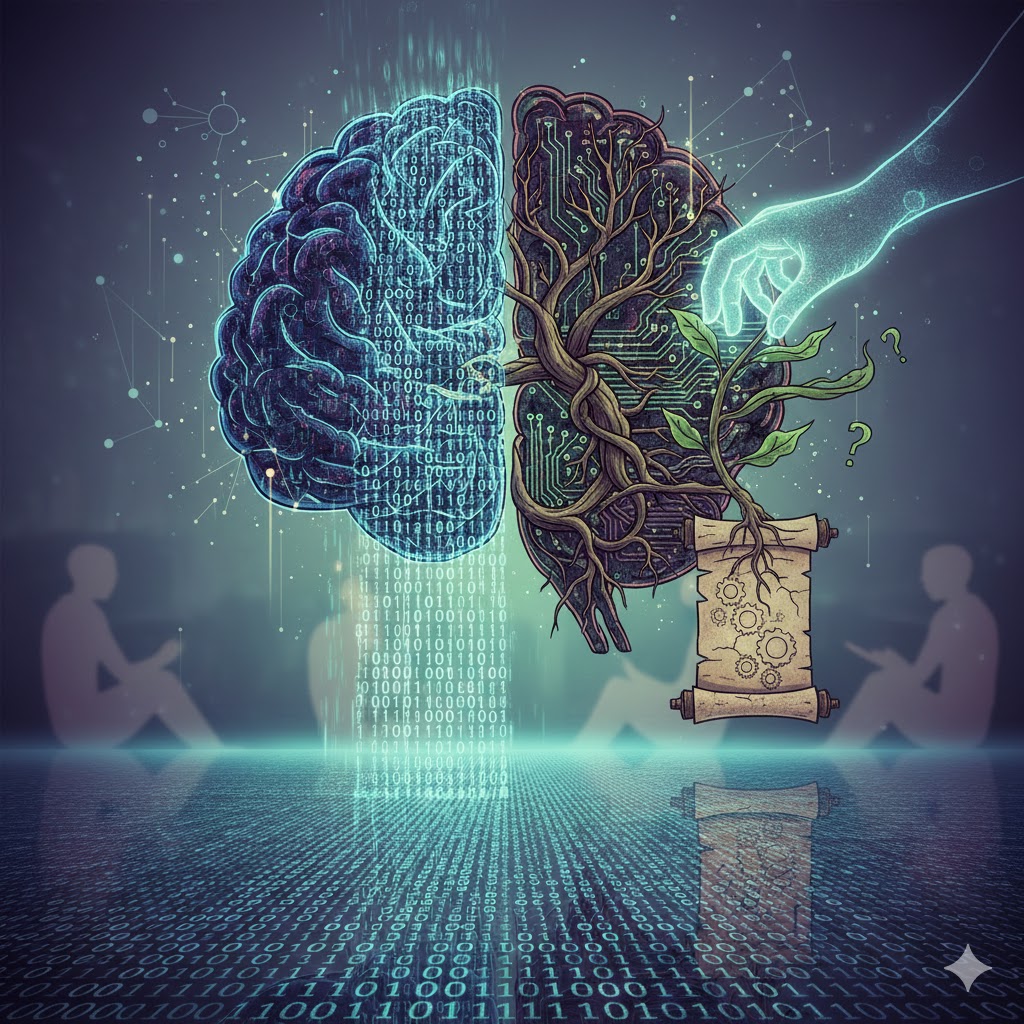
Education systems, research institutions, media platforms and individuals all have a role to play. We must protect critical thinking, encourage careful reading, value reflection over instant reaction and reward originality rather than viral popularity. A sincere but imperfect paragraph should matter more than a flawless but empty one. We may be among the last generations to clearly remember what an “original print” feels like. That fact should not make us hopeless, but alert.
If copies dominate the world, authenticity will shine even brighter. The future of knowledge will not belong to the most advanced machine, but to human beings who refuse to think like machines. In an age of photocopies, technology will not save us. Only the courage to remain original will.
Much has already been written about these concerns, and there is no shortage of opinions on the subject. Still, watching the rapid rise of AI-driven creation and the growing habit of copying from it, I felt compelled to add my voice. When technology begins to replace thinking instead of supporting it, and when creativity is outsourced rather than nurtured, staying silent becomes a kind of surrender. This piece does not come from a desire to sound new, but from concern that this trend is quietly weakening our ability to think, imagine and create on our own.
The views expressed in this article are solely those of the author and do not necessarily reflect the opinions or views of this newspaper. The author can be reached at [email protected]
Leave a Reply