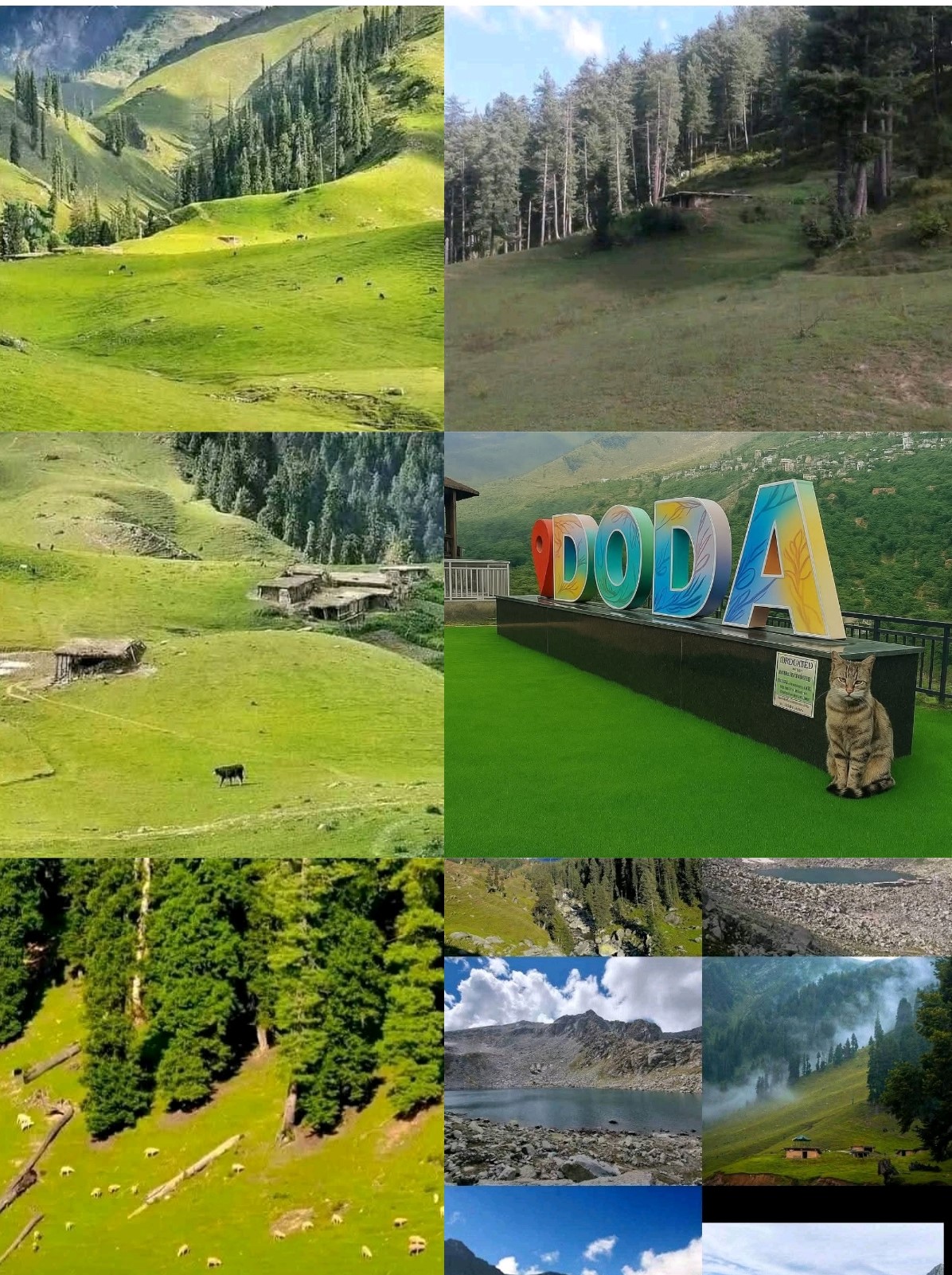
While the plains swelter under the summer sun, a quiet revolution of cool air and emerald meadows awaits in the Chenab Valley. From the “Mini Kashmir” of Bhaderwah to the high-altitude thrills of Padri Pass, we explore why Doda is the ultimate sanctuary for the soul seeking respite.
By Mool Raj
In the sweltering heart of mid-June, as heatwaves blanket the northern plains of India and the mercury climbs to unforgiving heights, a peculiar ritual begins in thousands of households. Suitcases, long relegated to dusty storage, are pulled out with a sense of urgency. But instead of light linens, eager hands pack them with mufflers, heavy mittens, and woolen layers. This seasonal migration is fueled by a singular pursuit: the promise of a calm, cool respite. While many flock to the over-saturated hubs of mainstream tourism, those in the know turn their gaze toward the rugged, ethereal heights of the Chenab Valley. Here lies Doda, a district that remains one of the most breathtakingly beautiful yet profoundly untouched corners of Jammu and Kashmir.
Nestled in the lap of the mighty Himalayas, Doda is a geographic masterpiece defined by its juxtaposition of rugged mountain peaks and serene, lush meadows. It is a place where the air is thinned by altitude and sweetened by the scent of Deodar forests. For the modern traveler, it offers a rare commodity—tranquility without the crowds. Yet, to see Doda only as a scenic retreat is to miss the depth of its character. The district is a complex tapestry of history, culture, and ancient traditions that have survived the passage of centuries, perched high above the churning waters of the Chenab River.
The historical identity of Doda is as evocative as its landscape. The name itself is believed to be derived from ‘Daud,’ a word signifying a gathering place, a testament to its long-standing role as a crossroads of cultures. Having been a vital constituent of the erstwhile Dogra kingdom, the region has served as a silent witness to the various historical shifts that shaped the broader Jammu and Kashmir landscape. This legacy is etched into the very stones of the district, visible in ancient temples and monuments that display the architectural brilliance of a bygone era. Today, Doda has evolved into a vibrant district that manages a delicate balancing act, blending the conveniences of modernity with a fierce preservation of its natural essence and historical soul.
The cultural heartbeat of the region is perhaps most visible in its craftsmanship. In the high-altitude reaches of Doda, where the winters are long and unforgiving, the local artisans have mastered the art of survival and beauty. The region is renowned for its handmade woolen blankets and Gaba—a traditional floor covering—that reflect a mastery of textile arts passed down through generations. Beyond the wool, the intricate ‘Bina’ work, which utilizes wheat and paddy grass to create functional art, stands out as a celebrated local craft. Furthermore, the silver jewelry of the Bakerwals, crafted by local silversmiths with techniques that haven’t changed in centuries, continues to captivate outsiders, offering a tangible link to the nomadic heritage of the mountains.
If Doda is the crown of the Chenab Valley, then Bhaderwah is undoubtedly its brightest jewel. Often referred to as “Mini Kashmir,” Bhaderwah earns this title through its sprawling green valleys and dense forests that mirror the famous vistas of the Kashmir Valley. This picturesque tehsil serves as a sanctuary for those looking to immerse themselves in nature’s arms. But Bhaderwah is more than just a visual treat; it is a center of spiritual and cultural significance. The town is the site of the 600-year-old Mela Pat, a three-day festival held annually on Nag Panchami. Symbolizing the rich ‘Nag Culture’ of the region, the festival is a vibrant explosion of tradition at Khakhal village, drawing devotees and curious travelers alike.
The geography of the region invites exploration at every turn. A short drive from the main town leads to the Chinta Valley, a destination crowned by “Black Forests” and a pervasive sense of calm that makes it the quintessential spot for a laid-back picnic. For the more adventurous, the Padri Pass, sitting at an altitude of 3,000 meters, serves as a high-altitude playground. In the summer, the skies are dotted with the colorful canopies of paragliders, while winter transforms the pass into a premier destination for skiers. Linking Jammu to Himachal’s Chamba Valley, the pass is a vital artery that offers some of the most dramatic views in the Western Himalayas.
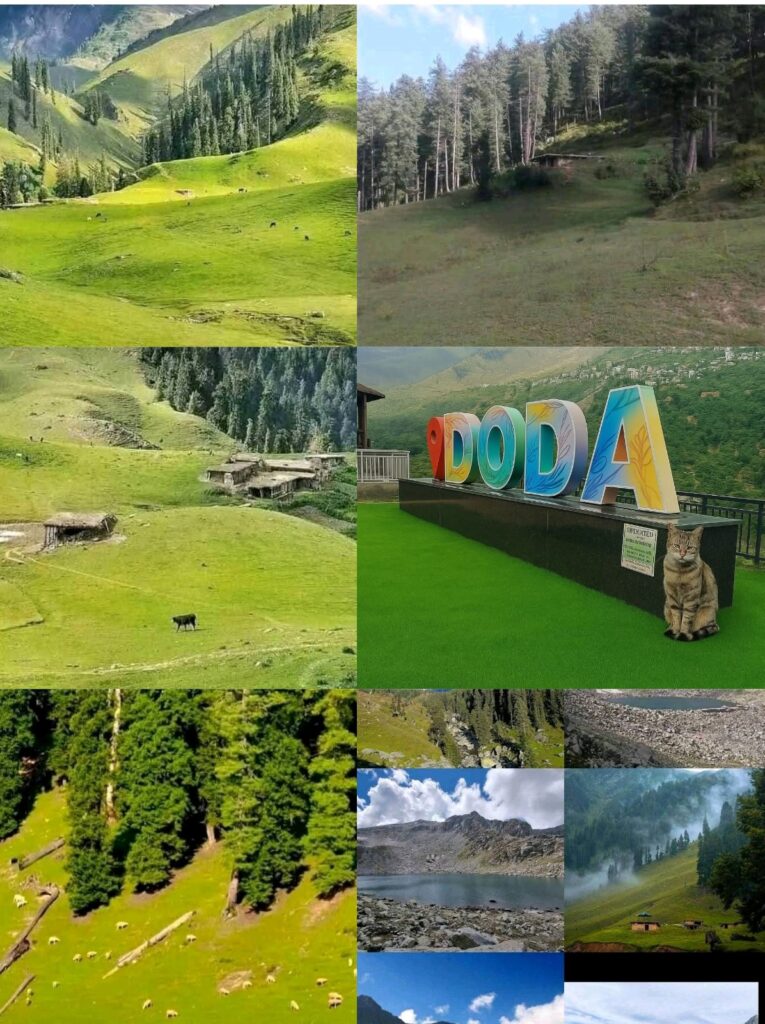
Further into the wilderness lies the Seoj Meadow, a stunning expanse that serves as a vital checkpoint for the famous Kailash Kund Trek. This meadow is an amphitheater of nature, where the only sounds are the echoes of the wind and the distant bells of grazing livestock. The spiritual journey often begins at the Vasuki Nag temple, dedicated to the popular deity of Bhaderwah, which marks the starting point for the trek to the high-altitude lake of Kailash Kund. Similarly, Nalthi has emerged as a crucial junction, especially with the completion of the Bhadarwah-Bani-Basholi road. Known for its lush grasslands adorned with flowering plants of every hue, it provides a serene resting point for trekkers moving between Sarthal and Bhaderwah.
Accessibility to this mountain paradise has improved significantly, making it a viable alternative for those seeking something different. The roads to Doda are well-connected from Jammu, winding through the scenic Patnitop region, and can also be accessed via the Chamba Valley. The hospitality sector in Doda has kept pace with this growing interest, offering a variety of pocket-friendly homestays, resorts, and hotels that allow visitors to experience the local lifestyle without sacrificing comfort.
The most pleasant window to explore this divine land falls between May and November, when the climate is mild and the mountain passes are clear. Whether it is the adrenaline-inducing activities of trekking and camping or the simple, quiet pursuit of peace, Doda remains a testament to the untouched beauty of the Himalayas. It is a place where every corner tells a story of purity and timeless charm, inviting the world to explore a land where beauty truly meets tranquility.
The views expressed in this article are solely those of the author and do not necessarily reflect the opinions or views of this newspaper
Leave a Reply