By Rayees Ahmad Kumar
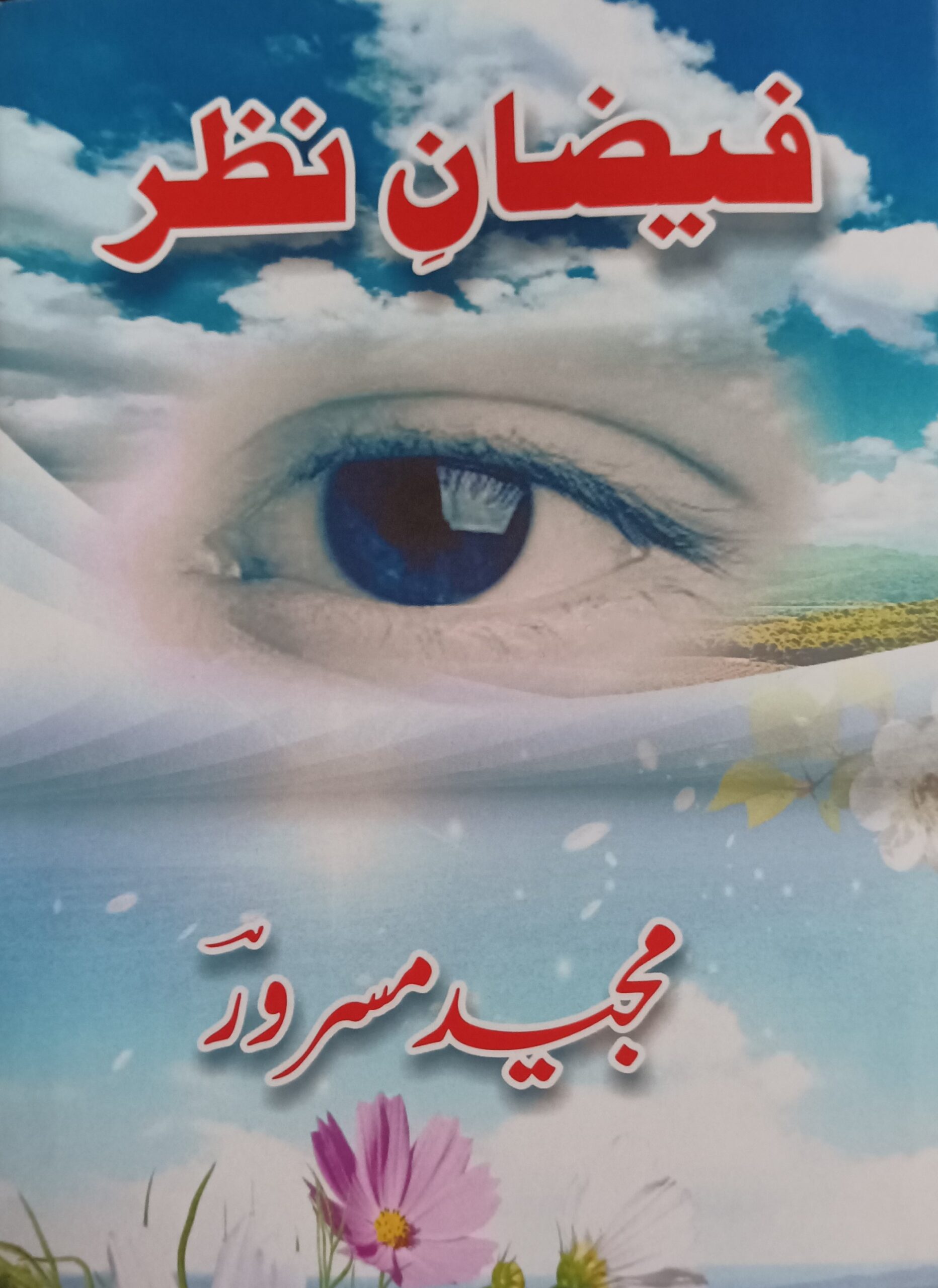
The Budgam district of Central Kashmir has long served as a fertile cradle for intellectualism, producing a lineage of poets, philosophers, and critics who have championed the preservation of regional heritage. Among these luminaries, Majeed Masroor stands as a household name. While many recognize him for the lyrical resonance of his celebrated songs that echo across the Valley, Masroor is more than a melodic voice. He is a grounded intellectual whose work bridges the gap between traditional aesthetics and modern social reform. In his latest literary offering, Faizan-e-Nazar, Masroor transitions from the rhythmic patterns of poetry to the structured clarity of the essay. Published by the esteemed Meezan Publishers in Srinagar, this 164-page collection is a curated treasure of 21 articles that dissect the moral and social fabric of contemporary life.
The book opens with a poignant dedication to the author’s parents and departed loved ones, immediately establishing a tone of gratitude and spiritual reflection. This is further anchored by the inclusion of the translation of Surah Fatiha and Darood-e-Ibrahim at the outset, signaling that Masroor’s worldview is deeply rooted in faith and ethical responsibility. In his foreword, Masroor posits a vital sociological argument: no issue is too small to be ignored, as the individual’s conduct invariably shapes the collective. He views the writer not merely as an observer but as a reformer. This sentiment is echoed in the proem by Akhter Meraj and a laudatory note by Wehshi Syed, editor of Nagina International, who praises the splendid simplicity of Masroor’s prose—a quality that makes his sophisticated themes accessible to the general reader.
The collection begins its thematic journey with “Kitabon ke Baghair Insaan Adhoora Hai” (Man is Incomplete Without Books). Here, Masroor argues that reading is the primary engine of wisdom and vocabulary. In an era of digital distraction, he reminds us that books are the storehouses of guidance that broaden mental horizons and provide a necessary compass for human ambition. The author then pivots to the internal struggle of the human spirit in “Zameer Murda Ho To Insaan Gunah Karta Hai.” Masroor defines the conscience as a powerful inner voice that serves as a bulwark against vice. He identifies avarice, greed, and scandal-mongering as destructive traits that erode the soul, urging readers to revive their dormant consciences to restore social harmony.
Masroor’s versatility is equally evident when he shifts his focus to the environment. In “Darakht Zameen Ka Zewar,” he explores the vital role of flora in maintaining ecological balance. Drawing on the wisdom of the patron saint of Kashmir, Sheikh Noor-ud-Din Noorani, Masroor invokes the famous maxim, “An posha teli yeli wan posha,” to emphasize that environmental preservation is a spiritual and survivalist necessity. This sense of duty extends into the domestic sphere in “Baap Ki Narazgi Allah Ki Narazgi,” which delves into the Islamic perspective on the parental bond. Quoting prophetic traditions, the author highlights the sacrifices of fathers who endure hardship for their children’s happiness, reminding the youth that respect for one’s parents is inextricably linked to divine pleasure.
The author also tackles the physical and verbal health of the individual. In “Sehat Aik Azeem Naimat,” he reminds the reader that health is the greatest blessing from the Almighty, a reality often only realized by the sick who feel the heavy burden of its absence. This is complemented by “Touba,” which explains the necessity of regular repentance to cleanse the soul of inevitable human errors. Furthermore, in “Zubaan Ko Apne Qaboo Mein Rakho,” Masroor offers a masterclass on the weight of words. Observing that a tongue can be sharper than a sword, he advocates for linguistic restraint, noting that the right words can heal wounds while the wrong ones can incite lifelong enmity.
Perhaps the most stirring piece in the collection is “Noujawan Qoum Ka Asasa Hote Hain,” where Masroor echoes the philosophy of Allama Iqbal. He characterizes the youth as the Shaheen (Falcon) of the nation, possessing the potential for lofty vision and revolutionary change. He argues that a well-guided generation is the only guarantee of a prosperous future for the Valley. Faizan-e-Nazar is more than a book; it is a mirror held up to society. Majeed Masroor proves that he is as adept with prose as he is with verse, using his pen to meticulously uproot social evils while planting seeds of moral rectitude. The collection is a testament to his deep empathy for his community and his unwavering commitment to the Urdu language. For those seeking a blend of spiritual insight and practical social commentary, Faizan-e-Nazar is an essential addition to their library.
The views expressed in this article are solely those of the author and do not necessarily reflect the opinions or views of this newspaper
Leave a Reply