How the Light of a Late Father Still Guides Three Generations
By Syed Majid Gilani
In the quiet labyrinth of Srinagar’s old city, where the scent of history clings to the timbered eaves of Khanqah-e-Mualla, certain lives are lived not with the roar of a storm, but with the steady, unwavering glow of a sanctuary lamp. For Syed Majid Gilani, that light emanated from his father, Syed Iftikhar Gilani—a man whose existence was defined by a rare intersection of modern duty and ancient spiritual lineage. Though Iftikhar passed away in 2001, his memory has not suffered the usual erosion of time. Instead, it has distilled into a potent legacy of silent strength, a narrative that speaks to the enduring power of character over worldly clamor. Born in 1950 amidst the scholarly echoes of Khanqah-e-Mualla, Iftikhar was the product of a genealogy rooted in devotion. The family’s trajectory was set in 1872 when his great-grandfather, Hazrat Syed Ghulam-ud-Din Gilani, migrated from Khanyar to the heart of the old city. This was more than a change of address; it was the anchoring of a moral compass. Iftikhar grew up in the shadow of his grandfather, the venerable Maulana Syed Muhammad Yaseen Shah Gilani, absorbing a philosophy where faith was not a public display but a private discipline. By the time he completed his electronics degree at S.P. College in 1972 and entered the Sales Tax Department, he had become a living embodiment of this heritage—a government official who navigated the complexities of bureaucracy with an incorruptible simplicity. To know him was to witness a man who wore his integrity as naturally as his neatly pressed clothes. He was a creature of habit and humility, a bridge between the rigorous demands of a modern career and the rhythmic peace of the Holy Qur’an. In the domestic sphere, he was the ultimate confidant, a father who transcended the traditional distance of the era to become his children’s closest friend.
The tranquility of this life met a sudden, jarring conclusion on June 11, 2001. The day began with the mundane exhaustion of a civil servant but carried an underlying tension that retrospect now reveals as prophetic. Returning from his office, Iftikhar spoke of a strange breathlessness, a physical weight that even seven glasses of water couldn’t lift. Yet, true to his nature, he did not complain. He sought solace in the Maghrib prayers, his spirit anchored in Zikr even as his body faltered. In a moment of profound coincidence—or perhaps divine orchestration—Majid returned home that very evening from an assignment in Banihal. Driven by an inexplicable restlessness and a sudden bout of ill health, Majid had fled the isolation of his posting to seek the sanctuary of home. The embrace they shared at 8:30 p.m. was more than a greeting; it was a final, protective seal. As the night deepened, the respiratory distress intensified, prompting a frantic rush to SKIMS Hospital. In a turn of events that haunts the family to this day, the medical charts failed to capture the approaching horizon. An ECG returned a “normal” result, a sedative was administered, and they were sent back into the night with hollow assurances. The drive home was a surreal transition between worlds. Iftikhar remained lucid, yet he began to speak in a vernacular of departure that his family was not yet equipped to translate.
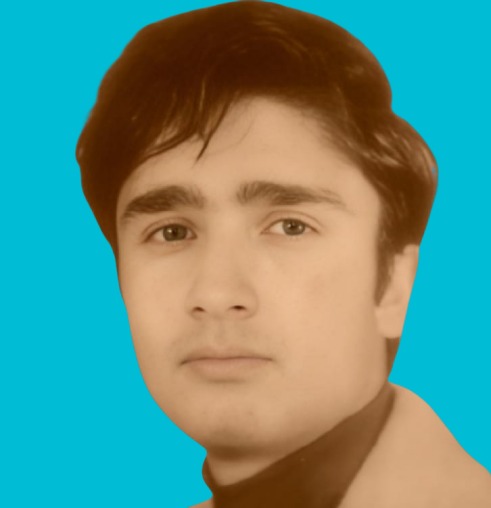
In the pre-dawn stillness of June 12, as the world hovered between sleep and waking, the veil grew thin. Iftikhar began reciting the final Surahs of the Qur’an with a clarity that pierced the heavy air of the bedroom. His request to “light the candles and call the tailor” felt like a cryptic fragment of a dream, but in the context of the spiritual tradition he hailed from, it was the preparation for a final journey. He was a man sensing the arrival of dawn, both literal and metaphorical. After a ritual bath and a change into fresh clothes, he took his place on the mattress where he had spent a lifetime in prayer. The scene was one of heartbreaking intimacy: a father holding the hands of his daughters, Yasmeen and Sabiyah, his lips moving in the rhythmic repetition of the Divine name. As they attempted to move him back to the car for a second medical intervention, the end arrived with a sudden, celestial focus. His gaze fixed upon a point beyond the horizon, witnessing something invisible to the grieving eyes of his children. With a final, gentle breath, the lamp flickered out in the physical world, leaving Majid to perform the final, devastating duty of closing his father’s eyes. He was only fifty years old, a man in the prime of his service, leaving behind a family suddenly cast into a cold, unfamiliar silence.
Yet, the story of Syed Iftikhar Gilani did not end at the Maqbara-e-Sadāt-e-Gilani. The vacuum left by his departure was filled by the extraordinary resilience of his widow, Shahida Chishti. At forty-two, she became the architect of the family’s survival, channeling her grief into a disciplined upbringing for her children, ensuring that the values of their father remained the bedrock of their lives. They were bolstered by the paternal grandparents, Syed Abdul Rashid and Syeda Sakina Gilani, who stepped into the breach with a love that prevented the family’s foundations from crumbling. Today, the legacy has moved into a third generation. When Majid’s sons, Arshad and Murshad, stand by their grandfather’s grave to recite the Qur’an, or when his daughter Sarah fills their home with the same holy verses that Iftikhar loved, the circle closes. These children never met the man who rests beside the Khanqah-e-Mualla, yet they know him through the cadence of his prayers and the integrity of the father he raised. It is a testament to the fact that a life lived with “silent strength” never truly vanishes. It becomes an inheritance of the blood—a light that, rather than fading with the passage of decades, grows warmer and more essential with every generation that carries it forward. The lamp still burns, fueled by the memory of a man who proved that the most profound lives are often the ones lived with the least noise.
The views expressed in this article are solely those of the author and do not necessarily reflect the opinions or views of this newspaper. The author can reached at [email protected].
Leave a Reply