In 2004, the average screen focus lasted 2.5 minutes. Today, it’s 47 seconds. Inside the rise of ‘Popcorn Brain’ and the neurological cost of the infinite scroll.
In a high school history classroom in suburban Ohio, a teacher pauses her lecture on the Cold War. The room is quiet, but it is not the silence of deep concentration. It is the restless, vibrating silence of suppressed energy. Under the desks, thumbs are twitching. Eyes dart down to laps. The students are physically present, but neurologically, they are drifting. They are waiting for the friction of the lesson to end and the flow of the feed to resume.
This is not merely a case of teenagers being teenagers. It is the visible symptom of a profound shift in cognitive processing. The rise of short-form content Instagram Reels, YouTube Shorts, and the juggernaut that is TikTok is not just changing how students entertain themselves. It is systematically reshaping their attention spans, their tolerance for boredom, and the very architecture of how they learn.
The 47-Second Attention Span
To understand the magnitude of the shift, we must look at the data. In 2004, research by Dr. Gloria Mark, a professor of informatics at the University of California, Irvine, found that the average time a person spent on a single screen before switching focus was about two and a half minutes. By 2023, her data showed that number had collapsed to just 47 seconds.
For Generation Alpha and Gen Z, this rapid switching is not a habit; it is a baseline. According to a 2024 Pew Research Center survey, nearly half of U.S. teens report being online “almost constantly,” a figure that has doubled over the last decade. They are inhabiting a digital ecosystem designed to fragment attention.
The mechanism at play is what behavioral psychologists call a “variable ratio schedule” of reinforcement. It is the same psychological hook used in slot machines. When a student swipes up on a Reel, they don’t know what they will get a dance trend, a cooking hack, a prank, or something boring. The unpredictability triggers a dopamine spike in the brain, the neurotransmitter associated with craving and desire.
“The algorithm is optimizing for engagement, not education,” says Dr. Mark. “When a student’s brain is trained to expect a reward every 15 seconds, a 40-minute lecture on molecular biology feels not just boring, but physically painful. The brain is actually starving for that dopamine hit.”
The Death of Deep Reading
The consequences of this “Popcorn Brain”, where focus pops rapidly from one stimulus to the next, are bleeding into literacy rates. Deep reading requires a cognitive gear shift that is antithetical to the scroll. It demands sustained attention, linear processing, and the ability to hold complex, sometimes contradictory ideas in the mind simultaneously without immediate resolution.
The statistics are alarming. Data from the Annie E. Casey Foundation reveals that in 2024, only 30% of fourth graders in the U.S. were reading proficiently, a decline from previous years. Educators report that students are increasingly unable to finish novels or lengthy articles. They scan. They skim. They look for the bullet points.
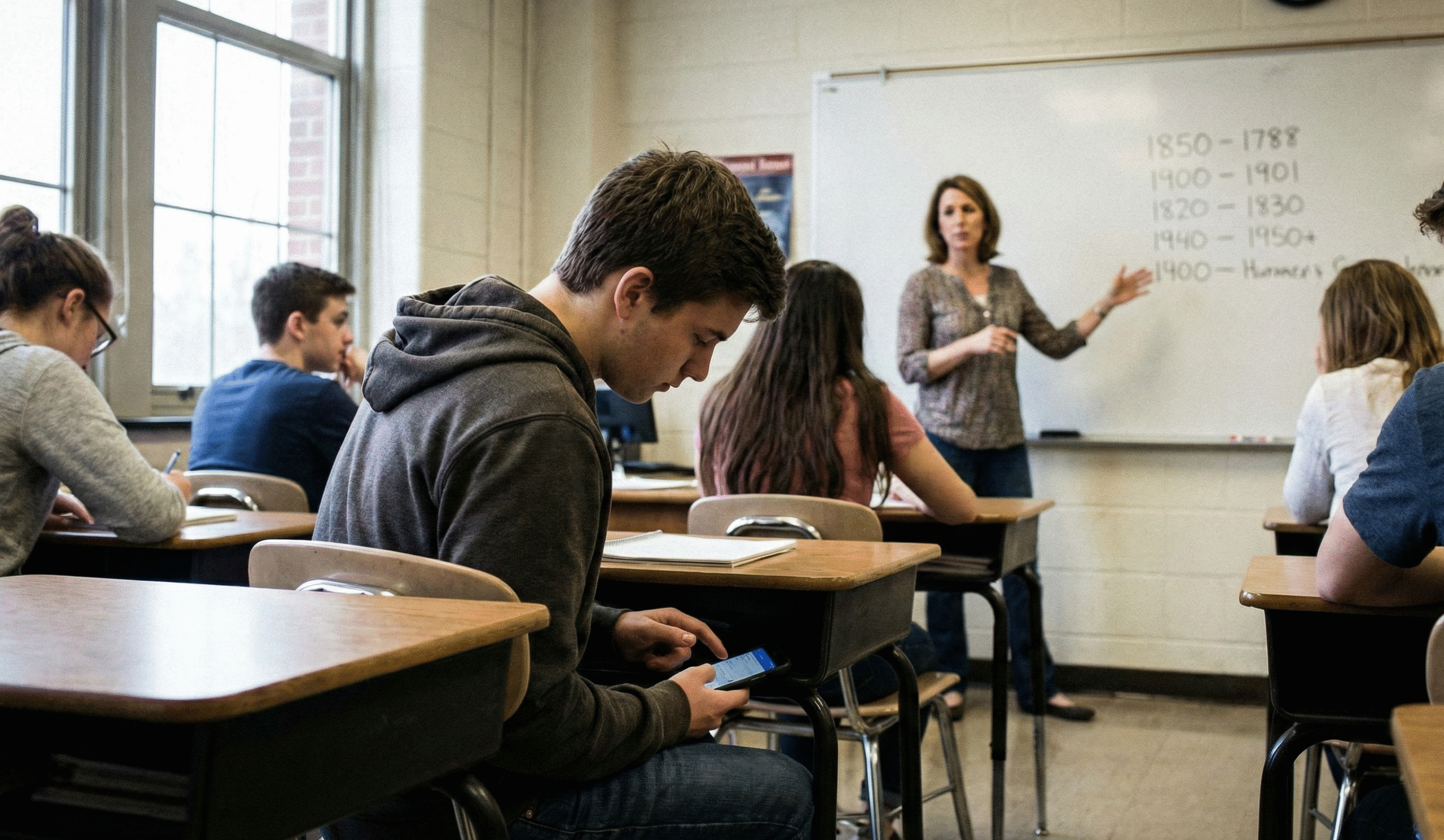
“I have students who can analyze a 30-second video with incredible sophistication,” notes Sarah Jenkins, an English teacher with 15 years of experience. “But if I ask them to read a five-page short story, they hit a wall. They treat the text like a broken screen, they keep waiting for it to move, to entertain them, and when it doesn’t, they check out.”
This friction is where the real damage to learning occurs. Traditional education is built on the premise that learning is often slow, difficult, and cumulative. It requires “cognitive persistence.” Short-form video, conversely, is built on the premise that content should be frictionless, immediate, and ephemeral. When these two worlds collide in the classroom, the friction of learning is often mistaken for failure.
The Creativity Paradox
However, the narrative is not entirely dystopian. To dismiss short-form content as purely destructive is to miss the nuance of how young people are expressing themselves.
Reels and Shorts have democratized video production. A 14-year-old with a smartphone today has access to editing tools that would have cost thousands of dollars a decade ago. Students are learning visual storytelling, pacing, sound design, and audience engagement intuitively. They are not just consumers; they are creators.
Yet, there is a hidden cost to this constant creative output: the loss of boredom.
Creativity has historically thrived in the empty spaces of the day, the bus ride, the wait at the doctor’s office, the quiet moments before sleep. These are the moments when the Default Mode Network of the brain activates, allowing for daydreaming and disparate idea connection.
Today, those empty spaces are filled with content. “Boredom is the incubator of creativity,” argues Dr. Michael Rich, director of the Digital Wellness Lab. “When we fill every gap with a screen, we are effectively strip-mining the brain’s potential for original thought. We are raising a generation that is incredibly good at remixing existing content but may struggle to generate entirely new ideas.”
The Sleep Recession
Perhaps the most immediate physiological impact is on sleep, the foundation of all learning and memory consolidation. The blue light emitted by screens suppresses melatonin, but it is the content itself that is the true thief of rest.
The “infinite scroll” mechanism means there is no natural stopping point, no end of the chapter, no commercial break. A student intends to check one notification at 10:00 PM and suddenly it is 1:00 AM. A 2024 study suggests that over 60% of teenagers are chronically sleep-deprived, directly correlating with lower academic performance and higher rates of anxiety.
The brain needs sleep to move information from short-term to long-term memory. Without it, the hours spent in the classroom are effectively erased. Students are coming to school in a state of “social jetlag,” physically present but cognitively absent, their brains fogged by a combination of exhaustion and overstimulation.
The Classroom of the Future
So, where do we go from here? Banning smartphones in schools is a growing trend and a necessary one, but it is a bandage, not a cure. The neural pathways have already been forged.
Forward-thinking educators are realizing that they cannot compete with the dopamine loop, nor should they try to emulate it. Instead, they are focusing on “micro-learning” strategies that bridge the gap. They are breaking complex lessons into shorter, punchier segments, not to dumb down the material, but to meet the students where their attention spans currently reside.
Simultaneously, there is a renewed emphasis on “stamina training.” Just as a runner trains for a marathon, students are being explicitly taught how to focus. Schools are implementing “tech-free” zones and deep-work sessions where the goal is simply to focus on a single task for 20 minutes without interruption.
According to the National Center for Education Statistics’ 2024 report, 26% of public schools cited student lack of focus as having a “severe negative impact” on learning. This acknowledgment is the first step toward a solution. The education system is slowly pivoting from assuming attention is a given to treating attention as a skill that must be rigorously taught.
The rise of Reels is not a temporary trend; it is a permanent shift in the media landscape. The students of today are the canaries in the coal mine of a high-speed digital culture. They are not less intelligent than their predecessors. They are simply adapting to the world they were given a world that moves at the speed of a swipe. The challenge for educators and parents is not to force them back into the 20th century, but to help them build the cognitive brakes necessary to slow down, look up, and think deeply in a 47-second world.
The views expressed in this article are solely those of the author and do not necessarily reflect the opinions or views of this newspaper
Leave a Reply