Human life is a three-act play, yet the final act is increasingly defined by isolation. As modern priorities shift, the very parents who sacrificed everything often find themselves treated as secondary choices.
By Mool Raj
The trajectory of human existence follows a predictable arc from the vulnerability of childhood to the vigor of youth and eventually into the fragility of old age. It is a biological certainty that we begin our lives in a state of absolute dependence, relying on the tireless devotion of parents who sacrifice their own comfort, health, and financial security to ensure our survival. Yet, as the wheels of time turn, a disturbing and heart-wrenching paradox has taken root in our modern social fabric. The very individuals who were once the center of their parents’ universe often relegate those parents to the periphery of their lives once they reach adulthood. This shift in priorities represents one of the most pathetic issues thriving in contemporary society, where the transition from being a cherished child to a self-sufficient adult frequently results in the abandonment of filial responsibility.
When children marry and establish their own households, a visible transformation occurs in their hierarchy of needs. While it is natural for a new family to require focus, it is increasingly common for this change to result in the total displacement of the elderly. As each child moves away, the question of where and with whom the parents will live becomes a source of tension rather than a competition of love. We are witnessing a bleak reality where offspring show a pragmatic unwillingness to house the people who spent decades fulfilling their every whim. This reluctance is a deep betrayal of the unspoken contract of familial love. Parents who labored under the constraints of limited income to provide a limitless future for their children find themselves treated as burdens or strangers in the very homes they built.
The resulting loneliness is a quiet epidemic. In the twilight of their lives, when they have a wealth of experience to share and a desperate need for emotional connection, the elderly are often met with silence. Their children, consumed by the perceived “busyness” of modern life, offer excuses instead of presence. They claim that their careers and immediate families demand every waking second, yet the harsh truth is that no one is ever truly too busy; it is simply a matter of where parents rank on their list of priorities. It is a bitter irony that as toddlers, children will fight one another to claim their parents’ attention, but as adults, they fight to delegate the care of those same parents to someone else. This selfishness is often masked by the pace of the digital age, but the underlying neglect is a choice that reflects a profound moral decay.
We must also consider the cyclical nature of this behavior. By treating their parents as secondary choices, today’s adults are effectively providing a masterclass in neglect for their own children. This world operates on the principle of retaliation; what you sow today, you will surely reap in the future. If a child grows up watching their father ignore their grandfather or seeing their mother treat a grandmother as an inconvenience, they are being programmed to replicate that same coldness. By the time today’s “busy” professionals reach old age, they may find themselves on the receiving end of the same isolation they once imposed. It is a terrifying prospect that the current generation is architecting its own future loneliness through its present actions.
To address this crisis, there must be a fundamental return to the spiritual and ethical mandates that govern the parent-child relationship. In many faiths, and most explicitly in Islam, the status of parents is elevated to a level that demands absolute patience and reverence. Even when the dialogue of the elderly becomes repetitive or their needs become taxing, the instruction is clear: do not utter a word of contempt, but remain quiet and listen with empathy. The promise of paradise is intrinsically linked to the treatment of one’s parents, with the mother’s feet serving as the gateway and the father as the door. This isn’t merely religious dogma; it is a universal blueprint for a functional, compassionate society.
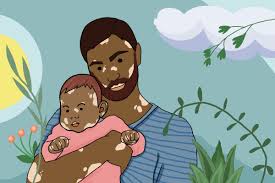
Conversely, history and daily observation show that success often follows those who honor their parents. Those who treat their elders with the dignity they deserve frequently witness a sense of peace and prosperity in their own lives. In contrast, those who treat their parents as disposable assets often face a different kind of destruction, characterized by internal unrest and a lack of true fulfillment. The prayers of a parent have a spiritual weight that can elevate a child’s life to new heights, while their silent heartache can be a heavy anchor. True wellness in a society will only be achieved when children stop fighting over who has to take the parents and start fighting over the privilege of hosting them. We must foster a culture where there is always room in the heart, ensuring that the final segment of the human life cycle is defined by dignity rather than abandonment.
The views expressed in this article are solely those of the author and do not necessarily reflect the opinions or views of this newspaper
Leave a Reply