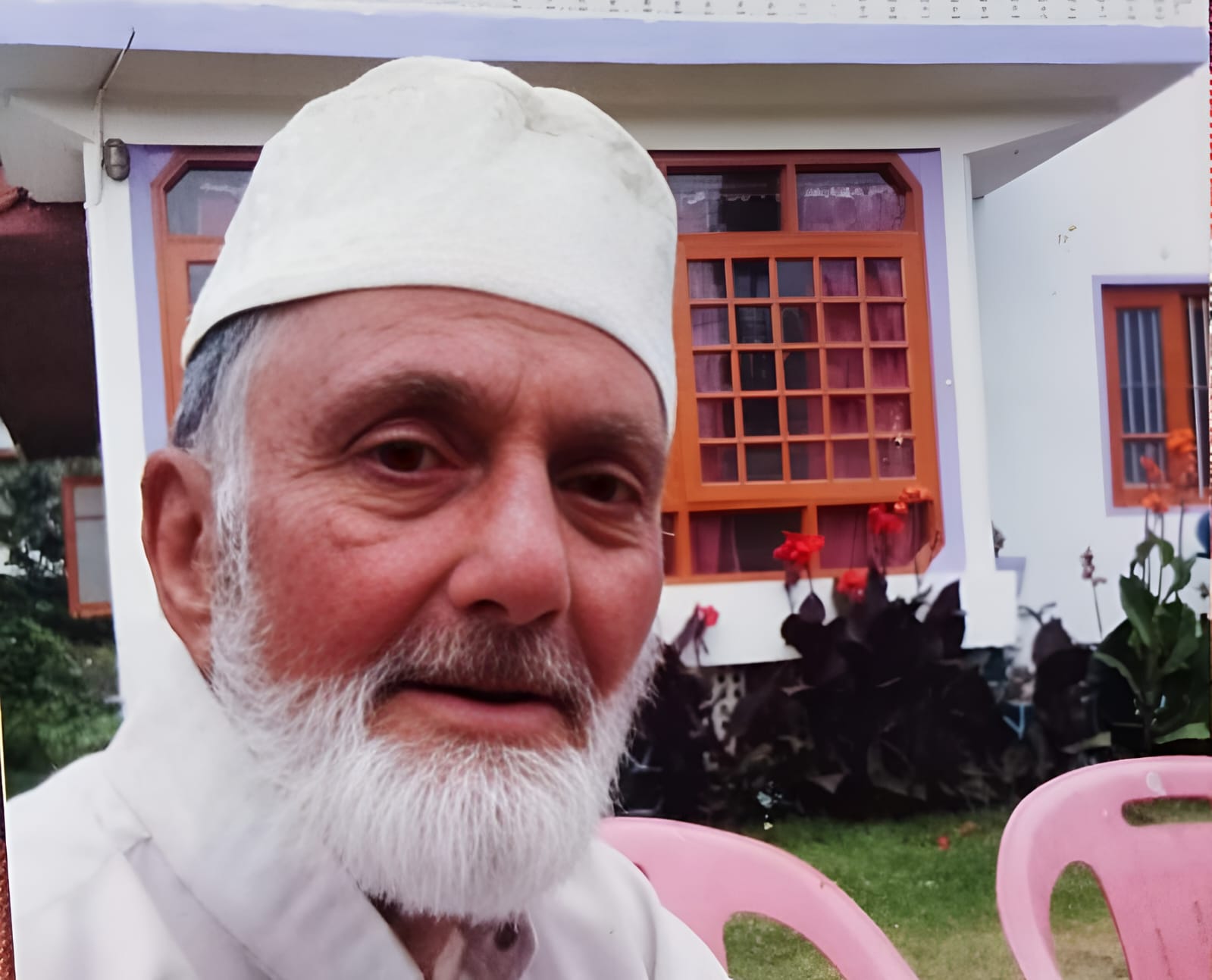
Syed Abdul Rashid Gilani (1927–2016) left behind a legacy that transcends the written word. In the wake of his son’s passing, he became the architect of a new future for his grandchildren, proving that true happiness is found in simple living, honest work, and a heart devoted to the Divine.
By Syed Majid Gilani
The measure of a life is often found in the shade it provides for others, and in the history of Srinagar, few trees stood as tall or as firm as Syed Abdul Rashid Gilani. To the world of the mid-twentieth century, he was a pioneer of the Kashmiri intelligentsia; to those who knew him in the corridors of the Food Control Department, he was a man of unassailable integrity; but to those of us who called him Abaji, he was the architect of our survival and the silent poet of our souls. Born in 1927 at Khanquah Moulla to the venerable Maulana Syed Mohammad Yasin Shah Gilani, Abaji belonged to a golden generation of scholars who bridged the gap between traditional wisdom and modern education. A graduate of the prestigious Punjab University in Lahore, he carried the refined air of a scholar-bureaucrat, beginning his career as a supervisor and eventually retiring in 1982 as an Assistant Director. Yet, the titles he earned in the civil service paled in comparison to the character he forged in the private sphere.
Abaji was a man of letters who lived in a sanctuary of ink and parchment. His companions were not the fleeting trends of the day, but the enduring voices of newspapers, magazines, and a vast personal library. He possessed an exquisite sensibility for verse, composing ghazals and Naatiya kalaam in Urdu and Persian with a mastery that could have easily commanded the public stage. However, he possessed a rare, humble disdain for fame; he wrote for the divine and for the self, never seeking the validation of a printing press. This literary discipline defined his world until the summer of 2001, when the trajectory of his life—and ours—was irrevocably altered.
On June 12, 2001, the sudden passing of his only child, my father Syed Iftikhar Gilani, at the age of 50, sent a shockwave through our family. At 74, an age when most men retreat into the quietude of their twilight years, Abaji found himself standing amidst the ruins of a broken home. My sisters, Yasmeen and Sabiyah, and I were left fatherless, and our mother, Shahida Chishti, was left widowed. In that crucible of grief, the poet and the scholar transformed into a guardian of fierce resolve. He made a silent pact with the memory of his son: his grandchildren would not grow up in the shadow of loss, but in the light of opportunity. He seamlessly transitioned from a man of retired leisure to a father figure of unwavering strength. He did not merely house us; he sheltered our spirits. He treated our mother not as a daughter-in-law, but as his own child, ensuring that our household remained a bastion of dignity, discipline, and faith.
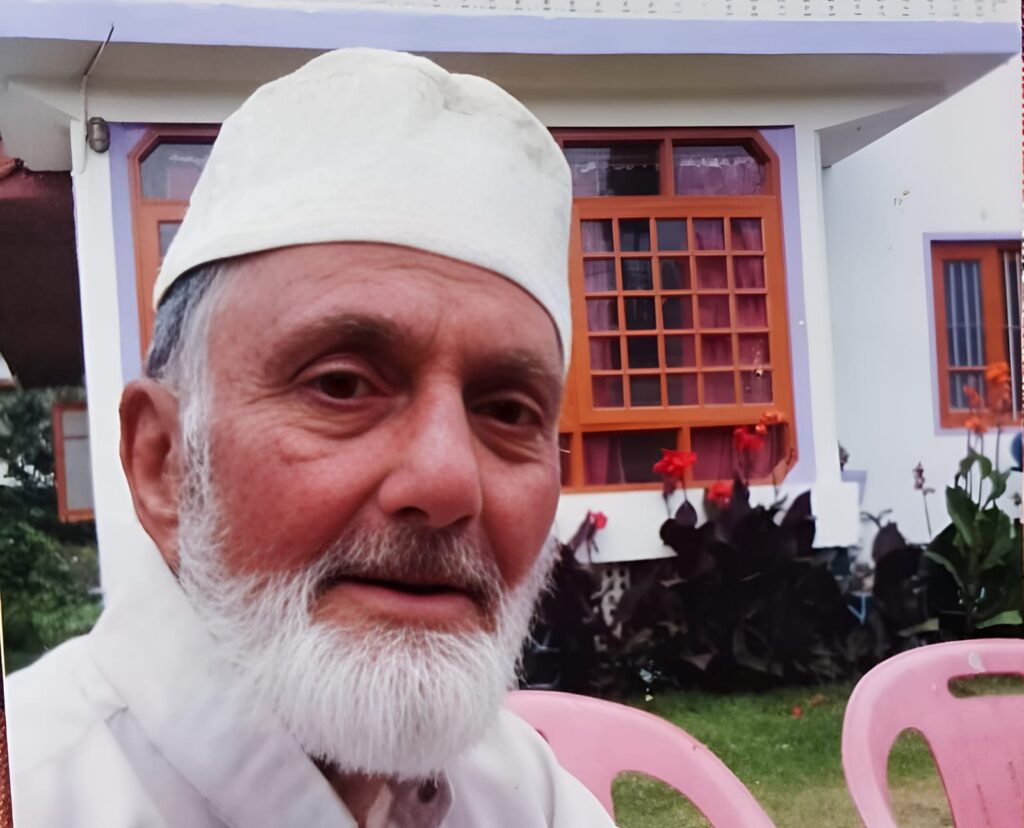
His daily routine was a masterclass in the “graceful life” he often preached. Long before the sun touched the peaks surrounding the valley, Abaji was awake for Fajr prayers. The rhythm of his day was set by the tilawat of the Holy Qur’an and the recitation of Aurad-e-Sharif, spiritual anchors that kept him grounded. He was a man who loathed idleness. After his spiritual duties, he could be found in the backyard of Gilan House in Lalbazar, tending to his kitchen garden with the same precision he applied to his prose. Even at ninety, he was a marvel of physical and mental vitality. He required no medication, a feat he attributed to his regular walks and a mind kept sharp by the daily rigors of English newspapers and classical literature. For Abaji, faith was not a passive inheritance but a practical mandate. He believed that the Qur’an and Hadith were meant to be lived through honesty and straightforwardness, and he modeled that belief every hour of his life.
Education was his primary weapon against the vagaries of fate. I remember the warmth of his surprise visits to our reading room, checking on our progress not with the sternness of a taskmaster, but with the quiet concern of a man who knew that knowledge was our only true inheritance. He was our personal tutor in English, Urdu, and Persian, insisting on a clarity of accent and a depth of understanding that few schools could replicate. He taught us that success was a slow harvest, requiring the tilled soil of hard work and the constant watering of prayer. He stripped away the distractions of “pomp and show,” teaching us that true happiness is found in simple living, honest earning, and the strengthening of family bonds.
When he passed away peacefully on March 13, 2016, at the age of 90, he left behind a vacuum that no library could fill. Yet, the “Gilan House” he built remains standing, not just in bricks and mortar, but in the character of the three women he raised. He was our grandfather, our teacher, our friend, and our greatest inspiration. He proved that while death can take a father, a grandfather’s love can bridge the gap, ensuring that dreams do not die with the dreamer. His legacy is written in the lives we lead today—lives built on the discipline, truthfulness, and loyalty he exemplified. As we remember him, we do so with a spirit of profound gratitude, praying that Allah elevates his status in Jannat-ul-Firdous. Abaji may have never published his poems, but in the story of our lives, he wrote his greatest masterpiece.
The views expressed in this article are solely those of the author and do not necessarily reflect the opinions or views of this newspaper. The author can be reached at [email protected].
Leave a Reply