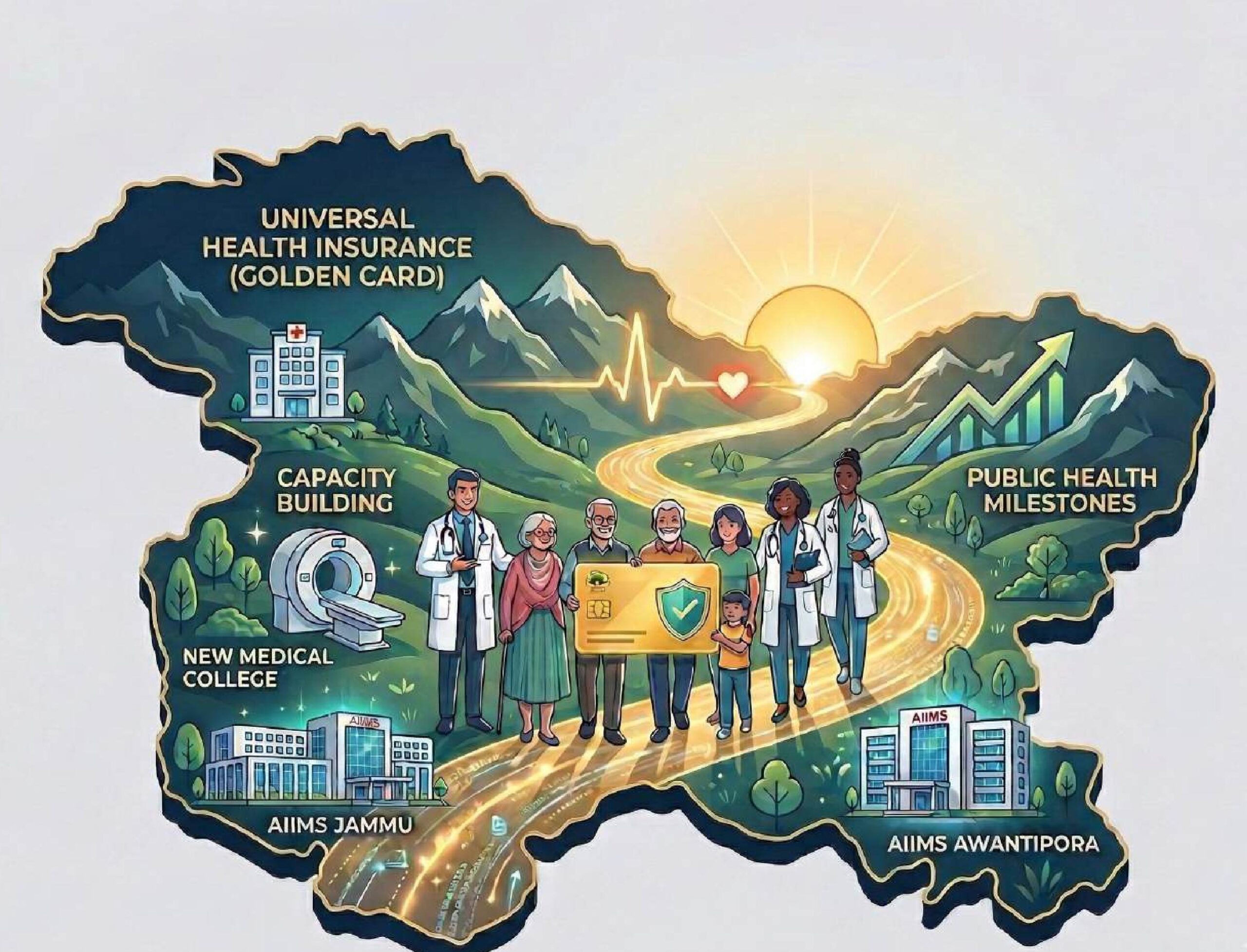
With record funding, expanding medical colleges, and the rollout of universal health insurance, Jammu and Kashmir is witnessing one of the most significant healthcare transformations in its history.
Jammu and Kashmir is experiencing a profound transformation in its medical landscape today. The central government has demonstrated an unwavering commitment to the region. This dedication is visible through unprecedented financial backing and rapid infrastructure expansion. Citizens across the Union Territory now have access to world class medical facilities right at their doorsteps. The year 2026 marks a historic turning point for public health in this beautiful region. The administration has successfully turned decades of inherited challenges into sustainable milestones of progress. The leadership has prioritized equitable access to medical services for every single citizen regardless of their geographic location.
Unprecedented Budgetary Support and Infrastructure Push
Financial empowerment lies at the very heart of this medical revolution. Chief Minister Omar Abdullah recently presented the comprehensive budget for the fiscal year 2026 and 2027. The government allocated a massive capital outlay of Rs 1866 crore specifically for health and medical education. This historic funding ensures the rapid modernization of medical infrastructure across all districts. The total health budget accounts for a significant portion of the overall Union Territory expenditure.
The number of Government Medical Colleges has expanded dramatically over recent years. The region now boasts seventeen functional medical colleges compared to just four a few years ago. The administration has utilized earmarked funds to install advanced diagnostic equipment everywhere. Patients now benefit from state of the art CT scan facilities at Government Medical College Jammu. Medical professionals are utilizing new MRI machines at medical colleges in Baramulla and Kathua and Rajouri. A modern Cath Lab is currently saving lives at the Doda medical facility.

Cancer care has received a massive and much needed boost this year. The administration has fast tracked the installation of a second PET scan machine in Srinagar to support the existing facility at SKIMS Soura. A brand new PET scan facility became fully operational in Jammu recently. This critical development brings immense relief to patients in the Jammu division. Citizens no longer need to undertake exhausting journeys to other states for advanced oncology diagnostics. The government is also establishing State Cancer Institutes in both capital cities to provide comprehensive oncology care under one roof.
The Golden Card Revolution Guaranteeing Health Security
The Ayushman Bharat Pradhan Mantri Jan Arogya Yojana SEHAT scheme remains the absolute crown jewel of public welfare initiatives here. People universally celebrate this highly successful initiative as the Golden Card. The scheme guarantees a cashless health insurance cover of Rs 5 lakh per family per year. Financial dread associated with medical emergencies has virtually vanished from the region.
The impact of this visionary central government scheme is truly staggering. The administration has issued over ninety lakh Golden Cards to date. The region is rapidly approaching total saturation for this scheme. Hospitals have facilitated nearly two million free treatments so far. Economically vulnerable families have saved thousands of crores in out of pocket expenditures. Out of pocket healthcare expenses in the region have plummeted to among the lowest levels in the entire country. The government provides an easy online portal where residents can instantly generate and download their cards from home. This seamless digital integration ensures that absolutely no citizen is left behind.
Decentralizing Lifesaving Care Across Districts
The government is actively bringing healthcare directly to rural and remote communities. The establishment of dedicated dialysis centers across district and sub district hospitals is a true game changer. Patients who previously endured grueling journeys to tertiary hubs in Srinagar or Jammu can now receive top tier care locally.
The rollout of chemotherapy units in all district hospitals has democratized cancer treatment entirely. The introduction of dedicated geriatric wards ensures that the elderly population receives specialized and dignified care. Health Minister Sakeena Itoo recently informed the legislative assembly about massive upgrades in peripheral areas. The government is currently constructing a fifty bedded Critical Care Block at the Kupwara sub district hospital at a cost of Rs 23 crore. The administration is building similar critical care blocks in seventeen different locations under the Prime Minister Ayushman Bharat Health Infrastructure Mission.
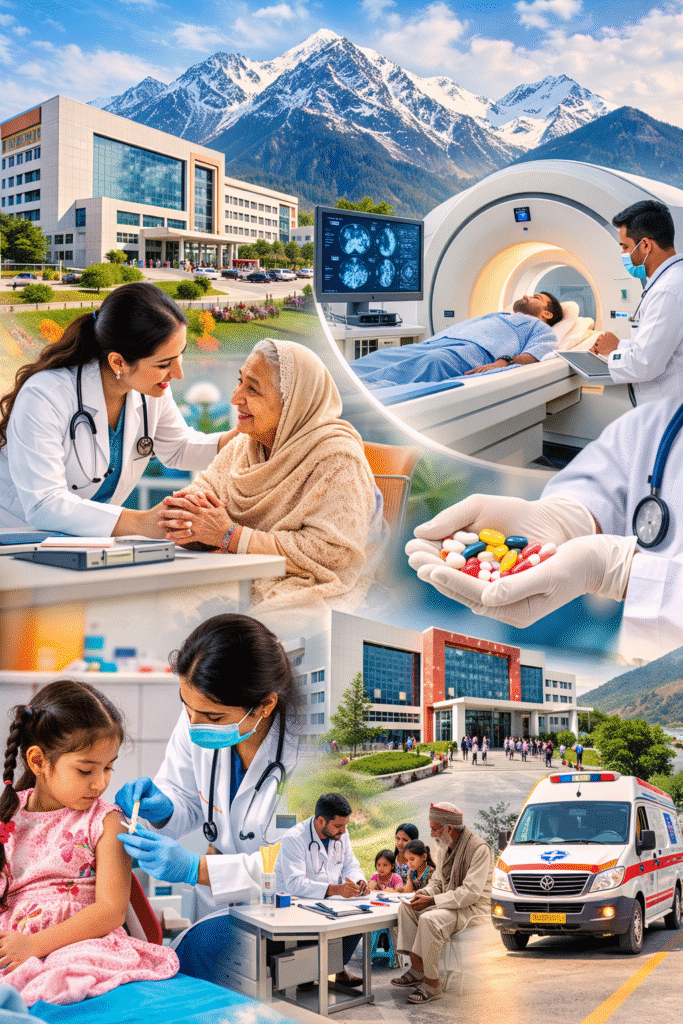
Telemedicine units and tele intensive care units are now operational in seven medical colleges to reach far flung populations. The government has expanded the Jan Aushadhi Kendras network to over three hundred locations. These centers provide highly affordable and quality medicines to the poorest sections of society. The emergency ambulance fleet has also expanded to nearly five hundred vehicles. This expansion significantly strengthens emergency response times across hilly and difficult terrains.
Bridging the Manpower Gap Through Capacity Building
Historical shortages of specialized healthcare workers once strained rural service delivery. The current administration has implemented a massive long term capacity building initiative to solve this issue permanently. The number of MBBS seats in the region has surged from five hundred to over seventeen hundred. Postgraduate medical seats have increased to eight hundred and two. Nursing seats have skyrocketed from six hundred to over three thousand.
These visionary educational expansions are flooding the healthcare system with brilliant homegrown talent. The government is conducting accelerated recruitment drives to bridge immediate gaps. Thousands of medical professionals have been hired recently based purely on merit. The administration is also undertaking the rationalization of existing resources to redistribute staff optimally across rural health facilities. Regular supervisory visits and strict enforcement of attendance norms have dramatically improved the quality of care in remote clinics.
Tackling the Dual Disease Burden Systematically
The region is actively managing a shifting epidemiological landscape right now. The health department successfully conducts rigorous vector control programs to manage seasonal outbreaks of communicable diseases like dengue. Rapid urbanization and changing lifestyles have also led to a spike in noncommunicable diseases. Current health surveys indicate that diabetes and hypertension are rising concerns among the adult population.
The government has aggressively scaled up its preventive healthcare framework to combat this silent epidemic. Over three thousand Health and Wellness Centers are actively screening citizens daily. Medical workers screened nearly two lakh people for hypertension and diabetes in January 2026 alone. Improving healthcare access has raised the overall life expectancy in the region to over seventy four years.
The Infant Mortality Rate has plummeted to an impressive low of fourteen. Institutional deliveries have reached a near perfect rate of over ninety nine percent. The sex ratio at birth has also improved significantly over the past five years. These metrics showcase undeniable progress in maternal and child healthcare. The government continues to run extensive awareness campaigns regarding nutrition and healthy lifestyle choices.
The AIIMS Vision Realized for Tertiary Care
The commitment of the central government to provide world class tertiary care is best exemplified by the twin All India Institute of Medical Sciences projects. The AIIMS Jammu campus is fully operational and proudly serves thousands of patients. It stands as a monumental achievement for the region and a beacon of medical excellence.
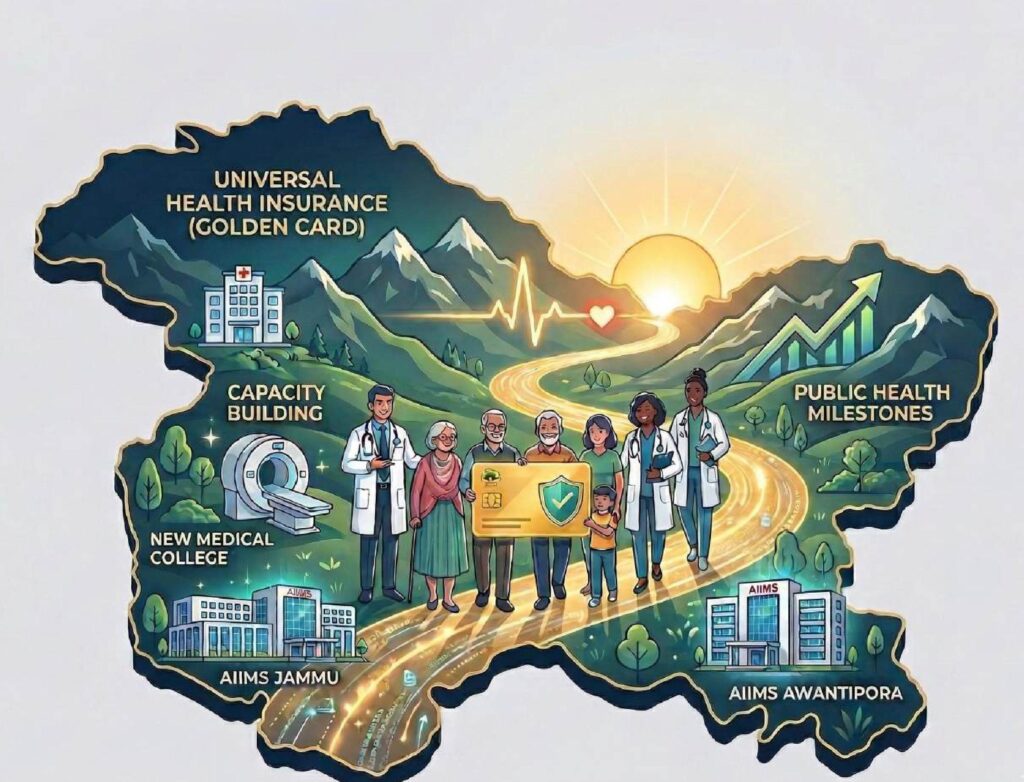
Meanwhile the AIIMS Awantipora project in Kashmir is advancing rapidly. The facility has achieved seventy percent physical progress despite initial delays caused by complex land acquisition and logistical hurdles. Chief Minister Omar Abdullah personally reviewed the site recently and confirmed that the project is on a definitive trajectory. The out patient department will commence operations by April 2026. The in patient department will become fully functional by November 2026. The first batch of MBBS students will begin their classes there in July 2026. This mega project promises to add one thousand beds to the healthcare arsenal of the Valley very soon.
The current situation proves that the health sector in Jammu and Kashmir is experiencing a golden era of development. The system is meticulously building a resilient and equitable and modern healthcare ecosystem. Backed by visionary central policies and relentless local execution the administration is securing a healthier future for generations to come. Every new hospital and every new doctor represents a promise kept to the people of this great nation.
Leave a Reply