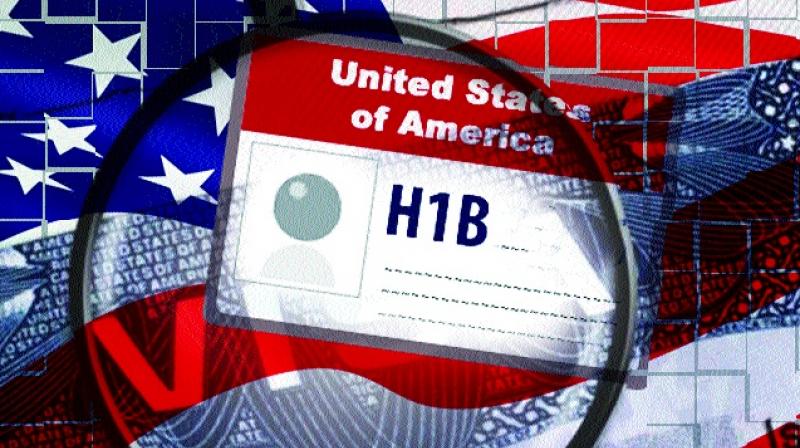
 WASHINGTON: US technology trade groups representing Apple, Microsoft, Facebook and Google have urged the Trump administration to retain an Obama-era rule that allows some spouses of H-1B visa holders, including Indians, to also work legally in America.
Groups including the Information Technology Industry Council, the US Chamber of Commerce and BSA-The Software Alliance wrote to Citizenship and Immigration Services to urge the government to keep the H-4 programme which allows the spouses of H-1B holders with pending green cards to legally work in the US.
The Trump Administration is reportedly moving ahead with its decision not to give work permits to the spouses of H-1B visa holders, arguing that this displaces genuine American workers.
“As the Trump Administration conducts its review of the H-4 rule, we respectfully encourage you and your colleagues to maintain the program given its importance to the business community and to the American economy,” said the lobbying and advocacy groups and business bodies.
The letter addressed to Lee Francis Cissna, Director of US Citizenship and Immigration Services, said: “It is a function of the failure to reform our nation’s immigration system that this group of H-4 spouses — the majority of whom are women — continue to face uncertainty and may be prevented from working while they wait for bureaucratic backlogs to be cleared.”
The Obama era H-4 rule extends employment authorisation eligibility for a limited subset of H-4 dependent spouses of H-1B non-immigrant employees seeking employment-based lawful permanent resident (LPR) status or Green card.
The rule had helped thousands of Indians.
The H-1B programme offers temporary US visas that allow companies to hire highly skilled foreign professionals working in areas with shortages of qualified American workers. This work visa is highly popular among Indian IT professionals.
According to the letter, the H-4 rule has limited unnecessary disruptions to businesses by ameliorating economic and personal hardships–resulting from the lack of spousal work authorisation–previously faced by many H-1B employees and their families as they obtain LPR status.
As of October 2017, the USCIS reported that there are an estimated 133,502 individuals with pending employment-based adjustment of status applications in the United States.
“The current demand for visas under certain employment- based preference categories and the application of the per- country quotas currently produce wait times of a decade or more for certain individuals and their families.
Leave a Reply