By Mukhtar Ahmad Qureshi
Character isn’t bought in a marketplace, borrowed from a book, or built overnight. It is shaped in silence—through choices made in the dark, values tested under pressure, and conduct carried when no one is watching. In a world increasingly obsessed with appearances and shortcuts, character is the quiet force that separates the merely successful from the truly admirable.
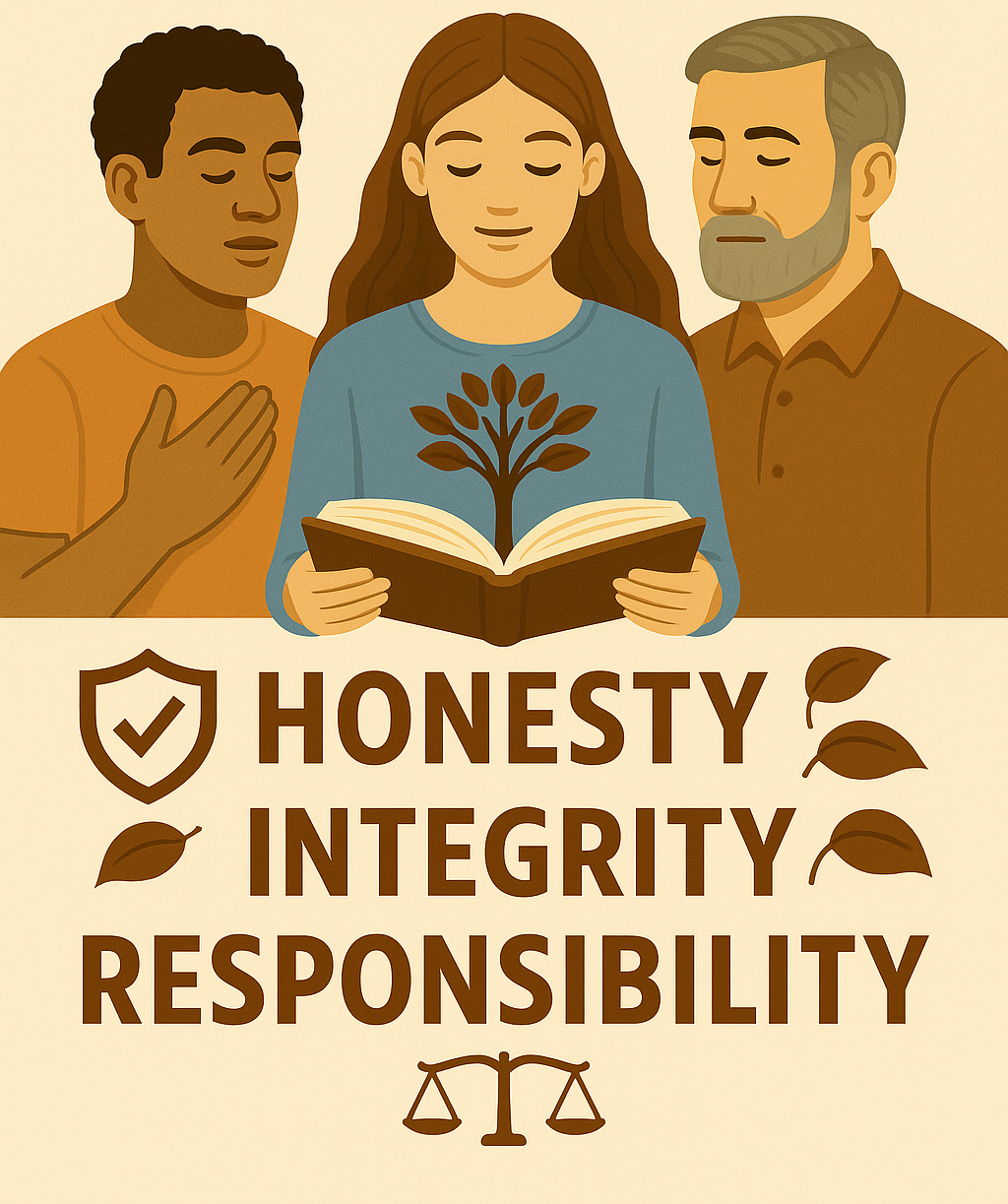
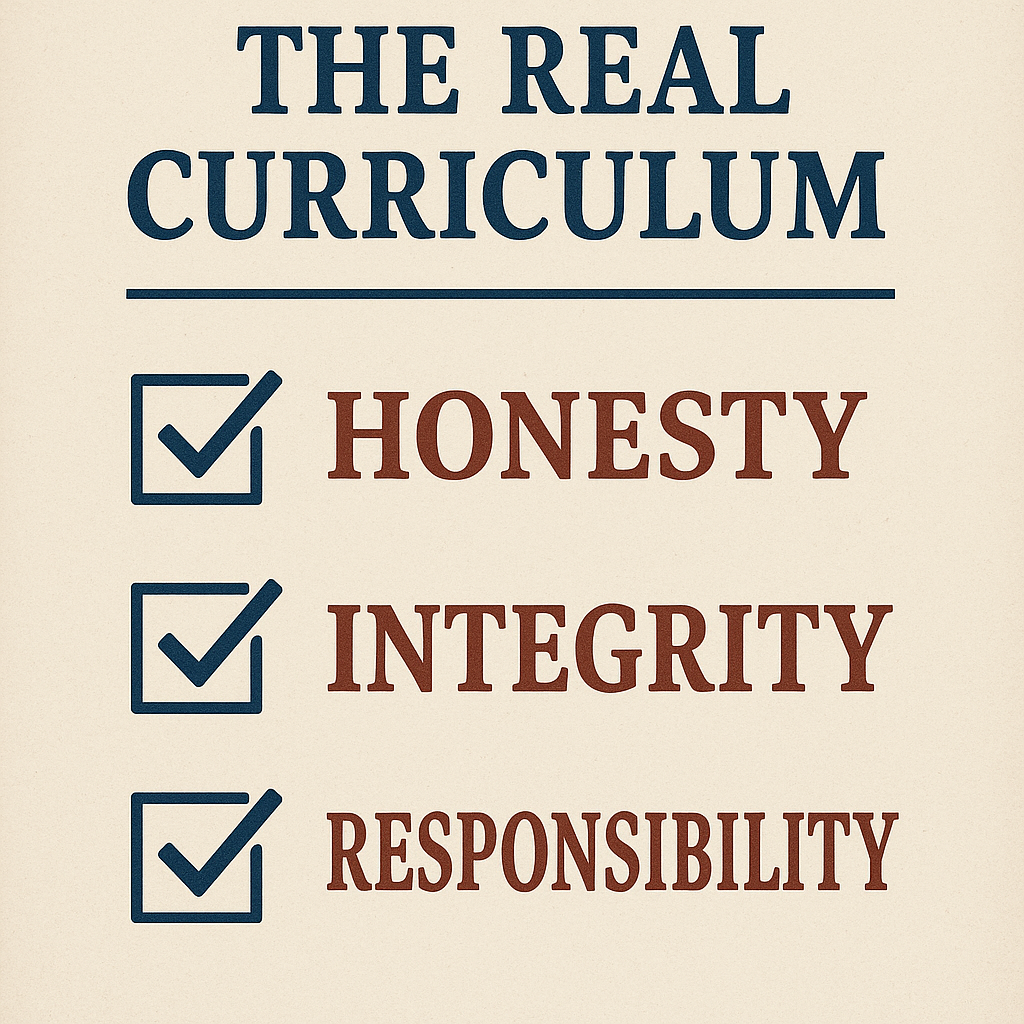
As a teacher, a father, and a citizen, I have come to believe that the foundation of strong character rests on three timeless values: Honesty, Integrity, and Responsibility. These aren’t just lofty words printed on school banners or uttered during morning assemblies—they are the invisible threads that hold relationships, institutions, and nations together. Without them, learning is shallow, success is hollow, and respect is impossible.
Honesty: The Foundation of Trust
One of my earliest encounters with honesty came during my ninth-grade year. I hadn’t completed my mathematics homework. Tempted by fear, I considered copying from a friend. But something stopped me. I walked up to my teacher and admitted, “Sir, I haven’t done it.”
He paused, looked at me, and instead of scolding me, he said with a calm smile, “That’s okay, Mukhtar. I appreciate your honesty. Just make sure to do it tomorrow.”
That moment left a permanent impression on me. I learned that honesty might feel difficult in the moment, but it wins trust—something far more lasting than a few marks or fleeting approval.
As a teacher now, I encourage my students to be truthful, even when the truth is uncomfortable. Once, during a class activity, a student accidentally broke a model in the lab and immediately confessed. I praised his honesty in front of his classmates. That one act created a ripple—other students began sharing their own truths, minor mishaps, and mistakes. The class felt lighter, safer, more united. That day, honesty wasn’t just taught; it was lived.
Honesty protects us from the burden of deceit and confusion. In every sphere—friendships, family, workplace—people may forget your errors, but they will never forget your truthfulness.
Integrity: Doing Right, Even When No One is Watching
If honesty is about speaking the truth, integrity is about living it. It is doing the right thing, even when the applause is absent and the cameras are off.
Several years ago, I was supervising an examination at school. I noticed a fellow teacher subtly passing a hint to a student. I froze. It was easier to ignore. It wasn’t my class. It was someone I respected. But would I be upholding the values I expected from my students if I turned away?
I chose the difficult path. I approached the teacher later, respectfully discussed the incident, and made it clear that this was unacceptable. It wasn’t about public humiliation—it was about drawing a line that must not be crossed.
Integrity may not always be rewarded, but it offers something rarer: peace of mind. In a world eager for loopholes, where connections often outweigh merit, integrity anchors us. It’s what makes us sleep peacefully at night and face our reflection in the mirror without guilt.
I tell my students often: when you cheat, you’re not just cheating the system—you’re cheating your own potential.
Responsibility
Responsibility completes the trio. It’s about standing by your words, owning your actions, and being accountable for both your successes and failures.
I remember an instance with my young son, Saffiullah. He had left his schoolbag outside, and it got soaked in the rain. His books were drenched. I resisted the impulse to scold. Instead, I asked him to dry the books and reflect on what he had learned.
He quietly said, “I learned that when I neglect small responsibilities, big problems happen.”
That moment was more valuable than any punishment. He learned that responsibility isn’t imposed—it’s understood.
Professionally too, I’ve realized responsibility isn’t about doing what you’re told. It’s about anticipating what needs to be done and doing it with sincerity. Whether it’s preparing lessons, guiding younger colleagues, or supporting community events, the willingness to act without waiting for applause marks true leadership.
Responsibility also demands we stop blaming others. In any failure—whether in school management, a team project, or a family decision—growth begins when we stop pointing fingers and start raising our hands.
Why These Values Matter—Now More Than Ever
Imagine a society where honesty wasn’t an exception but the norm, where integrity guided public service, and where responsibility wasn’t shirked but embraced. Such a society would be immune to corruption, strong in its institutions, and rich in its relationships. That’s the society we owe our children.
But too often, we witness the opposite. Students cheat in exams, leaders offer promises they never intend to keep, and professionals deflect accountability. These aren’t just personal flaws—they are social cracks. When character weakens, the entire structure of society begins to collapse.
Which is why teaching character is not optional—it is essential. And it must begin at home and in schools. Children do not learn by lectures. They learn by watching. If we want them to be honest, we must be honest in our dealings. If we expect them to act with integrity, we must avoid double standards. If we hope they become responsible, we must stop making excuses ourselves.
The Legacy That Endures
In the end, honesty, integrity, and responsibility are not just moral slogans—they are investments in a better world. They define us not in the moments of achievement, but in moments of silence, doubt, and solitude. When the crowd disperses and the spotlight fades, it is character that remains.
As a teacher, I don’t want to raise students who are just toppers or professionals. I want to help nurture good human beings—doctors who heal with ethics, engineers who build with conscience, officers who lead with humility. That is the real success. That is the legacy I hope to leave behind.
We may not all become famous. But if we live by these values, we will be remembered with respect—and sometimes, that is the greatest reward of all.
The views expressed in this article are solely those of the author and do not necessarily reflect the opinions or views of this newspaper. The author can be reached at [email protected]