Autumn in Kashmir is more than a season—it’s a dialogue between memory and renewal. As chinar leaves turn to embers and orchards hum with life, the Valley finds quiet lessons in resilience, gratitude, and letting go.
By Bareen Hilal
Autumn in Kashmir is never just a season; it’s an emotion, a memory, and a moment of transition that carries the weight of history and the lightness of hope. As September melts into October, the Valley slowly slips into its annual spell of transformation. Days grow crisper, nights arrive earlier, and the air picks up that unmistakable hint of woodsmoke. It is in this shift—quiet but dramatic—that autumn, or Harud, unfolds its lessons in resilience and renewal.
Across Kashmir’s landscape, the transformation is almost theatrical. The chinar leaves, those broad, iconic stars of the Valley, turn into blazing medallions of red, gold, and copper. One gust of wind, and they flutter down in slow spirals, carpeting gardens, pathways, and the old Mughal lawns in riotous colour. Botanists have long explained the science behind this transformation—trees pulling back nutrients, preparing for the coming winter—but Kashmiris read the season not just through science, but through memory and sentiment. The falling of chinar leaves is seen as both farewell and promise, a reminder that even the tallest, most majestic entities must sometimes let go to survive.
In Kashmir, letting go is not an abstract idea. It’s woven into the Valley’s history, its collective griefs, and its quiet stubbornness to start again each spring. Autumn becomes a soft metaphor for endurance. The shedding of leaves reflects the human instinct to release what burdens the heart: past sorrows, unspoken anxieties, old wounds. In a region where people have lived through cycles of uncertainty, the simplicity of nature’s rhythm becomes a grounding force—an unspoken assurance that every harsh change is followed by a season of renewal.
But autumn in Kashmir is not all introspection. It is also the season of harvest, of community, and of abundance. Fields across Anantnag, Shopian, Pulwama, Sopore, and Kupwara come alive with activity as families gather their year’s produce. Apple orchards buzz with workers packing the famed Kashmiri varieties—Red Delicious, Kulu, Ambri—into wooden crates destined for markets across India. Walnut trees, standing tall on terraced fields, begin dropping their shells; crack their rough exterior, and the Valley’s prized kernel emerges, rich and golden.
Villages hum with a familiar energy. The threshing of paddy fields, the smell of fresh hay, the sight of women spreading red chillies on rooftops to dry—these are scenes that mark Kashmir’s autumn as much as the colours of its leaves. Harvest time is also gathering time. Families come together over traditional dishes: harisa bubbling in large vessels, nadru cooked crisp, haakh simmering gently, and fresh bread arriving warm from the tandoor. People move through their routines with a sense of fullness, their homes infused with the scent of spices and the comfort of shared meals.
This season brings with it a nostalgia that Kashmiris know intimately. There is the memory of childhood schoolbags stuffed with crackling chinar leaves, the sound of dry foliage crushed under hurried steps, and the sight of elders warming their hands around kangris as dusk settles on the Dal Lake. The golden hour of a Kashmir autumn is unlike anything else—soft light slants through orchards, reflecting off water channels and painting the valley in a warm glaze that feels almost dreamlike.
Yet, beneath the beauty, autumn is also preparation. Just like the trees stand bare before the long winter, the people of Kashmir ready themselves for months of cold. Firewood is stacked high, homes are insulated, and kangris are crafted in villages like Charar-e-Sharief and Bandipora. The change in weather nudges everyone into an instinctive process of fortifying—emotionally, physically, and mentally.
Psychologists often say that autumn is the season that naturally pushes people inward, encouraging reflection, recall, and renewal. In Kashmir, this introspection is deeper, anchored not only in seasonal rhythm but in lived experience. Shorter days and longer nights create pockets of stillness in which people revisit old memories, mend unresolved emotions, and prepare for the cycles ahead. Even the muted palette of the landscape—golden fields, rusty leaves, fading greens—encourages a kind of gentle rethinking.
Autumn in Kashmir is also one of storytelling. Elders sit outside in the mellow afternoon sun, recounting tales of old Srinagar, of harvest traditions, of long winters survived and long summers awaited. The crackling leaves, the crisp air, the faint sound of muezzin at dusk—all blend into the Valley’s collective soundtrack for the season.
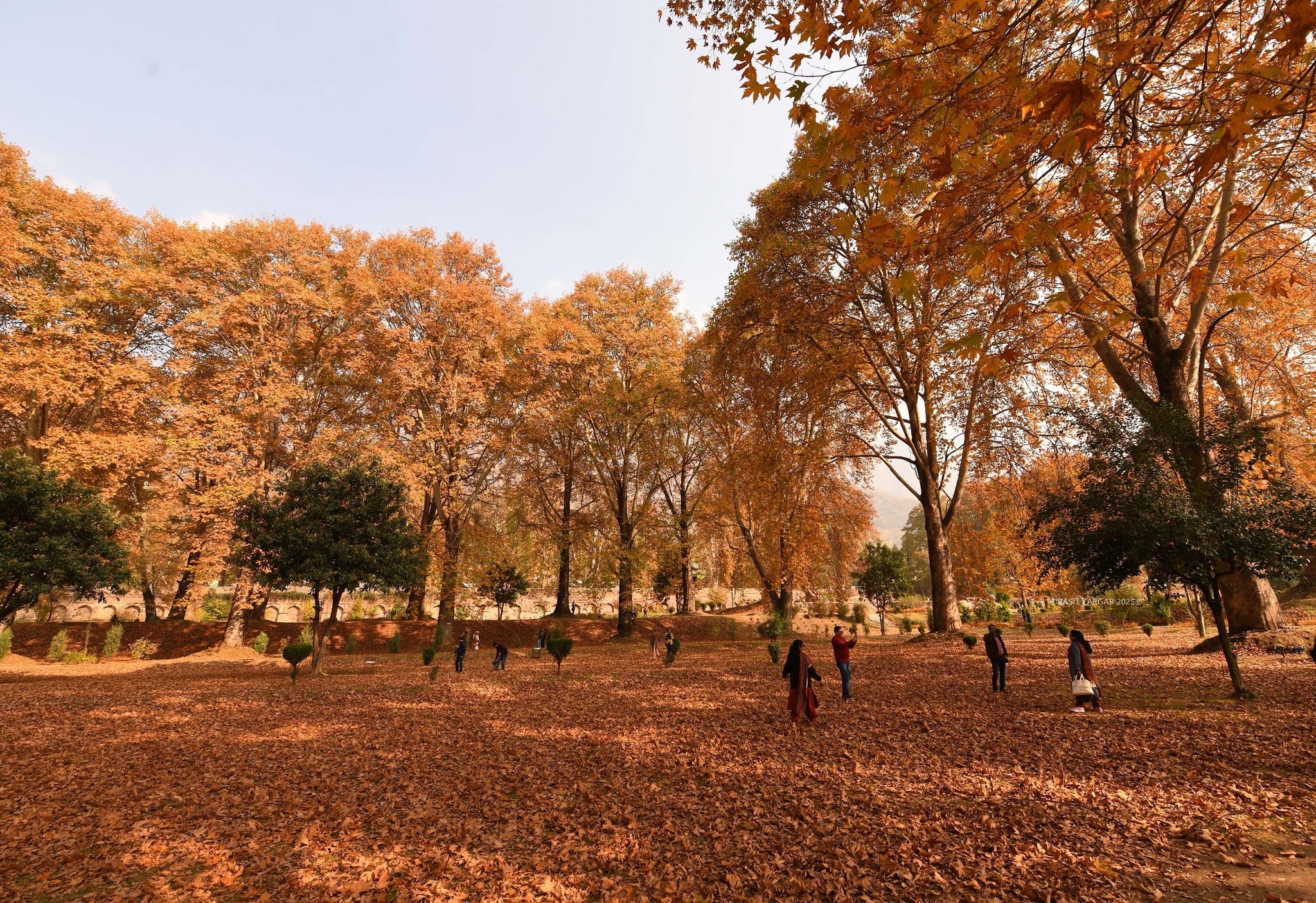
In many ways, Harud becomes both mirror and guide. It reflects the lessons of endurance the Valley has internalised: how to bend without breaking, how to stand bare yet strong, how to allow stillness before movement. The season encourages Kashmiris to unclench their burdens, to let go of habits, fears, or patterns that no longer serve them. And in doing so, it whispers the gentle truth nature repeats every year—that renewal is not an act of sudden transformation, but a slow, steady unfolding.
As the last chinar leaf falls, swirling like a final note in a symphony, autumn leaves Kashmir with a familiar assurance: that vulnerability is not defeat, pause is not stagnation, and letting go is often the first step toward becoming whole again. Just as the Valley braces for the stillness of winter, it also carries within it the quiet promise of spring—a reminder that even after the longest cold, the chinar will burn bright once more.
The views expressed in this article are solely those of the author and do not necessarily reflect the opinions or views of this newspaper
Leave a Reply