
New Delhi, December 1: The Delhi High Court on Monday heard the defamation suit filed by former Jammu & Kashmir Chief Secretary Dr Arun Kumar Mehta against retired IAS officer Ashok Kumar Ranchhodbhai Parmar and several news media platforms, in a case that has quickly become a study in how unverified allegations can be weaponised to undermine governance reforms.
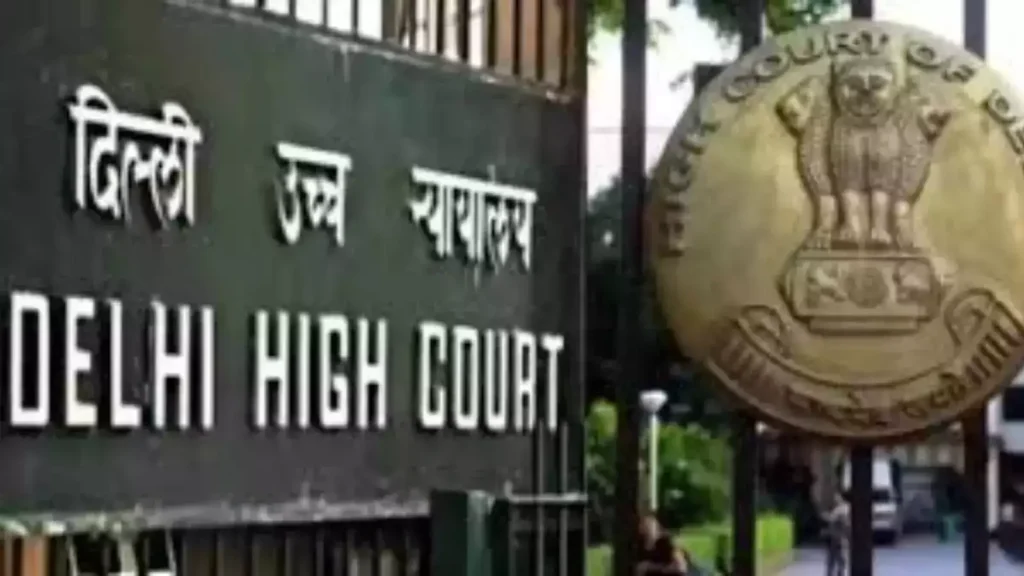
The matter, listed as CS(OS) 859/2025 with accompanying interlocutory applications, was taken up as Item 45 before Justice Purushindra Kumar Kaurav in Court No. 47. The case was filed on behalf of Dr Mehta by advocate Vasudev Sharan Swain, while Senior Advocate Puneet Mittal, Advocate-on-Record Nar Hari Singh, and Senior Advocate Nachiketa Joshi appeared and advanced detailed arguments. The court directed the defendants to file their responses within ___ days, and the matter has been posted for further hearing on ___.
Dr Mehta has sought a permanent mandatory injunction and damages of ₹2.55 crore against Parmar and others.
At the heart of the dispute are letters circulated by Parmar, in which he claimed to have filed corruption complaints against Mehta with the Central Bureau of Investigation (CBI) and the National Commission for Scheduled Castes (NCSC). These claims, however, have not withstood official scrutiny. In replies to RTI applications, both the CBI and NCSC categorically denied receiving any such complaints from Parmar. The situation grew more concerning when RTI responses revealed that many of Parmar’s purported communications—claimed to have been issued in his capacity as Chairman, Bureau of Public Enterprises (BPE)—did not exist in the Bureau’s records at all, raising questions about the authenticity of the widely circulated letters.
Parmar’s credibility faced another setback when the Anti-Corruption Bureau (ACB) examined his allegations concerning governance processes in Jammu & Kashmir and found that none of them could be substantiated. The ACB concluded that the governance systems introduced during Mehta’s tenure—such as BEAMS, PaySys, online sanctioning processes, and e-tendering—had strengthened transparency, reduced discretionary powers, and made public expenditure fully traceable.
Mehta’s suit argues that Parmar’s allegations, which fluctuated wildly between ₹1,000 crore and ₹14,000 crore, were not only factually baseless but malicious in intent, aimed at damaging the reputation of an officer credited with institutionalising transparency in J&K’s public finance administration. The petition also frames the controversy as part of a broader resistance by those unsettled by the shift away from opaque, manual, and discretionary systems toward digital accountability. It further notes that as Chief Secretary, Mehta had no role in contractual matters, which fell under the domain of Contract Committees, and cites contradictions such as allegations tied to periods when Mehta was not even posted in J&K.
Legal observers say the case carries wider institutional implications. With central agencies denying receipt of complaints, with the BPE confirming no record of Parmar’s letters, and with the ACB dismissing his charges, the suit raises a critical question: should public servants be permitted to circulate false or unverified complaints that can derail administrative reforms and tarnish reputations without consequence?
The court is expected to take up further submissions in the coming hearings.
Leave a Reply