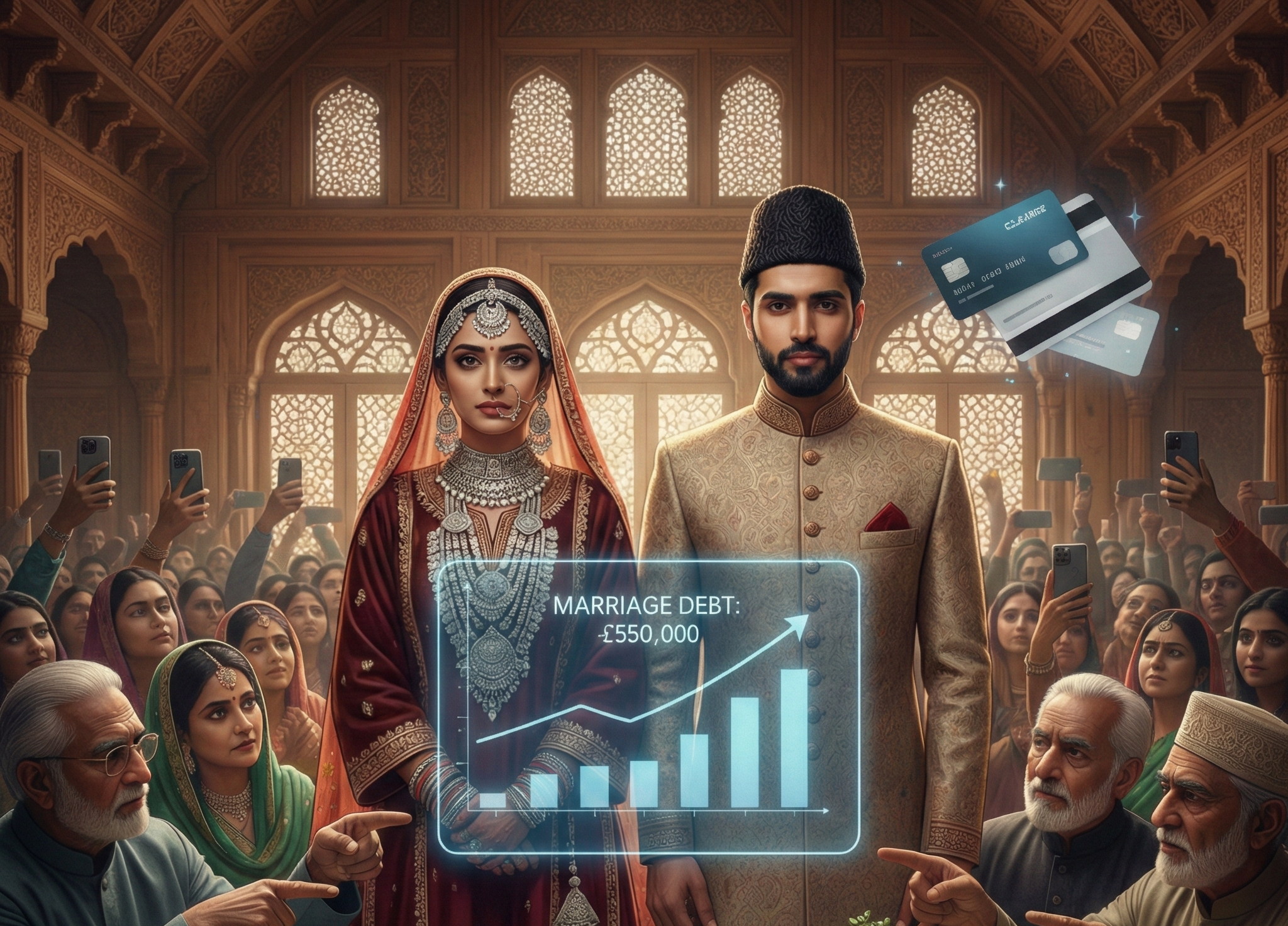
Has the quest for a wealthy spouse overshadowed the need for a good one? We explore how materialism is reshaping modern matrimony.
By Aubaid Ahmad Akhoon
The quest to find a life partner is a journey historically defined by hope, excitement, and the universal longing for companionship. It is a search for a soulmate who offers understanding, moral grounding, and emotional maturity. However, in the contemporary landscape of matrimony, this profound human experience is increasingly colliding with a stark, transactional reality. We are witnessing a paradox where the pursuit of wealth and social status has begun to overshadow the fundamental importance of character, creating a societal bottleneck that is delaying marriages and eroding the sanctity of the institution itself.
In navigating the modern matrimonial market, there is a disconcerting trend where financial dossiers are weighed more heavily than moral fiber. While financial stability is undeniably a pragmatic necessity for a secure future, it was never intended to be the sole criterion for a union. Ideally, material security should serve to enhance a relationship built on virtues like care, love, and mutual respect, rather than replacing them. Yet, the current dynamic suggests that bank balances and property deeds often obscure the significance of kindness, empathy, and shared ethical values. This shift has placed immense pressure on young individuals, forcing them to conform to materialistic ideals that set unrealistic standards for what constitutes a “suitable” match.
This deviation from ethical foundations represents a significant break from cultural and ancestral norms. Our predecessors, though perhaps less affluent in a material sense, generally regarded an individual’s character and lineage of virtue as paramount. They understood that while money fluctuates, the temperament and moral compass of a spouse are constant. By prioritizing financial status over these enduring qualities, modern society has invited a host of challenges that are destabilizing the social fabric.
One of the most alarming consequences of these elevated barriers to entry is the rising age of marriage. As individuals and families wait longer to secure the “perfect” financial match or to accumulate the wealth necessary for extravagant wedding demands, men and women are remaining single well into their thirties and forties. This delay is directly contributing to a demographic shift characterized by declining birth rates. Recognizing the significance of timely unions is no longer just a personal matter but a societal imperative. A collective shift towards prioritizing early, character-driven marriages could address both the personal anguish of loneliness and the broader demographic issues facing the community.
Furthermore, we must address the uncomfortable irony of our times regarding the ease of relationships. It has become increasingly accessible to form illicit or non-marital relationships, while nurturing a legal, religiously sanctioned marriage has become fraught with financial and social hurdles. This inversion of values demands a radical change in attitude. Rather than engaging in sectarian squabbles, religious scholars and leaders from all schools of thought must utilize their platforms—from Friday pulpits to social media—to address this crisis. They must emphasize that a society where the prohibited is easy and the permissible is difficult is a society in decline. As the Quran states, mates are created so that we may dwell in tranquility with them, with love and mercy placed between hearts. This divine purpose is defeated when the path to marriage is paved with insurmountable financial expectations.
The culture of extravagance is a primary culprit in this difficulty. The trend of lavish weddings, particularly in regions like Kashmir, places a crushing burden on families. Advocating for modesty is not merely a suggestion of austerity but a strategy for survival. By controlling spending and promoting simpler ceremonies, we can prevent the financial ruin of newlyweds and their parents, allowing the focus to remain on the union rather than the spectacle.
Compounding these financial pressures are deep-seated social prejudices and deceptive practices. The caste system, ingrained in many societies including Kashmir, remains a detrimental force. Despite religious teachings that explicitly prioritize piety and character over lineage, families often reject compatible matches based on rigid, outdated caste considerations. Additionally, the rise of commercial matchmakers has introduced a layer of opacity, with some exploiting families by selling fake profiles for financial gain. A move toward a transparent, community-based matrimonial system is essential to foster trust.
Ultimately, the Prophet Muhammad (PBUH) taught that the best people are those who are best to their wives, highlighting that the true measure of a person is their conduct within the home, not their standing in the bank. This article serves as a call to action for elders, parents, and the youth to reshape their perspective. We must dismantle the walls of materialism, caste, and extravagance that we have built around the institution of marriage. By collectively working towards an ethical, transparent, and character-driven approach, we can pave the way for a society where respect forms the bedrock of relationships, transcending the limitations imposed by financial motives and deceptive societal norms.
The views expressed in this article are solely those of the author and do not necessarily reflect the opinions or views of this newspaper. The author can be reached at [email protected]
Leave a Reply