“Safar Taveel Hai, Bhoj Bhi Bari Hai. Par Har Surat, Yeh Safar Jaari Hai.” (The journey is long, the burden is heavy. But at all costs, the journey continues.)
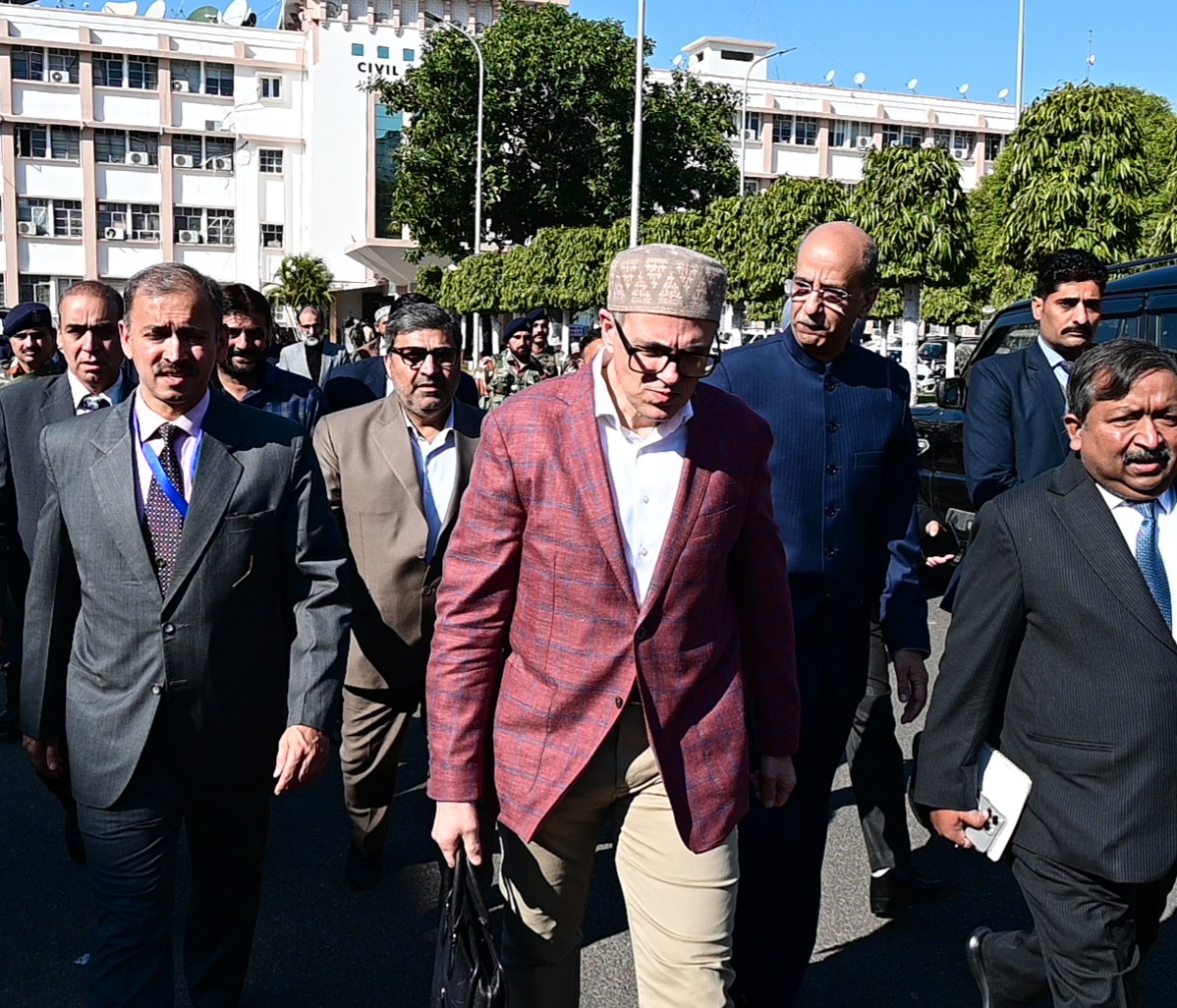
With these poetic words resonating through the august House, the Finance Minister rose to present the Second Budget for the Union Territory of Jammu and Kashmir for the fiscal year 2026-27. It was a moment laden with gravity. The past year has tested the region’s spirit like few others in recent memory—the geopolitical friction, the shock of the terror attack in Pahalgam, and the biblical floods that battered the Jammu region in late summer.
Against this backdrop of adversity, the Government unveiled a net budget of ₹1,13,767 crore, positioning it not just as a financial statement, but as a manifesto of survival and eventual thrive. The narrative was clear: J&K is bruised but unbowed. The administration is betting big on capital expenditure to stimulate an economy projected to grow at 9.5% to ₹3,15,822 crore, while simultaneously rolling out a massive social safety net for the poorest citizens.
“This Budget is not merely a ledger of figures; it is a fiscal compass charting our path towards a brighter horizon,” the Finance Minister declared during the opening address. “It lays strong foundations for enduring economic growth, social harmony, and sustainable prosperity. We will turn obstacles into stepping stones.”
The Welfare Umbrella
Perhaps the most headline-grabbing aspect of the 2026-27 budget is its aggressive pivot toward social welfarism, targeting the Antyodaya—the poorest of the poor. In a move that will likely yield significant political goodwill, the government announced the provision of six free LPG cylinders annually to all AAY (Antyodaya Anna Yojana) households.
“To reduce the household energy burden on vulnerable families and protect poor households from inflationary pressures, I propose to provide six free LPG cylinders per year to all AAY households,” the Finance Minister announced, framing it as a direct cost-of-living relief measure.
The welfare basket doesn’t stop at energy. In a bid to ensure that poverty is not a barrier to education, the budget proposes a full fee waiver for students from AAY families in government schools (Class 9-12) and undergraduate colleges. Additionally, a new sponsorship scheme for orphans will provide ₹4,000 monthly via Direct Benefit Transfer to 6,000 children who have lost their parents and lack other support.
Social security pensions have also seen a hike, with rates for the elderly rising to ₹1,500 and ₹2,000 depending on age, expanding the safety net to over 10 lakh beneficiaries.
Mission Youth
Unemployment remains a critical issue in the region, and the budget addresses this with a mix of immediate recruitment and long-term entrepreneurship. The government has committed to fast-tracking the recruitment of 23,800 posts—including 2,800 gazetted and 14,000 non-gazetted positions—in a time-bound manner.
Beyond government jobs, the flagship Mission YUVA is the centerpiece of the employment strategy. Anchored on the “4-C framework” (Culture, Capacity, Capital, Connectivity), the mission has already disbursed nearly ₹800 crore to 16,500 enterprises.
Addressing the long-standing grievance of daily-rated workers, the Finance Minister struck a hopeful yet cautious note. “I assure this House that my Government is committed to finding a just and humane resolution to this long-pending issue,” the Minister stated. “Based on the recommendations of the high-level committee, a structured and phased roadmap for regularisation will be announced in the coming period.”
Agriculture
The primary sector, the backbone of J&K’s economy, is undergoing a structural shift under the Holistic Agriculture Development Programme (HADP). The budget outlines a vision to move from subsistence farming to high-value processing.
A major focus is the “White Revolution.” The government aims to increase milk processing from a meager 4% to 25% in the coming years, establishing seven new milk processing plants with a capacity of 1 lakh liters per day each.
Key Highlights at a Glance
| Sector | Key Announcement |
| Welfare | 6 Free LPG cylinders/year for AAY households; Fee waivers for poor students. |
| Employment | 23,800 new government posts to be filled; Roadmap for daily wager regularization promised. |
| Agriculture | 7 new Milk Processing Plants; Top-up subsidy for CA Stores; ₹6,594 Cr crop insurance. |
| Power | 24/7 Power target by 2027-28; Free solar rooftop for 2.22 lakh AAY families. |
| Health | New Emergency Hospitals in Uri & Poonch; Cancer Control Strategy rollout. |
| Finance | Fiscal Deficit at 3.69%; Diesel rebate reduced by ₹2/liter. |
For the horticulture sector, specifically the apple industry which was hit hard by climate anomalies, the government is expanding Controlled Atmosphere (CA) storage. A top-up subsidy will encourage storage facilities in districts beyond the saturated hubs of Pulwama and Shopian. Furthermore, a Restructured Weather Based Insurance Scheme (RWBIS) with a sum insured of over ₹6,500 crore aims to protect growers of apple, saffron, mango, and litchi from the vagaries of nature.
Infrastructure
Capital expenditure is set at ₹33,127 crore, with a heavy emphasis on physical connectivity. The completion of the USBRL (Udhampur-Srinagar-Baramulla Rail Link) has finally connected the Kashmir Valley to the rest of India by train, a historic milestone referenced with pride in the speech.
The road network is seeing an investment of over ₹61,000 crore, with focus on the Delhi-Amritsar-Katra expressway and the strategic Zojila Tunnel. The budget also introduces PMGSY-IV, aiming to connect 2,400 unconnected rural habitations.
“The soul of Jammu and Kashmir has been forged in resilience,” the Minister noted while discussing the rebuilding of infrastructure damaged by floods. “We are building a business-friendly ecosystem that invites innovation and investment, turning Jammu and Kashmir into a hub of enterprise.”
Power
The power sector remains the Achilles’ heel of the administration, contributing massively to the fiscal deficit. However, the budget outlines a “forward-looking plan” to achieve 24/7 power supply by 2027-28. This relies on the commissioning of massive hydropower projects like Pakal Dul (1000 MW) and Kiru (624 MW), scheduled to come online this year.
In a push for green energy, the government proposes the “Solar Village” initiative, aiming to saturate 100 tribal villages with solar power, alongside the installation of rooftop solar for 2.22 lakh AAY households under the PM Surya Ghar Muft Bijli Yojana.
Tourism: Rebranding After the Shock
The Pahalgam terror attack cast a long shadow over the tourism sector, yet the numbers show resilience—1.61 crore tourists visited in 2025. The budget proposes a shift toward high-end, diverse tourism to mitigate risks. This includes an International Film Festival in 2026-27 to bring global cinema to the valley and the development of new circuits to decongest traditional hotspots like Gulmarg.
“We will turn obstacles into stepping stones and aspirations into achievements,” the Minister said, referring to the tourism sector’s recovery. “Our focus will be on developing new world-class tourist destinations and positioning Jammu and Kashmir as a global tourism brand.”
Health and Education
With two AIIMS and renewed focus on peripheral medical colleges, the health sector allocation of ₹1,866 crore (Capex) aims to reduce the referral burden on Srinagar and Jammu cities. A critical addition is the establishment of “Emergency and Accident Hospitals” in border areas like Uri and Poonch, recognizing the unique vulnerability of these regions to cross-border shelling and difficult terrain.
In education, the implementation of the National Education Policy (NEP) continues, with a novel “JK e-Pathshala” DTH channel to provide education in remote areas without internet dependence.
The 2026-27 Budget for Jammu & Kashmir is a complex document that attempts to serve many masters. It seeks to placate a populace weary of conflict and natural disasters with generous welfare; it tries to reassure the Centre with fiscal reforms and digitization; and it attempts to seduce investors with infrastructure and industrial policies.
While the reduction in the diesel rebate and the high fiscal deficit of 3.69% indicate that the financial road ahead is rocky, the administration is banking on the multiplier effect of its capital investments.
As the session concluded, the Finance Minister’s opening couplet seemed to hang in the air. The “safar” (journey) is indeed long, and the “bhoj” (burden) of debt and geopolitics is heavy. But by prioritizing the vulnerable while pouring concrete for the future, the J&K government has signalled that it intends to keep moving forward, no matter the cost.
Leave a Reply