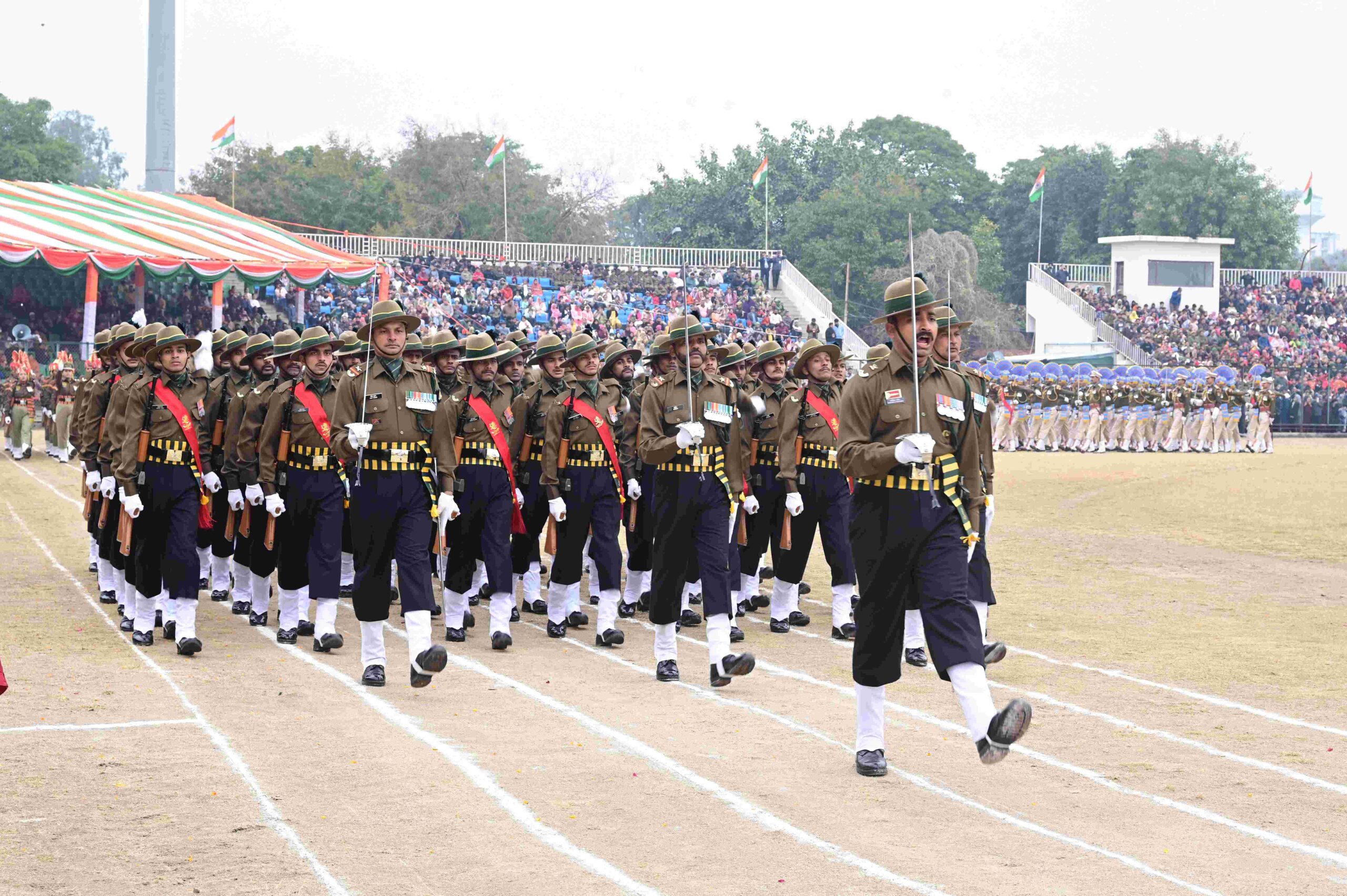
From the termination of the Indus Water Treaty to the arrival of the first freight train in the Valley, the 77th Republic Day address outlines a radical shift in strategy. The message is clear: the era of managing conflict is over; the era of aggressive integration has begun.
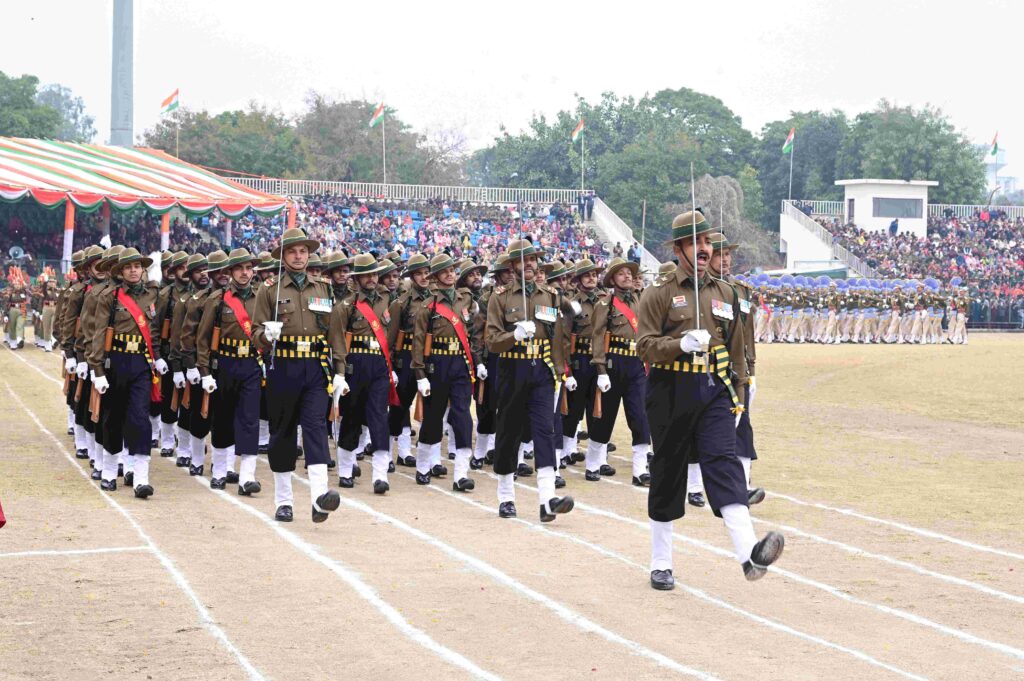
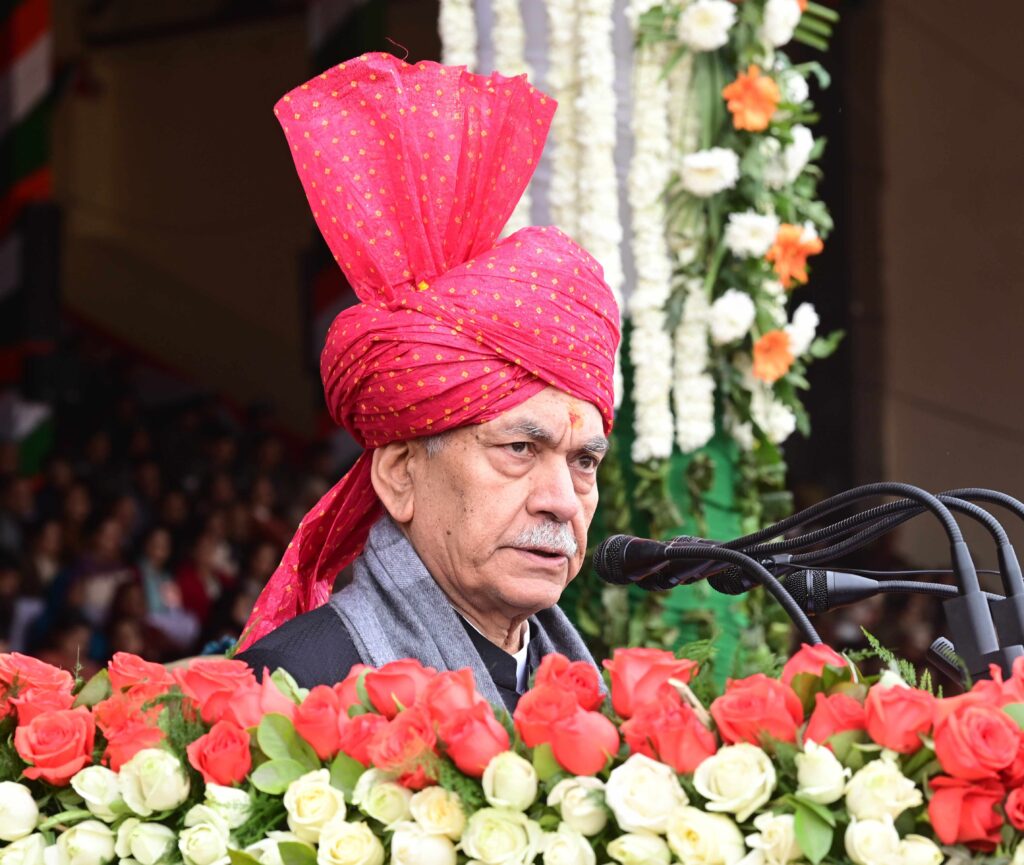
The 77th Republic Day celebrations in Jammu and Kashmir were marked this year not by the usual platitudes of peace, but by the drawing of a definitive, scorching line in the snow. Addressing the Union Territory from Jammu, the Lieutenant Governor delivered a speech that functioned less as a ceremonial address and more as a geopolitical manifesto, outlining a doctrine where aggressive military deterrence coexists with a radical economic overhaul. Against the backdrop of the Tricolour, the administration signalled to both Islamabad and New Delhi that the era of managing conflict is over; the era of ending it, by force if necessary, by development where possible, has begun.
Operation Sindoor
The address came in the long shadow of the brutal Pahalgam terrorist attack earlier in April 2025, an event that clearly recalibrated the region’s security architecture. For the first time, the administration officially detailed “Operation Sindoor” as a foundational shift in India’s strategic resolve. In what was perhaps the most muscular statement of the day, the Lieutenant Governor declared that India has now drawn a new red line where any terrorist attack on its soil would be treated as an act of war. He described Operation Sindoor not merely as a military action but as a declaration of intent, noting that security forces struck at the heart of the enemy and dismantled their terror infrastructure. The message to the international community was framed as one of rational restraint rooted in the legitimate right to self-defence, with the LG asserting that whether terrorist networks operate across the border or within it, they will be completely neutralized.
This militaristic firmness was paired with a significant geopolitical maneuver that will likely reverberate through diplomatic corridors for months: the termination of the Indus Water Treaty. The administration framed this not as a breach of protocol but as a necessary non-kinetic measure, driven by the principle that bloodshed and cooperation cannot coexist. The declaration that India’s water resources will now be utilized exclusively for India’s development marks a profound shift in sub-continental hydro-politics, aimed at squeezing the resources of adversaries while bolstering domestic capacity. The Lieutenant Governor was unequivocal, stating that this was a direct response to the hostility faced by the state, ensuring that the resources of the land serve the people of the land.
The 11% Surge
Yet, the narrative of the day was not solely focused on the border. The administration went to great lengths to illustrate that while the gun protects the peace, it is the rupee that will sustain it. Despite the shadow of the Pahalgam incident and subsequent floods, which saw tourist numbers dip to 1.61 crore in 2025 from the previous year’s high of 2.36 crore, the economic indicators presented were surprisingly robust. The Union Territory’s economy is estimated to register a growth rate of 11 percent at current prices, with the Gross State Domestic Product (GSDP) rising to ₹2,62,458 crore for 2024–25. This resilience was attributed to a structural shift from a subsistence economy to an industrial one. The LG highlighted that since 2020, over 2,200 industrial units in the organized sector have commenced production, injecting nearly ₹16,000 crore into the economy and generating employment for over 73,000 people.
Tracks of Change
This economic pivot is underpinned by what can only be described as an infrastructure blitzkrieg. The long-cherished dream of connecting Kashmir with the rest of India through train services has finally been realized, a logistical triumph that promises to alter the economic geography of the valley permanently. The operationalization of the first-ever Food Corporation of India food-grain freight train was cited as a game-changer, ensuring that logistics are no longer held hostage by the vagaries of weather or the blockage of the National Highway. This is not just about moving food; it is about integrating the Valley into the national supply chain as an equal partner. The address detailed an investment of over ₹61,000 crore in road networks, including the Delhi-Amritsar-Katra Expressway and the Zojila Tunnel, which is nearing completion. This connectivity is not just about moving people; it is about moving goods, ideas, and security assets with unprecedented speed, effectively shrinking the psychological and physical distance between Srinagar and New Delhi.
The Yellow Revolution
While the highways and railways dominate the headlines, a quieter, perhaps more sustainable revolution is taking place in the fields. The speech highlighted a “Yellow Revolution” in the agricultural sector, a strategic move to wean the region off traditional, low-yield crops. The area under oilseeds has expanded substantially from 1.4 lakh hectares to 2.1 lakh hectares, resulting in a doubling of oilseed production. This is a deliberate attempt to create high-value cash crops for the region’s farmers. Similarly, honey production has surged to nearly 3,900 metric tonnes, positioning Jammu and Kashmir as a leading honey-producing region in the country. The administration’s focus on obtaining Geographical Indication (GI) tags for local heritage crops like Kashmir Saffron, Bhaderwah Rajma, and Mushkbudji rice indicates a sophisticated strategy to monetize the region’s brand value globally. The integration of 17 mandis with the e-NAM platform, facilitating trade worth over ₹1,680 crore, suggests that the J&K farmer is finally entering the digital marketplace.
Mission YUVA
The speech also navigated the delicate terrain of social reintegration and the youth. The administration’s “Mission YUVA” was presented as the antidote to radicalization, a massive engagement program targeting the creation of 1.35 lakh entrepreneurial units. The Lieutenant Governor emphasized that employment is being provided not to those associated with terrorism, but to families who have suffered because of it, framing this as a moral corrective to decades of suppressed pain. The contrast drawn was sharp: while the youth are being steered toward “College on Wheels,” startups, and the ONDC buyer app, the administration is simultaneously battling a severe drug menace, which the LG identified as one of the most serious challenges confronting society today. He called upon the community to isolate elements that justify violence and to actively dismantle the terror ecosystem, linking the fight against drugs directly to the fight against terror.
The Saturation Doctrine
The emphasis on “saturation” was another recurring theme—a bureaucratic term that here implies the total coverage of welfare schemes to eliminate the grievances that often fuel unrest. From providing piped water to 81 percent of rural households under the Jal Jeevan Mission to the installation of over 10 lakh smart prepaid power meters, the state is attempting to assert its legitimacy through service delivery. The administration’s success in reducing power losses by 9 percent while increasing revenue by 16 percent is a testament to a hardening of administrative discipline. The LG noted that places that once echoed with voices of division are today alive with the colours of the Tricolour, framing these development metrics as the true indicators of emotional integration with the Union. This sentiment was reinforced by the mention of the 150th anniversary of Vande Mataram, which the LG described as having transformed into a people’s movement, rekindling a spirit of devotion to the motherland.
Healing Wounds
However, the scars of conflict remain central to the government’s rhetoric. The LG paid specific tribute to the civilians and personnel lost in the Pahalgam attack and the accidental explosion in Nowgam, commending the J&K Police for uncovering a nationwide terror network the previous November. The promise of justice was absolute, with the LG assuring the people that every case linked to terrorism will be thoroughly examined and the guilty will face the strictest punishment. This includes a reopening of past wounds to ensure that those who suffered decades of pain finally receive dignity. The mention of compassionate appointments for the Next of Kin of terror victims, including those from the Kathua and Operation Sindoor incidents, served as a reminder that the state is now prioritizing the victims of violence over the perpetrators.
Significantly, the speech also highlighted the mainstreaming of tribal communities, a demographic often sidelined in the region’s complex political narrative. The disbursement of over ₹8 crore in scholarships to Scheduled Tribe students and the operationalization of the Tribal Research Institute in Srinagar signal a concerted effort to bring the Gujjar and Bakerwal communities into the administrative fold. The celebration of Janjatiya Gaurav Divas in the frontier district of Poonch serves as a symbolic embrace of these border populations, who are crucial to the region’s security grid.
In the realm of healthcare, the administration touted the “SEHAT” app and the massive expansion of medical infrastructure, including two AIIMS and 15 new medical colleges. The construction of Critical Care Blocks under the PM-ABHIM scheme aims to prepare the region for future health emergencies, ensuring that the healthcare system is as resilient as the security grid. The narrative here is one of self-sufficiency; J&K is no longer looking to be a dependent territory but a hub of medical excellence in the North. The Lieutenant Governor also touched upon the housing sector, noting the completion of over 3 lakh houses under the Pradhan Mantri Awas Yojana. The development of satellite townships and the ambitious Smart City projects in Jammu and Srinagar are intended to urbanize the region rapidly, creating new economic centers away from the traditional, congested downtowns.
A New Dawn
As the speech concluded, the focus returned to the youth and the future, invoking the names of para-archers Sheetal Devi and Rakesh Kumar as symbols of a new, aspiring Jammu and Kashmir. These athletes, who have created history through their perseverance, serve as metaphors for the state itself—overcoming physical and structural limitations to compete on the global stage. The LG’s call to action was for a collective dismantling of the “terror ecosystem,” isolating those who justify violence. In his closing, he articulated a vision of a “Naya J&K” that is no longer a geopolitical flashpoint but a hub of sports, wellness, and industry.
The address also contained a subtle but firm message to the banking and financial sectors. The turnaround of J&K Bank, with net NPAs declining to 0.85 percent, was presented as a proxy for the state’s overall return to financial health. This fiscal discipline, combined with the extension of the Special Assistance to States for Capital Investment scheme, suggests that New Delhi is willing to bankroll J&K’s development, provided the results are visible and measurable.
This Republic Day, the message from Jammu was unmistakable: The state has the will to fight and the capital to build. The termination of treaties and the launch of military operations like Sindoor suggest that the administration’s patience with cross-border interference has run its course. Simultaneously, the rush of trains, the hum of industrial units, and the yellow bloom of mustard fields suggest that its ambition is just getting started. As the Lieutenant Governor remarked to the gathering, a new dawn has arrived in Jammu and Kashmir, one where the only red lines are the ones drawn by the state itself, and where the future is being written not in the ink of treaties, but in the sweat of its youth and the resolve of its soldiers. The 77th Republic Day may well be remembered as the moment J&K stopped waiting for peace and started enforcing it.
Leave a Reply