Nearly 38 new cancer cases every day. Overburdened hospitals. Mounting treatment costs. Jammu & Kashmir is staring at a silent health emergency that demands faster screening, advanced technology and a radical shift toward prevention.
As the calendar turned to February 2026 the healthcare landscape of Jammu and Kashmir faced a sobering reality check. Behind the scenic vistas and the daily rhythms of life in the Union Territory a silent health crisis has been gathering momentum. Data released around World Cancer Day has revealed that the region is witnessing an average of 35 to 38 new cancer cases every single day. This alarming statistic has triggered a collective call from leading oncologists and government officials for an urgent overhaul of screening protocols and the introduction of next-generation medical technology.
The gravity of the situation was underscored by fresh data presented in the Legislative Assembly which painted a stark picture of the preceding year. The government revealed that in 2025 alone approximately 10,000 cancer cases were registered across three major tertiary care hospitals: SKIMS Soura GMC Jammu and GMC Srinagar. This surge has placed immense pressure on the existing healthcare infrastructure prompting authorities to pledge new financial packages for the poor and accelerated upgrades to diagnostic machinery.
The Numbers That Define the Challenge
The sharp rise in malignancy rates was brought to light by Dr Zahoor Ahmad a senior oncologist at the Sher-i-Kashmir Institute of Medical Sciences (SKIMS). Speaking on the sidelines of World Cancer Day events he provided a grim assessment of the current trajectory.
“Cancer is rapidly increasing in Jammu and Kashmir. On average, we are witnessing around 35 to 38 new cancer cases every single day across the UT, and this number is likely to grow further in the coming years,” Dr Zahoor stated.
His on-ground observations were corroborated by official government statistics released shortly after by the Health and Medical Education Department. Responding to queries in the assembly Minister Sakeena Itoo detailed the escalating patient load. SKIMS Soura the region’s premier medical institute recorded a steady year-on-year increase. The institute registered 5,108 cases in 2023 which rose to 5,387 in 2024 and climbed further to 5,791 in 2025 marking a 7.5 percent increase in the last year alone. In total over 16,000 cases have been documented at SKIMS in just three years.
The trend is not isolated to the Kashmir valley. GMC Jammu reported a significant spike registering 1,767 cases in 2023 2,206 in 2024 and 2,569 in 2025. While GMC Srinagar saw a slight fluctuation with 1,558 cases in 2025 the overall burden remains critically high.
Health officials have sought to contextualize these rising numbers suggesting that better detection is a contributing factor. “The observed increase is likely influenced by significantly improved diagnostic capabilities and enhanced detection rates across healthcare institutions,” Minister Itoo noted cautioning that conclusive interpretation requires further epidemiological research.
A Unique Regional Profile
While the rising numbers mirror global trends experts point out that Jammu and Kashmir has a distinct cancer profile influenced by local geography and lifestyle. Dr Manzoor Head of the Department of Radiation Oncology at GMC Srinagar explained that while the overall burden matches national patterns specific types of malignancies are more prevalent in the region.
“The overall cancer burden here is similar to what is seen across India and the world. However, due to our unique geographical and lifestyle factors, the spectrum of cancers in Kashmir is slightly different,” Dr Manzoor explained.
He highlighted a disturbing prevalence of gastrointestinal cancers particularly affecting the oesophagus and stomach alongside high incidence rates of breast and lung cancers. This specific profile makes generic screening protocols less effective necessitating a tailored approach.
“This makes it extremely important to focus not just on treatment but on large-scale screening and prevention strategies, especially for gastrointestinal cancers,” he said calling for government intervention at the community level. “We require mass screening programs, early diagnostic facilities and widespread public awareness so cancers can be detected at an early stage, where cure is possible. The government must take concrete steps to establish these programs at the community level.”
The Technology Gap
Despite the availability of standard treatment modalities the medical fraternity is advocating for the inclusion of Jammu and Kashmir in the map of advanced oncological care. Dr Zahoor noted that while most tertiary care hospitals are equipped for general treatment there is a critical gap in high-end technology.
“Most of the required treatment modalities are available within J&K. Only a few highly advanced technologies like Proton Radiotherapy are not available here, which are limited to very few centres in the entire country,” Dr Zahoor pointed out.
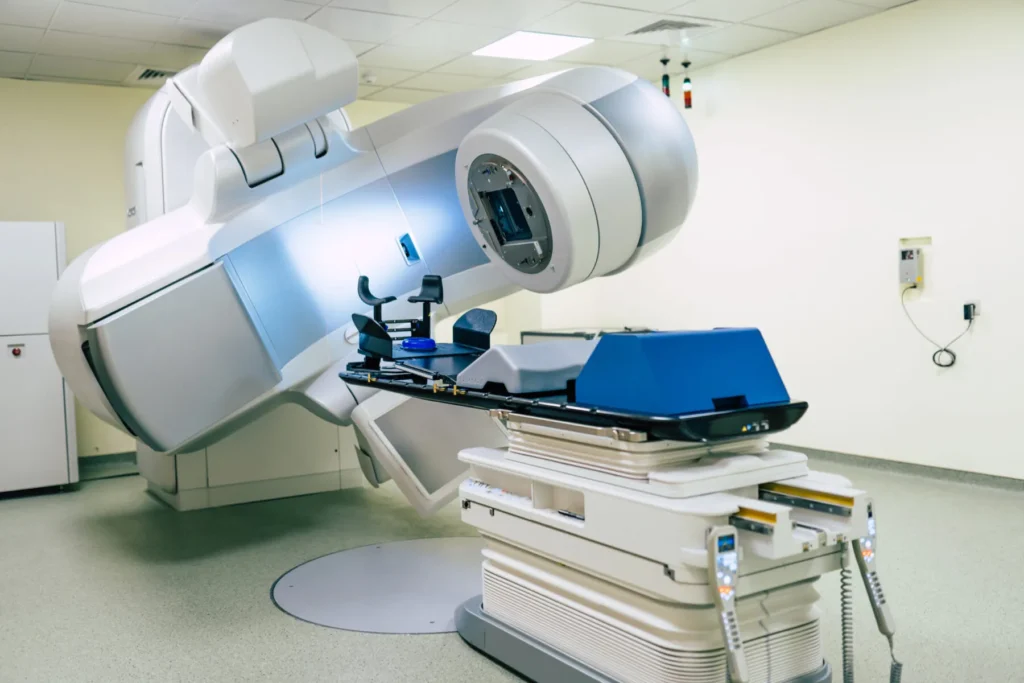
Proton Beam Therapy is viewed as a game-changer in modern oncology particularly for pediatric cancers and tumors located near vital organs. Unlike traditional X-ray radiation which can damage surrounding healthy tissue proton therapy delivers a precise beam of protons that stops at the tumor site minimizing collateral damage.
Dr Manzoor emphasized the necessity of bringing this technology to the region. “One of the most modern radiotherapy technologies today is Proton Beam Therapy, which causes less damage to surrounding healthy tissues and improves treatment outcomes. Currently, it is available only at three centres in India, with a few more in the pipeline,” he said adding that “J&K should also be included among the regions where this advanced facility is established in the future.”
Government Response and Infrastructure Upgrades
Recognizing the mounting crisis the political leadership has signaled a shift in priority toward healthcare strengthening. Chief Minister Omar Abdullah speaking on the occasion addressed the dual challenge of infrastructure and affordability. He candidly admitted the severity of the situation.
“There is no doubt that the incidence of cancer is increasing. What are the reasons behind this? Only doctors can tell us?” the Chief Minister remarked emphasizing the need for medical experts to lead the inquiry into root causes.
He outlined a three-pronged strategy involving research funding healthcare system improvements and manpower management. “One is to fund research and development and create proper infrastructure for it. Second is to improve the healthcare system. Our state cancer institutes should function properly, have adequate infrastructure, and doctors should be able to work effectively,” he said.
Crucially the Chief Minister addressed the financial toxicity of cancer treatment which often pushes families into poverty. “For our financially weaker sections, getting cancer treatment is very difficult because medicines are very expensive. We have thought about a special package for them, which will be announced later,” he promised.
On the operational front the Health Minister provided updates on the State Cancer Institutes (SCI). The 100-bedded SCI at SKIMS Soura established with a Rs 120 crore grant under the National Programme for Prevention and Control of Cancer Diabetes Cardiovascular Diseases and Stroke (NPCDCS) is currently running at 80 percent functionality. While the facility was commissioned in late 2020 infrastructure development continues.
“However, the proposal for the creation of dedicated manpower, including doctors, nursing staff, paramedical, technical and other support personnel, on the analogy of the State Cancer Institute, Jammu is under active consideration by the Government of Jammu and Kashmir,” Minister Itoo stated.
To address diagnostic delays the government has approved the procurement of a new PET scan machine for GMC Srinagar at an estimated cost of Rs 16 crore. This move aims to reduce the dependency on SKIMS which has seen its PET scan volume jump from 1,410 in 2024 to 2,250 in 2025.
The Future lies in Prevention
As infrastructure plays catch-up medical experts are pivoting their focus toward preventive oncology. Dr Ashraf Ashia a noted oncologist stressed that the battle against cancer cannot be won in hospitals alone.
“Most established cancer treatment modalities are already available in our UT. However, the future lies equally in prevention,” Dr Ashraf said.
He advocated for the widespread adoption of vaccines such as those against the Human Papillomavirus (HPV) which can prevent cervical and other cancers. He also pointed to the emerging role of genetics in treatment. “Alongside this, genetics-based therapies and biotherapy are also emerging as strong tools in modern cancer treatment,” he added.
The consensus among the medical community is clear while hospital beds and machines are vital the ultimate solution involves a societal shift. Doctors are urging the public to adopt healthier lifestyles undergo regular health check-ups and stay alert to early symptoms.
As 2026 unfolds the data from Jammu and Kashmir serves as a stark warning. With nearly 38 new cases emerging daily the race is on to modernize facilities subsidize costs and educate the populace before the silent crisis overwhelms the valley’s healthcare system. The government’s promise of a special financial package and the procurement of advanced diagnostic tools offer a glimmer of hope but for the thousands of families navigating this diagnosis the speed of implementation will be the true measure of success. (With inputs from KNO)
Leave a Reply