A child is like wet clay, and the impressions we make early on last a lifetime. Learn why “doing it for them” might be holding them back and how giving your child the freedom to make small choices today builds the leaders of tomorrow
By Arshid Dar
The foundation of a successful and fulfilling life is often built long before a child enters the workforce or even a secondary classroom. It is rooted in the quiet, steady development of self-confidence during the formative years. In an era where the pressures of academic performance and social comparison are amplified by digital connectivity, the role of parental guidance has never been more vital. A child enters the world like wet clay, pliable and receptive to the impressions made by their primary caregivers. Those who possess a sturdy sense of self-esteem are consistently more willing to embrace new challenges, perform better in diverse environments, and navigate the complexities of social competition with resilience. Conversely, a lack of confidence can act as a tether, preventing talented children from exploring their potential and leaving them feeling sidelined by their more self-assured peers.
The modern landscape of parenting presents unique hurdles to this developmental goal. With many households featuring two working parents, children frequently spend a significant portion of their day in institutionalized care. While these environments offer socialization, they cannot replace the focused emotional nourishment provided by a parent. Without that intentional bond, we see a rising tide of anxiety, depression, and emotional burnout in increasingly younger demographics. Parental care is the primary antidote to these issues, serving as the essential scaffolding upon which a child’s identity is built. To foster a truly confident individual, one must look beyond grand gestures and focus on the small, daily habits that reinforce a child’s sense of worth and agency.
True confidence begins with the art of appreciation. It is a common mistake to reserve praise only for the moments of victory or the attainment of a perfect score. To cultivate a growth mindset, parents must shift their focus toward recognizing effort regardless of the outcome. When a child attempts a difficult task and fails, acknowledging their courage to try prevents the development of a paralyzing fear of failure. Whether it is the simple pride of folding a tidy paper boat or the discipline required to memorize a poem, these small wins deserve recognition. A child who feels seen and encouraged for their persistence is far more likely to approach the world with an open mind rather than withdrawing into a complex of inadequacy.
Equally important is the discipline of avoiding comparison. In a competitive society, it is tempting to use a sibling’s success or a friend’s grades as a benchmark for a child’s progress. However, this tactic is almost always counterproductive. Every child possesses a unique constellation of talents and limitations. When parents draw comparisons, they inadvertently signal to the child that their value is relative rather than inherent. This practice does not breed excellence; instead, it fosters resentment, emotional stress, and an inferiority complex that can persist well into adulthood. While healthy competition has its place, the ultimate goal should be to encourage a child to be a better version of themselves than they were yesterday, rather than a carbon copy of someone else.
Parents must also remain cognizant of their role as the child’s first and most influential teachers. The family unit serves as a primary classroom where children learn not through lectures, but through observation. If a parent approaches their own life with discipline and a positive outlook, the child will naturally mirror those behaviors. Simple acts, such as making the bed every morning or handling a mistake with grace, provide a blueprint for the child to follow. By becoming conscious of their own habits, parents can model the very confidence and competence they wish to see in their offspring.
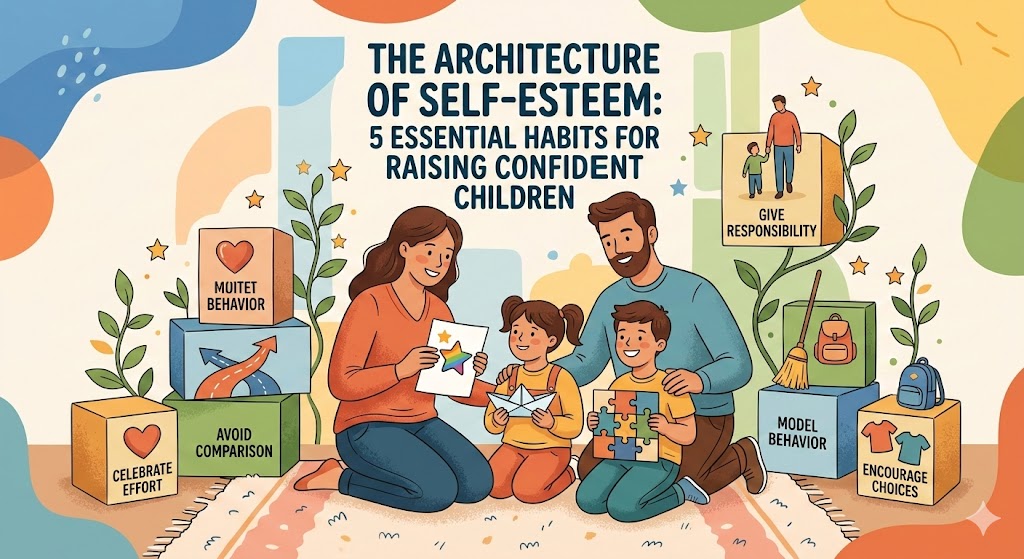
Autonomy is another critical pillar of self-esteem. It is often easier for a mother or father to step in and complete a task to save time or avoid a mess, but this protective instinct can inadvertently hinder growth. Giving a child small, age-appropriate responsibilities—such as tidying their toys, finishing a puzzle, or managing their own mealtime—instills a sense of independence. When a child completes a task on their own, they receive a tangible internal reward: the knowledge that they are capable. Over-functioning for a child creates a cycle of dependency that leaves them ill-equipped for the realities of the world. By stepping back and allowing for a bit of a mess, parents allow for the birth of a capable individual.
Finally, confidence is bolstered when a child feels their voice has weight. Even at the age of five or six, children begin to form preferences, from the clothes they wear to the activities they enjoy. When parents dismiss these choices or impose their own will without explanation, it can diminish a child’s sense of agency. While it is not always possible to agree with a child’s decision, engaging with them in a rational and kind manner is essential. Allowing them to experience the natural consequences of a safe choice provides a much more powerful lesson than a forced mandate. By respecting their developing identity, parents gift their children the ultimate tool for the future: the belief that they are worthy of being heard.
The views expressed in this article are solely those of the author and do not necessarily reflect the opinions or views of this newspaper
Leave a Reply