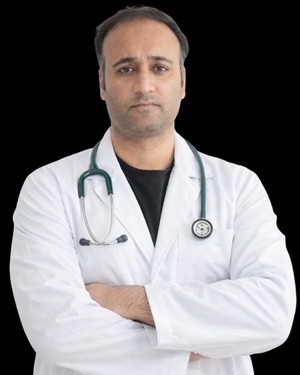
Dr. Wahid Akbar warns that lifestyle-driven metabolic syndrome is fueling an epidemic; early detection and lifestyle shifts remain the best defense.
Across the globe, liver disease is emerging as a primary cause of mortality, and the Kashmir Valley is no exception. What was once considered a secondary health concern has now morphed into a “silent epidemic,” with an estimated 23% to 30% of the local population affected by fatty liver disease.
In an exclusive sit-down with Jahangeer Ganaie, Dr. Wahid Akbar, Consultant Gastroenterologist at Amandeep and Ujala Hospital, Srinagar, unpacks the drivers behind these alarming statistics. From the impact of “metabolic syndrome” to the rising incidence of Hepatitis and alcohol-related damage, Dr. Akbar provides a comprehensive roadmap for prevention and recovery.
Q: Dr. Akbar, looking at the global landscape, how severe is the burden of liver disease today?
Dr. Wahid Akbar: It is staggering. The World Health Organization (WHO) consistently ranks liver disease—encompassing cirrhosis, liver cancer, and viral hepatitis—among the top global killers. We are currently witnessing a silent epidemic of fatty liver disease that doesn’t discriminate by age; it is affecting both children and adults at rates as high as 30% globally.
Q: How does this translate specifically to the Kashmir Valley?
Dr. Akbar: Kashmir is facing a major public health crisis. Our prevalence of fatty liver is exceptionally high, sitting between 23% and 30%. We are seeing a “perfect storm” of metabolic syndrome and poor dietary habits. Furthermore, we’ve noted a rising incidence of Hepatitis C and Alveolar Echinococcosis.
In a screening of over 5,000 individuals in South Kashmir, 2.4% tested positive for Hepatitis B alone. When you factor in variants A, C, and E, the cumulative burden is much higher. While fatty liver is the primary driver of cirrhosis here, alcohol-related liver disease now contributes to roughly 14% to 15% of our cases—a figure that is unfortunately on the rise.
Q: You mentioned that this is a “silent” epidemic. What symptoms should the average person be looking for?
Dr. Akbar: That is the danger—liver disease often develops without any outward signs until it is advanced. However, as it progresses, patients may notice:
- Persistent, unexplained fatigue.
- Jaundice (yellowing of the skin or eyes).
- Abdominal pain or swelling.
- Dark urine and pale, clay-colored stools.
- Itchy skin and unexplained weight loss.
Q: Given that it’s often asymptomatic, how often should someone get checked?
Dr. Akbar: It depends on your risk profile. If you struggle with obesity or diabetes, have a high alcohol intake, or a family history of liver issues, you need regular screenings. For those at low risk, a simple annual Liver Function Test (LFT) is usually sufficient.
Q: There is often a sense of doom associated with liver diagnoses. Is fatty liver reversible?
Dr. Akbar: Absolutely. Especially in the early stages, the liver has a remarkable capacity to heal. By adopting a balanced diet, exercising regularly, and maintaining a healthy weight, you can significantly reduce fat buildup.
However, if left unmanaged, simple fatty liver can progress to MASH (Metabolic Dysfunction-Associated Steatohepatitis), then to fibrosis, and finally to irreversible cirrhosis or total liver failure.
Q: Does this apply to all liver conditions?
Dr. Akbar: Not all. While fatty liver and mild fibrosis can be reversed, advanced cirrhosis usually involves permanent scarring. In those cases, our goal shifts from “reversal” to “management”—using early intervention to slow the progression and preserve remaining function.
Q: You mentioned alcohol accounts for 15% of cirrhosis cases in the region. How does it specifically damage the organ?
Dr. Akbar: The liver is responsible for metabolizing alcohol, but excessive intake creates toxic byproducts that cause inflammation and scarring. Interestingly, biological factors play a role here; females are often more susceptible to alcoholic liver disease because they lack certain enzymes to metabolize alcohol as efficiently as males. In Kashmir, the increasing intake of alcohol is directly padding our cirrhosis statistics. Reducing or eliminating intake is the only way to allow the liver a chance to regenerate.
Q: If a patient comes to you with concerns, what tools do you use to see what’s happening inside?
Dr. Akbar: We have moved far beyond simple blood tests. To get a full picture, we use:
- Imaging: Ultrasound, CT scans, or MRIs to find structural abnormalities.
- FibroScan: A non-invasive way to measure liver stiffness and the degree of fibrosis.
- Hepatitis Panel: To rule out or identify viral infections.
- Biopsy: In complex cases, we take a small tissue sample to assess the exact extent of damage.
Q: Is a transplant the only hope for those with severe disease?
Dr. Akbar: Transplants are the “gold standard” for end-stage liver failure, but they aren’t the only option. Many conditions can be managed effectively through specialized medications and rigorous lifestyle shifts. Early diagnosis often helps us postpone—or even entirely avoid—the need for surgery.
Q: Do you have a final message for the people of Kashmir?
Dr. Akbar: Think of your liver not just as an organ, but as a lifeline. It processes everything you eat and drink. By understanding its function and adopting proactive, liver-friendly habits, you are advocating for your own survival. Our theme this year says it best: “Solid Habits, Strong Liver.” Don’t wait for symptoms to appear; start the change today. (KNO)
Leave a Reply