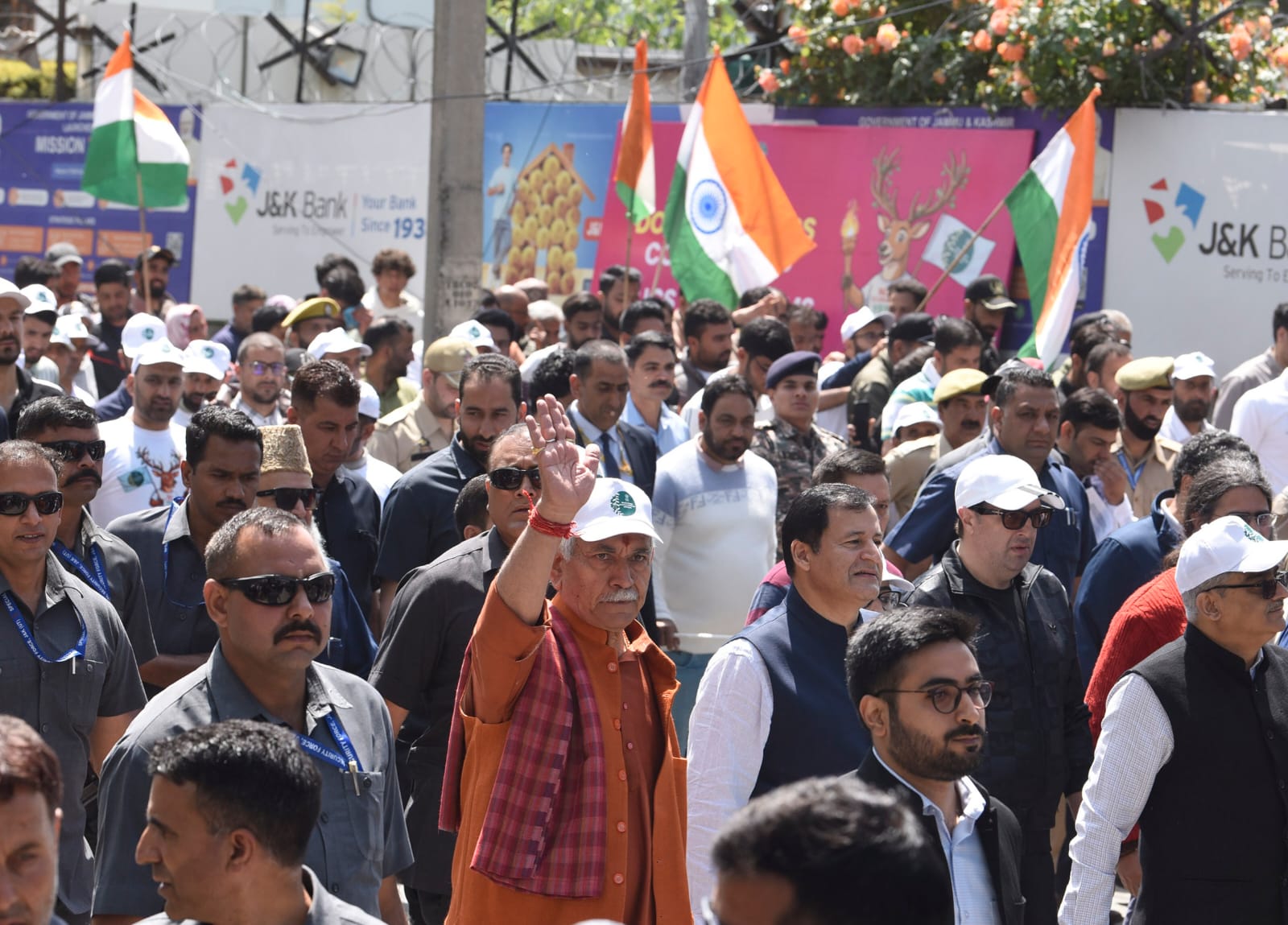
Over 70,000 citizens have poured into the streets, declaring that the era of losing their children to illicit drugs is definitively over. Backed by a relentless law enforcement blitz, this historic mass movement promises a swift end to the region’s supply chains.
By Ajaz Rashid
The spring air in Srinagar carries a different kind of electricity these days. For decades, the narrative of Jammu and Kashmir was dominated by the echoes of cross-border militancy and the geopolitical tug-of-war that scarred its pristine valleys. But today, a new, more insidious enemy has crept into the homes, alleyways, and schools of the region. It does not announce itself with the crack of a rifle, but with the quiet, devastating collapse of a family’s future. It is the scourge of drug addiction and narco-terrorism.
In a decisive and historic mobilization, the Union Territory’s administration has drawn a line in the sand. On a brisk Sunday morning at the TRC Football Ground in Srinagar, a sea of over 70,000 citizens, mothers, students, spiritual leaders, and civil society members gathered to launch an unprecedented counter-offensive against this existential threat. At the helm of this Jan Andolan (people’s movement) was Lieutenant Governor Manoj Sinha, stepping out of the corridors of power and taking to the streets to lead a massive two-kilometer padyatra towards Lal Chowk.
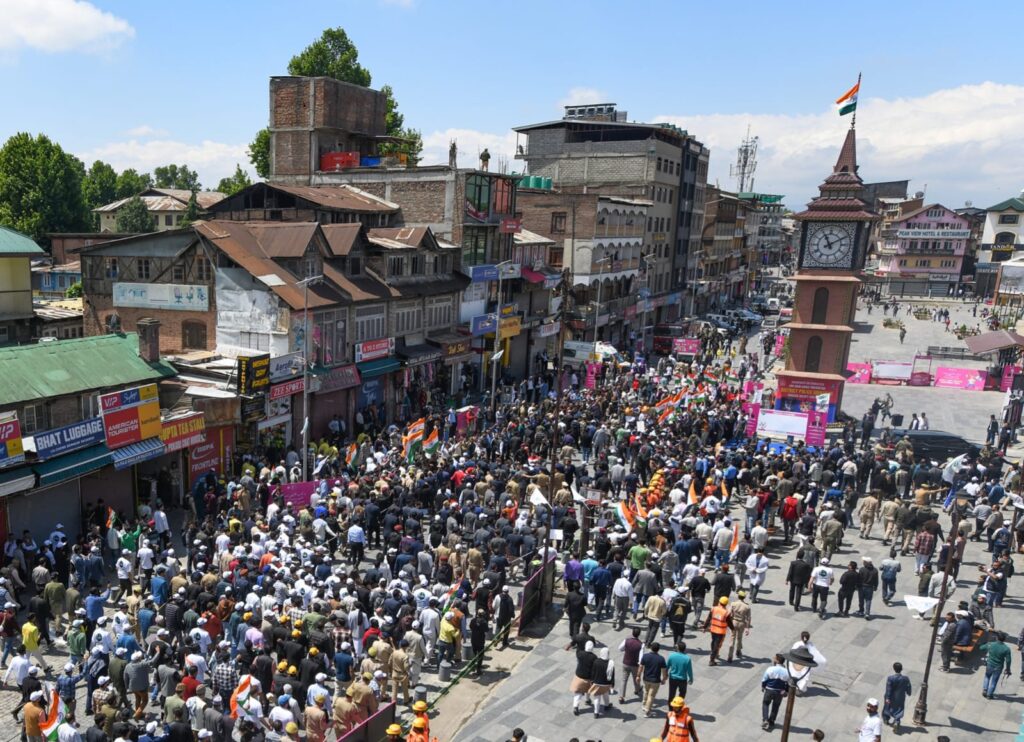
The message was clear, resounding, and uncompromising. The government and the people are no longer fighting separate battles; they have unified into a single, formidable front. Reflecting the magnitude of the moment, the official mandate declared: “Lieutenant Governor Launches Major Campaign Against Drug Abuse and Narco-Terrorism in Srinagar.”
A Vow Forged in Collective Grief
The true devastating cost of narcotics cannot be measured merely in seized contraband or frozen bank accounts; it is tallied in the hollowed eyes of the youth and the shattered dreams of their parents. The march in Srinagar was a manifestation of that shared grief turned into defiant resolve. Addressing the mammoth gathering, LG Sinha captured the emotional gravity of the crisis, acknowledging that this war is being waged in every living room and on every street corner.
“Thousands marched together, sending a clear message to defeat drug addiction and narco-terrorism. People’s movement carries promise of a future where J&K stands free from the grip of drugs: LG,” the statement echoed across the grounds.
The administration’s anti-drug campaign, known as the Nasha Mukt J&K Abhiyaan, has transformed from a bureaucratic initiative into a deeply personal crusade for the citizens. With 78 days left in its initial 100-day blitzkrieg, the pledge taken by the masses was not just symbolic. It was a testament to the agony of a society that has borne enough.
“It is cry of every mother who has seen her child consumed by addiction, and solemn commitment of every father who has watched dreams collapse under weight of drug abuse,” LG Sinha stated, his words resonating deeply with the families in attendance. He further emphasized the profound tragedy unfolding in classrooms across the valley: “It is also promise of every teacher who has witnessed talent and potential fade into silence. Determination to uproot drugs is not only a declaration from administration but it is collective resolve of people, who, after enduring decades of suffering, have risen to say: enough is enough: LG Sinha.”
This collective vow culminated in a sweeping vision for the region’s tomorrow. The “Lieutenant Governor called upon people to come together to build a Jammu Kashmir, where no child is lost to drugs, no family is broken by addiction, no community suffers under drug traffickers, and every resident of the UT thrives in health and strength.”
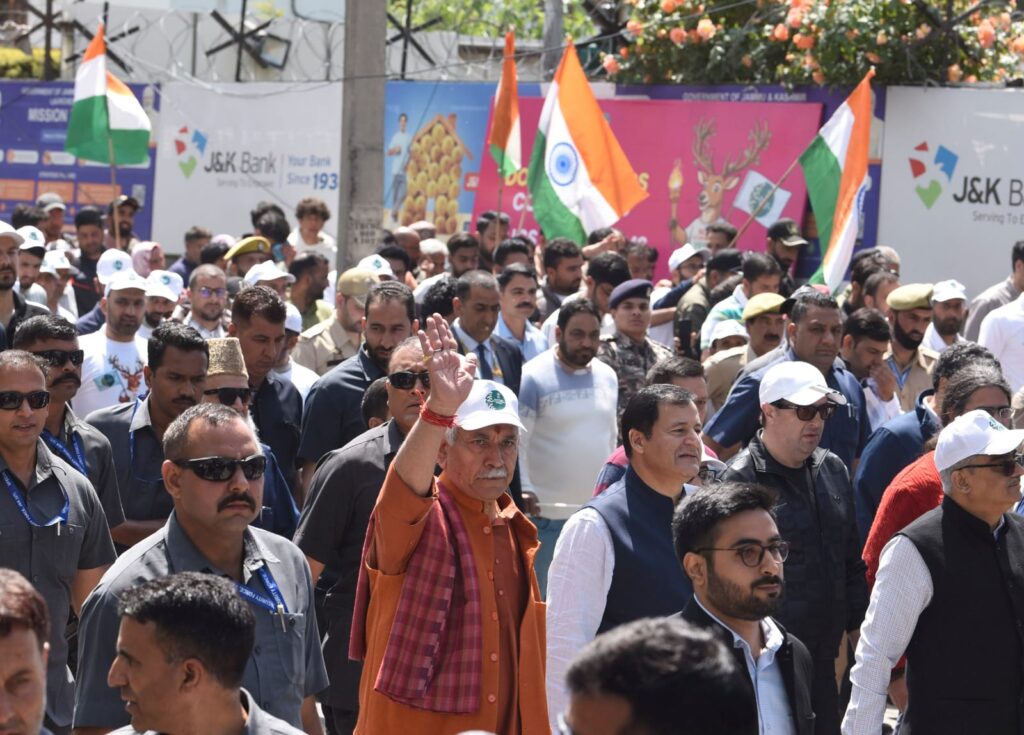
“This is the vision we pursue, the dream we must fulfil, and the legacy we owe future generations. It is about Jammu Kashmir’s destiny, the society we aspire to build, the values we uphold, and the lives we safeguard. Today, let us pledge that we will not rest until Jammu Kashmir is completely drug-free: LG Sinha,” he proclaimed, setting a monumental goal for the UT.
The Narco-Terrorism Nexus
For Jammu and Kashmir, the drug epidemic is not an isolated social issue; it is a meticulously engineered weapon of proxy warfare. Neighboring adversaries, historically recognized as incubators of unrest, have pivoted to narcotics as a tool to drain the vitality of the region’s youth while simultaneously funding terror modules. This phenomenon, which LG Sinha aptly branded as “silent terrorism,” requires a multi-pronged, aggressive counter-strategy.
“Active participation of the people is unshakable force capable of defeating the enemies’ assault through narco-terrorism. Drug traffickers and their networks have targeted our youth. We have taken a solemn oath that we will never allow them to succeed: LG,” he declared, issuing a direct challenge to the syndicates operating across borders.
The administration’s response is not limited to mere rhetoric; it is a clinical, systemic dismantling of the terror-crime network. “It is a grave threat to internal security. Both terrorists and drug traffickers seek to fracture unity, corrode integrity, and destroy peace, while draining the strength of our youth to strike at Jammu Kashmir’s future. We have adopted 360-degree approach for cracking down on drug peddlers, rehabilitating addicts, training police, raising awareness, and mobilizing grassroots participation,” the LG articulated.
The days of leniency and porous enforcement are definitively over. The government is tracking the intricate financial trails of drug cartels, ensuring that the proceeds of this illicit trade cannot be utilized to procure arms or radicalize the vulnerable. In a stern warning that sent ripples through the underworld, LG Sinha made the state’s intentions crystal clear: “Our agencies, our administration, and our people stand united to dismantle every smuggling ring and peddler operation. We are tracking the financial trails of drug cartels. Every link will be broken, every mechanism destroyed. I pledge to the people that every trafficker will be exposed, every criminal will face justice, and anyone, inside or outside Jammu Kashmir, who has aided the drug network will be held accountable under the full force of law.”
A Massive Crackdown
To understand the sheer scale of this offensive, one only needs to look at the unprecedented data generated in just the first three weeks of the Nasha Mukt J&K Abhiyaan. The civil administration, operating in tandem with the Jammu and Kashmir Police, has unleashed a relentless crackdown on the supply chains that poison the valley.
Detailing the tangible outcomes of this aggressive enforcement, the Lieutenant Governor provided staggering
LG’s High-Level Meet
The Padyatra was followed by a a high-level security and administrative review meeting conveyed by Lieutenant Governor Manoj Sinha at Lok Bhavan, intensifying the Union Territory’s ongoing Nasha Mukt Jammu Kashmir Abhiyaan (Drug-Free J&K Campaign). The summit focused on evaluating district-wise action plans aimed at completely eradicating drug abuse and the cross-border narco-terrorism nexus.
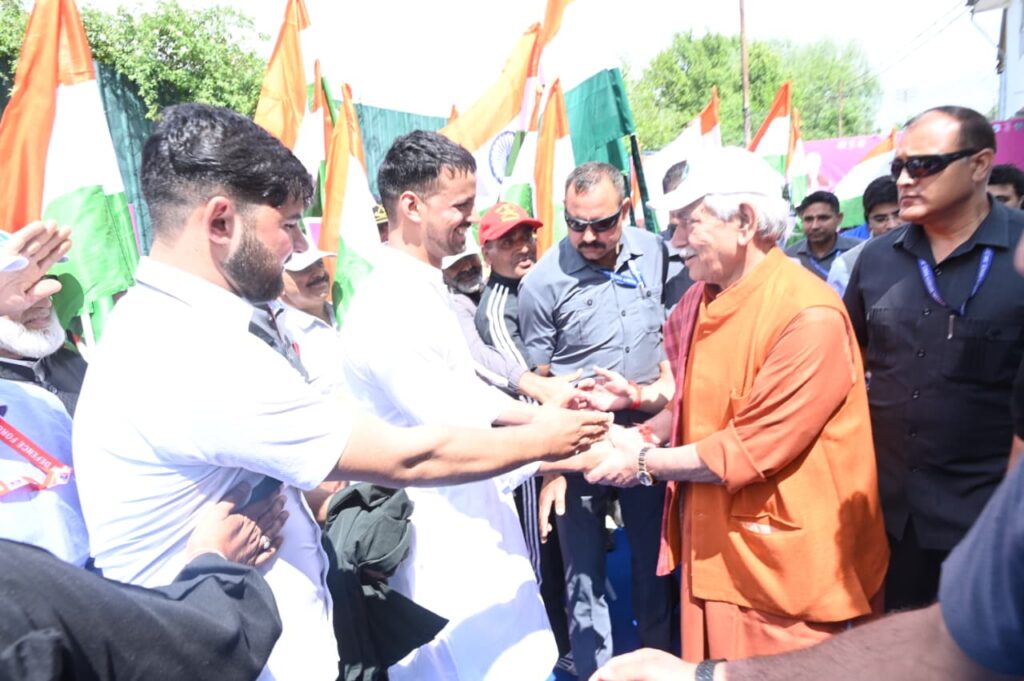
The strategic briefing brought together the top echelon of the UT’s civil and police administration, including Chief Secretary Atal Dullo; DGP Nalin Prabhat; Principal Secretary Home Chandraker Bharti; Spl DG Coordination PHQ S.J.M. Gillani; and ADGP CID Nitish Kumar, alongside other senior officials, Deputy Commissioners, and SSPs from the Kashmir Division.
During the extensive review, the Lieutenant Governor underscored the absolute necessity for a focused, time-bound, and result-oriented strategy across all district administrations for the remaining 78 days of the campaign’s current phase.
Key Directives Issued by the Lieutenant Governor:
- A 78-Day Enforcement Sprint: Officials were directed to ensure the effective implementation of action plans at all levels, demanding measurable outcomes in curbing drug abuse and dismantling illicit narcotics networks.
- “Zero Tolerance” and Swift Penalties: Reaffirming a zero-tolerance policy towards narcotics, the LG mandated strict and highly visible enforcement actions against traffickers. This includes the swift execution of Standard Operating Procedures (SoPs) to cancel or suspend driving licenses, passports, and other vital documents of known drug peddlers.
- Targeting Narco-Finances: Authorities were instructed to promptly identify and seize properties linked to narco-terrorists and smugglers.
- Cracking Down on Pharmacies & Fake Rehabs: The LG stressed the need for intensified inspections of pharmaceutical shops to prevent the misuse of prescription drugs. Additionally, he directed Deputy Commissioners to shut down fake or unauthorized de-addiction centers, ensuring only certified institutions operate within the established regulatory framework.
- Grassroots & Community Mobilization: The campaign must transform into a sustained mass movement. The LG called for intensified engagement at the Panchayat and Ward levels, involving religious leaders, educators, traders, and youth groups.
- Empowering Women and Youth: Mahila Samitis (women’s committees) and Youth Clubs were highlighted as vital community institutions. The LG called for their active involvement in awareness campaigns, early identification of vulnerable individuals, and community-based monitoring.
- Sports as a Shield: Special emphasis was placed on youth engagement through athletics. Deputy Commissioners were instructed to ensure the development of playfields in all panchayats, strengthen district sports infrastructure, and regularly organize competitions under the Nasha Mukt banner.
Leave a Reply