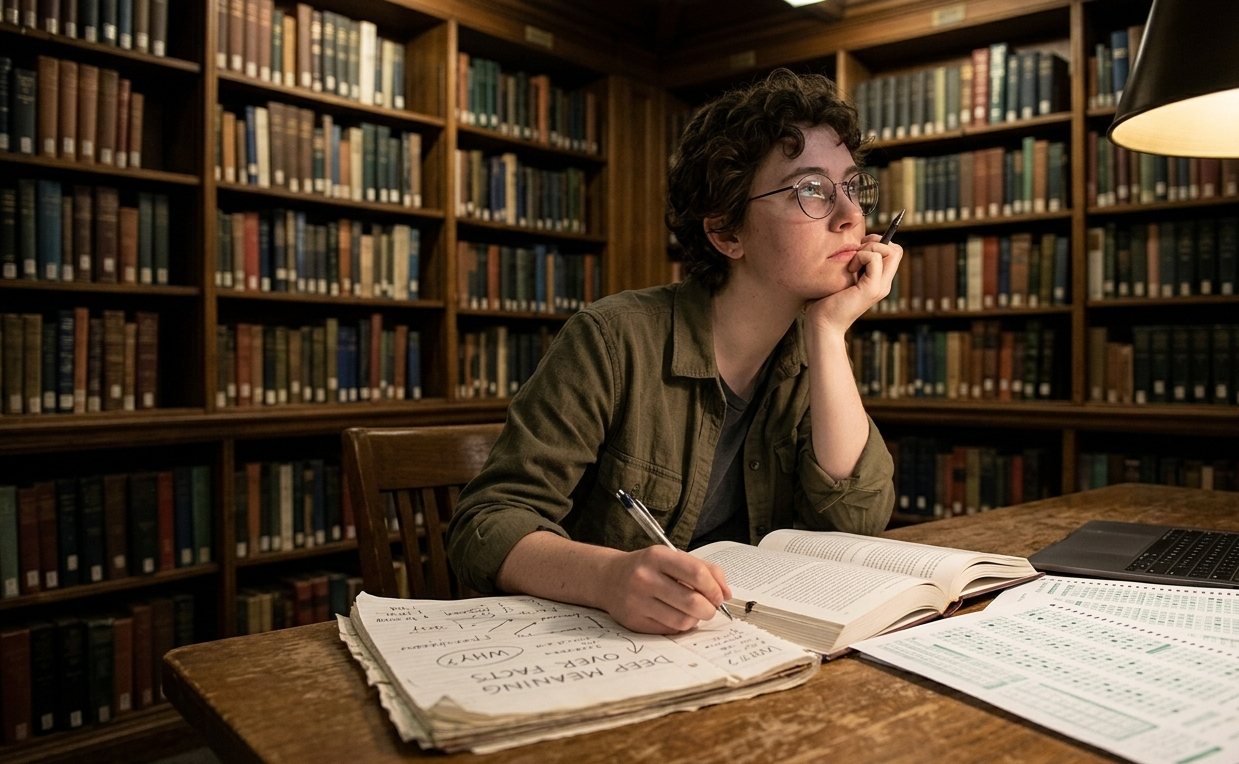
Traditional classrooms have become factories for the status quo, effectively punishing the curiosity required for modern progress. By prioritizing ancient methods over new solutions, we are graduating generations of students equipped only for a world that no longer exists.
The modern educational landscape is currently locked in a struggle between the preservation of legacy systems and the urgent demands of a rapidly evolving digital economy. While education is theoretically defined as a systematic process of learning—a journey where the whole of life serves as a classroom—the practical reality remains stubbornly narrow. In classrooms across the globe, we are witnessing a crisis where the “systematic” nature of learning has been reduced to a mechanical ritual of data ingestion and regurgitation. This “malaise,” as it can be termed, is not a recent development but a centuries-old stagnation that favors the rote learner over the creative mind, effectively penalizing the very innovation required for the 21st century.
At the heart of this issue is a fundamental disdain for innovation. Our traditional educational infrastructure operates on a philosophy that prioritizes the status quo, effectively treating “innovation” as a foreign concept rather than a necessity. Each year, global institutions graduate cohorts of “barren minds” who are trained to follow paths carved out centuries ago. These students are taught to see the world through a rear-view mirror, ignoring the light at the end of the tunnel that signals a need for new solutions. In a world increasingly driven by Artificial Intelligence and automation—technologies that can perform rote tasks with 100% accuracy—human value must lie in the ability to break the status quo. Yet, we continue to abhor the questioning nature of the creative mind, preferring the quiet compliance of those who memorize without understanding.
This leads us to the second major flaw: the tyranny of the examination. For decades, the high-stakes exam has been the sole metric for judging human intelligence. Even the original architects of formalized testing often warned that these assessments should be temporary measures, yet they have become permanent fixtures that halt intellectual development. When a learner’s entire future depends on a three-hour window of recall, the mind becomes habituated to a cycle of cramming and forgetting. This environment allows the rote learner to “win the day,” while the creative individual—who requires time to synthesize information, find proofs, and develop original thoughts—is left behind. The result is a system that beats the head of creativity against a wall of standardized bubbles.
Furthermore, the corruption of the educational purpose has allowed financial and social capital to override intellectual depth. In many regions, the qualification of an exam is no longer a certificate of competence, but a transaction. Whether through the literal purchase of grades or the “shadow education” industry of private coaching that teaches test-taking “hacks” rather than subject mastery, the system has become intellectually bankrupt. Creativity seeks answers that soothe the nerves and expand the soul; rote learning seeks only the credential. Because the current global administration is largely composed of the products of this very system, there is a systemic resistance to change. To the rote learner in a position of power, creativity is an “alien concept” that threatens the predictable, albeit stagnant, hierarchy they inhabit.
This stagnation is fueled by a societal obsession with instant gratification. In an era of high-speed internet and algorithmic feedback, we have lost the patience for long-term intellectual cultivation. We invest in education and demand immediate results in the form of high marks and instant employment. Rote learning is perfectly suited for this short-termism. When a student passes with distinctions through memorization, they are celebrated by a society that values the trophy over the race. Conversely, the creative student who may “fail” to progress for years because they are busy exploring the “why” behind the “what” is treated with derision. They are labeled as useless or lazy, their views rejected by a world that values the speed of the answer over the depth of the inquiry.
Perhaps the most profound failure is our detachment from the “divine plan” of intellectual inquiry—a concept present in nearly every philosophical and spiritual tradition. Many approach education like a holy book that is recited for the sake of “good deeds” or “merit,” without ever bothering to ponder the actual meaning or relevance of the text. If the Creator intended for humanity to understand the “which way to follow and which not,” then rote recitation without comprehension is an affront to that purpose. We are tasked with understanding our world and our place within it, yet we choose to remain on the surface, delighting in the “recital” of facts while remaining blind to their objectives.
This leads to the final, and perhaps most pervasive, cause of our educational degeneration: materialism. Rote learning has become the foundation of a materialistic worldview where education is viewed strictly as a means to acquire things. When the goal of learning is merely the accumulation of wealth and status, the arduous path of creative inquiry seems unnecessary. We settle for a society where “donkeys” rule because they have mastered the art of the materialistic checklist, while true creativity hangs its head in shame.
The need of the hour is a radical shift in how we perceive the student. We must move toward a model of “Pedagogical Intelligence” that understands individual leanings and plans accordingly. The digital age has already provided us with the tools to move beyond rote learning; we have information at our fingertips, so the human mind must be freed to focus on synthesis, ethics, and innovation. We can no longer afford to suffer the consequences of an intellectually barren population. It is time to pledge a change at the ground level, moving away from the “malaise” of the past and toward an environment where deep learning is the standard, not the exception. Only then can we hope that good sense will prevail in the classrooms of tomorrow.
The views expressed in this article are solely those of the author and do not necessarily reflect the opinions or views of this newspaper
Leave a Reply