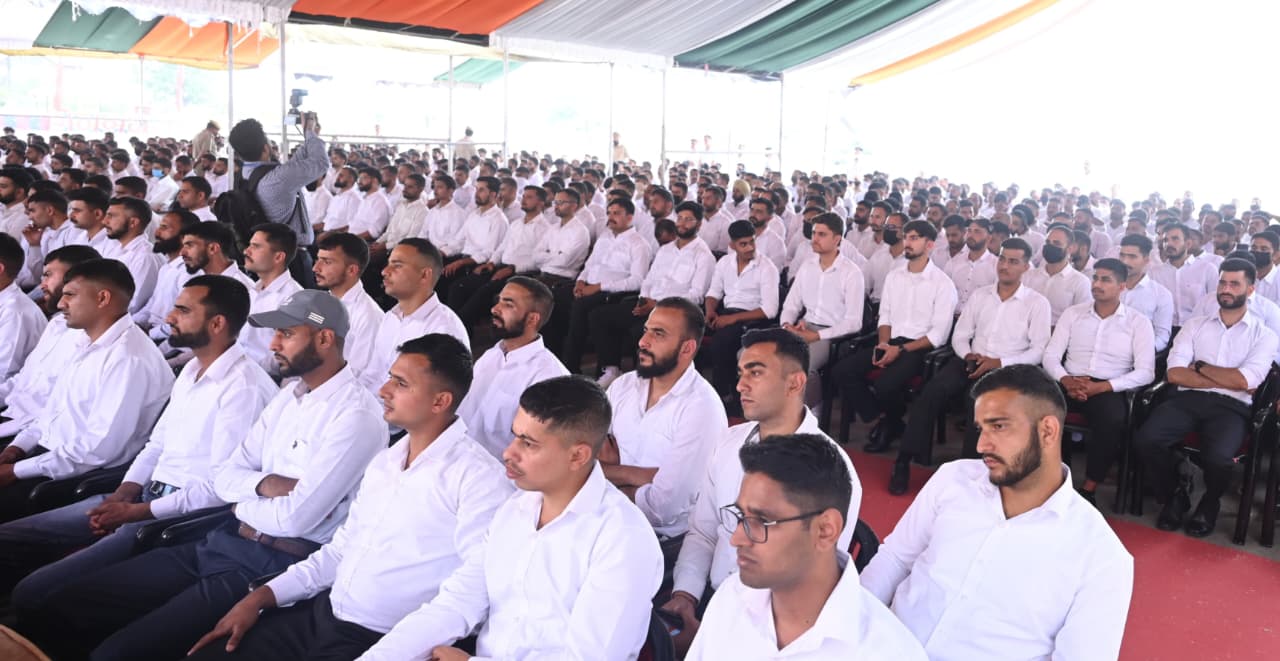
The induction of 4,000 new constables significantly bridges the vacancy gap, providing fresh strength for operations in rugged, far-flung terrains. These personnel serve as the frontline defense against foreign-sponsored incursions in the region’s most difficult ridges and forests.
By Ajaz Rashid
Beneath the towering chinar trees of the Armed Police Complex in Zewan, the rhythmic stomp of boots on the parade ground signaled more than just the conclusion of a training cycle. It signaled a generational shift in the security architecture of Jammu and Kashmir. On 10th this week, as the valley’s crisp air carried the weight of a solemn oath, 4,000 newly recruited constables including over 600 women, were formally inducted into a force that has transitioned from a traditional police unit into the frontline of India’s most complex internal security theater.
The attestation-cum-passing out parade was not merely a ceremony of appointment letters; it was a high-stakes declaration of intent. Addressing the sea of khaki, Lieutenant Governor Manoj Sinha and Director General of Police (DGP) Nalin Prabhat painted a picture of a region undergoing a profound transformation, where the traditional “bullet for bullet” mantra is being augmented by a sophisticated war on “narratives” and “digital crime.”
A Symbol of People’s Faith
For Lieutenant Governor Manoj Sinha, the Jammu and Kashmir Police has evolved beyond its administrative functions to become an emotional anchor for the region. Speaking to the recruits, he emphasized that the force has earned its stripes through a “glory, sacrifice, and professionalism” that is now recognized nationwide.
“If I talk about the achievements of the past five to six years, there have been major successes in counter-terrorism operations, intelligence coordination and internal security management,” Sinha remarked, highlighting the “close synergy” between the police, intelligence agencies, and the CRPF.
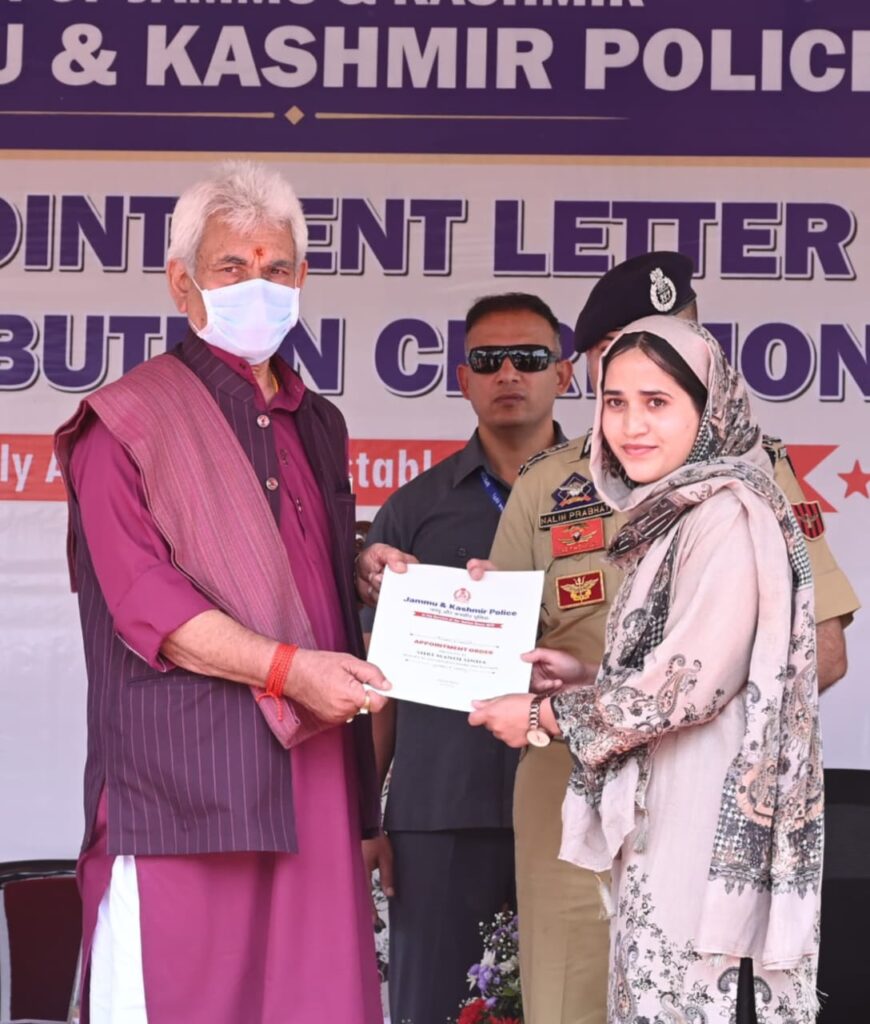
The Lieutenant Governor was unequivocal in his warning to those seeking to destabilize the hard-won peace. Referring to the systematic dismantling of terror networks through initiatives like “Operation Mahadev” and the swift response following the Pahalgam terror attack, he made it clear that the era of impunity had ended.
“This is a clear warning to those who consider themselves above the law. No terrorist, criminal, drug trafficker or anti-national element will be spared,” the LG asserted. “Jammu and Kashmir Police is not merely the name of a force, but the name of people’s faith and trust.”
Sinha’s rhetoric underscored a shift in governance: the police are no longer viewed merely as an occupying presence by some, but as a “symbol of people’s trust and sacrifice.” He reminded the recruits that their uniform represents a “proud legacy” built by those who “knowingly put their lives at risk so that common people can live safely and peacefully.”
The Changing Face of Warfare
While the LG focused on the symbolic and moral authority of the force, he also issued a pragmatic warning about the evolving nature of conflict. The modern constable in Srinagar or Rajouri is no longer just facing a gunman in the woods; they are facing an invisible enemy in the digital ether.
“The nature of crime and warfare has evolved significantly over the years,” Sinha noted. “The future policing system will have to deal with cyber threats, digital crimes, narrative warfare and organised terror structures. The new recruits must prepare themselves mentally and technologically for these future challenges.”
This sentiment was echoed by DGP Nalin Prabhat, who characterized the force as a “technology-driven and citizen-centric” entity. The DGP highlighted a remarkable statistic that challenges old stereotypes of the police force: many of the 4,000 new recruits are not just physically fit, but academically elite, holding degrees in B.Tech, M.Tech, and various postgraduate disciplines.
“We will utilise technically qualified youth in specialised areas and make full use of their skills during service,” the DGP said, suggesting that the “mind becomes the biggest weapon” when physical limits are reached.
“Force Multipliers” Against Proxy War
DGP Nalin Prabhat’s address focused heavily on the operational necessity of this new batch. In a region where the terrain is as much of an enemy as the insurgent, these 4,000 recruits are being groomed as “force multipliers.”
The DGP revealed that the sanctioned strength of constables stands at 53,000, with about 40,000 currently on the ground. These new additions will significantly close that gap, specifically enhancing the force’s ability to conduct operations in the “mountains, forests, ridges and far-flung areas against Pakistani-sponsored terrorists.”
The recruitment drive itself was a testament to the changing aspirations of the Kashmiri youth. Over 5.5 lakh candidates applied for these positions, a process that began in 2014 and was completed under a cloud of heightened scrutiny to ensure transparency.
“This reflects the eagerness of youth to join the police force,” Prabhat said, adding that the response is a barometer for the “growing peace, stability and development in Jammu and Kashmir over the last six years.”
To maintain this momentum, the DGP encouraged the most daring among the new recruits to volunteer for elite specialized units like the Snow Leopards, Markhor, and the Special Operations Group (SOG), where they will receive advanced training in jungle warfare and high-altitude operations.
The War on Narcotics
While counter-terrorism remains the headline-grabbing priority, both leaders identified a more insidious threat: narco-terrorism. The DGP emphasized that the force is carrying forward an aggressive anti-narcotics campaign under the LG’s leadership, aimed at dismantling the “Drug-Free J&K” mission launched in April.
“Joining the force is not merely a job but a symbol of sacrifice, dedication and service to the nation,” Prabhat told the recruits. He urged them to balance their tactical roles with a “citizen-centric” approach, reminding them that public trust is the ultimate intelligence tool.
“There should be no misbehaviour with the public. Mutual respect and public trust are essential in policing,” he warned, noting that the conduct of the police is under “constant public scrutiny.”
A Legacy of Sacrifice
The ceremony at Zewan was shadowed by the memory of those who fell before. The DGP reminded the recruits that 1,620 personnel of the J&K Police have laid down their lives for the country.
“This is our golden legacy and you are its inheritors,” the DGP said. “You are becoming members of one of the bravest police forces in the country, serving the nation since 1873. There can be no greater honour.”
As the parade concluded, the message from the leadership was clear: the modern J&K Police constable must be a hybrid, a soldier capable of mountain warfare, a tech-expert capable of thwarting cyber-attacks, and a diplomat capable of winning the hearts and minds of the local populace.
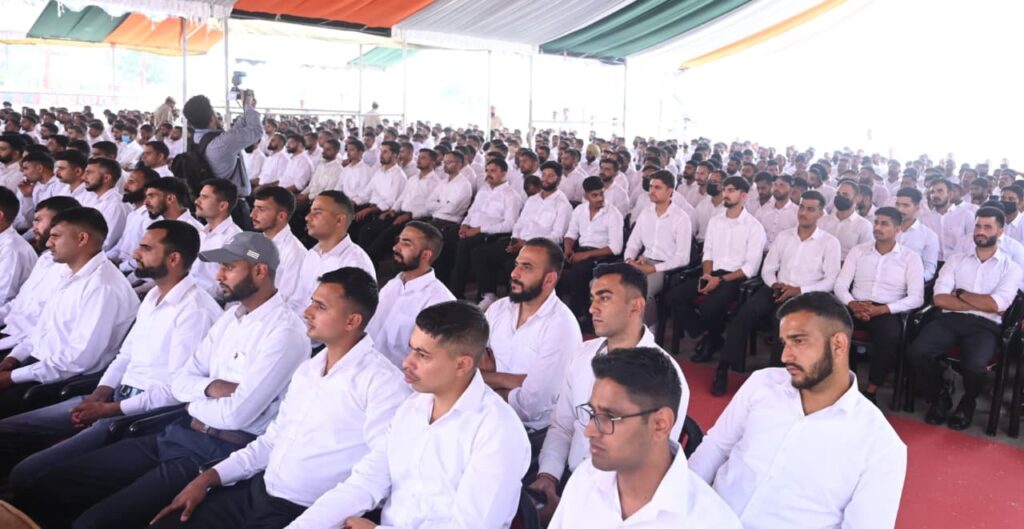
Lieutenant Governor Sinha summarized the weight of the moment for the thousands of young men and women standing at attention: “Recruits must accept the realities of modern policing and constantly upgrade their capabilities… Future-ready policing requires courage, impartiality, honesty and commitment. I hope all of you will live up to these expectations.”
With another 6,484 recruitments already in the pipeline, the J&K Police is not just expanding; it is attempting to reinvent itself as the definitive guarantor of a “New Kashmir.” For the 4,000 families present at Zewan, the day was one of pride, but for the region, it was a signal that the “thin khaki line” is becoming thicker, smarter, and more resolute than ever before.
Leave a Reply