• Skip to primary navigation
  • Skip to main content
  • Skip to primary sidebar
  • Skip to footer

Era Of Kashmir

Weekly Newspaper

  • Home
  • J&K
  • India
  • Opinion
  • Editorial
  • Columns
  • SOCIETY
  • Tourism
  • Education
  • e Paper
Home » Terror Declines by 80% in J&K Since 2014: Amit Shah in Parliament
Terror Declines by 80% in J&K Since 2014, Says Amit Shah in Parliament

Terror Declines by 80% in J&K Since 2014: Amit Shah in Parliament

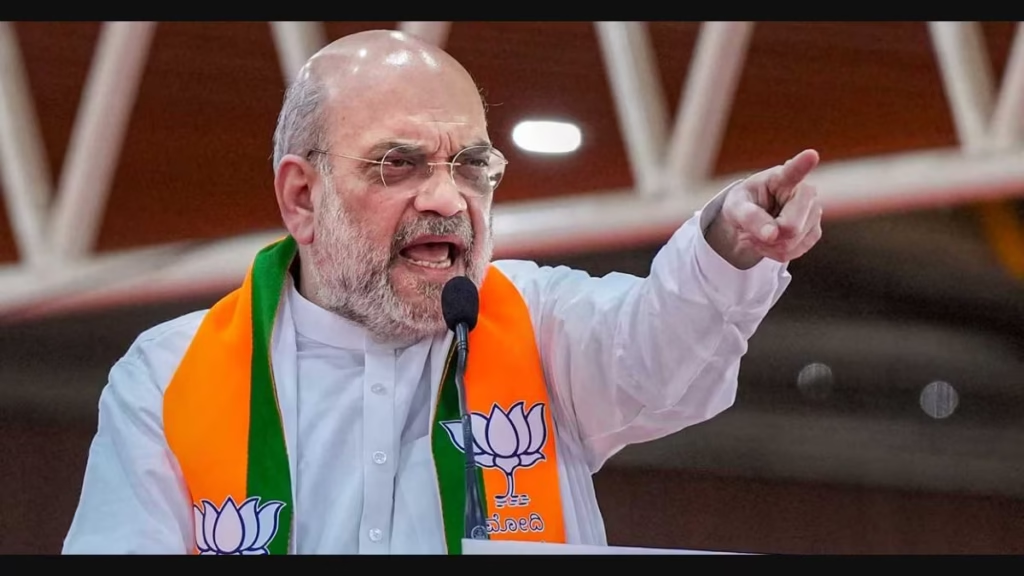
Union Home Minister Amit Shah on Tuesday claimed a dramatic decline in terror-related incidents in Jammu and Kashmir, stating that terrorism had dropped by nearly 80 per cent over the past decade. Addressing Parliament, Shah credited the post-2019 policy shift—particularly the abrogation of Article 370—for what he called a “decisive turnaround” in the region’s security landscape.

Drawing comparisons with the previous decade, Shah revealed that from 2004 to 2014, Jammu and Kashmir witnessed 7,217 terror incidents, with 1,770 civilian and 1,060 security force casualties. In contrast, from 2015 to 2025, the region reported only 2,150 incidents, resulting in 357 civilian and 542 security personnel deaths. He further noted a 123% rise in the number of terrorists neutralised during this period.
Terror Declines by 80% in J&K Since 2014, Says Amit Shah in Parliament

“Terror infrastructure has been dismantled,” Shah asserted, ruling out any engagement with the Hurriyat Conference, which he labeled a “terror group.” He also praised security forces for the recent success of Operation Mahadev, describing it as a clear signal of India’s growing counter-terror capabilities.

Taking aim at the Congress, Shah challenged Rahul Gandhi to explain his party’s counter-terror record during the UPA years, asserting that unlike then, no terror attackers under the NDA regime have been Indian nationals. “All were Pakistanis. No terrorist remains in Jammu and Kashmir now,” he said.

Filed Under: India, Latest News Published on July 29, 2025

Primary Sidebar

Latest ePaper

Cover Stories

The Next Harvest

The Next Harvest

Published on October 7, 2026

Venture-backed agri-tech often caters to sprawling commercial estates, leaving small and marginal farmers behind. Shifting toward cooperative ownership models and affordable hardware ensures that the digital transition leaves no community stranded. By Ajaz Rashid Urging financial institutions, academic bodies, and private-sector venture partners to actively dismantle systemic funding barriers, Lieutenant Governor Manoj Sinha made an […]

  • The Crack Beneath Paradise
  • The Unfinished House
  • The Vanishing Whiteout
  • Kashmir Reclaims The Frame
  • Himalayan Deluge
  • The Crimson Corridors
  • The Anatomy of an Anxious Deluge
  • Himalayas on the Brink
  • Cascading Skyfall
  • India Honours High-Altitude Heroes

More Posts from this Category

Education

The Cost of an Extra Holiday

Published on October 7, 2026

Kashmir’s students already navigate severe weather closures, administrative disruptions, and extensive breaks. Slicing away another school day deprives young minds of the vital continuity they need to compete globally. By Aubaid Ahmad Akhoon “In this age, education is the remedy for the ailments of the nation.” These timeless words of wisdom from Allama Muhammad Iqbal […]

  • The Anxiety Age
  • The Rote Learning Malaise
  • Redefining Achievement in the Wake of the Winter Session
  • A Review of Majeed Masroor’s ‘Faizan-e-Nazar
  • The Dilemma of First Standard Admissions

Footer

About Us

Contact Us

e Paper

© 2005–2026 Era Of Kashmir