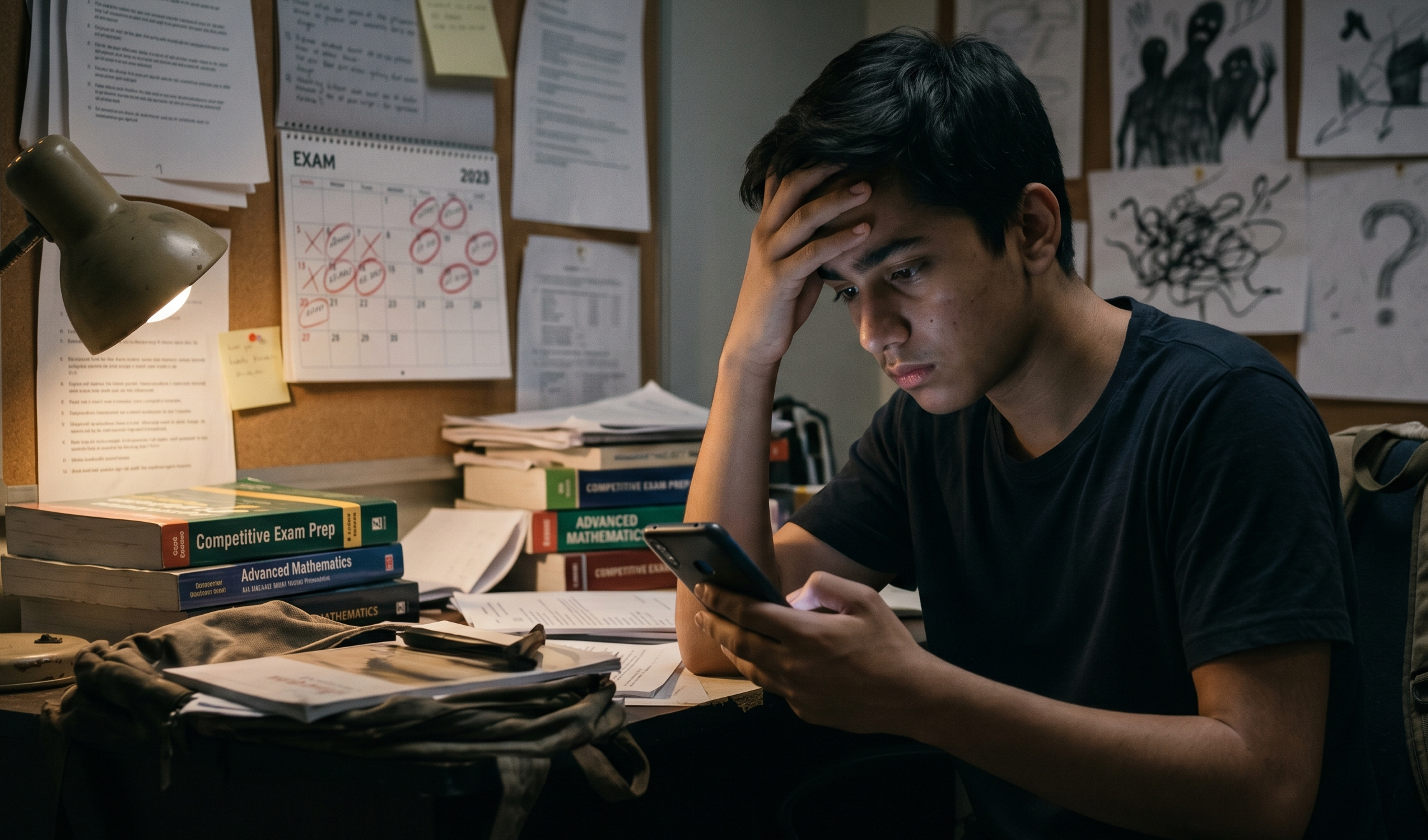
Today’s students face an exhausting array of modern phobias that extend far beyond traditional childhood monsters. From digital anxieties to academic dread, these hidden terrors are slowly eroding their mental well-being.
By Syed Mustafa Ahmad
Fear is as old as the human condition itself. For generations, our collective anxieties were tethered to the tangible and the immediate: the devastating sweep of floods, the sudden violence of earthquakes, or the visceral reality of physical danger and mortality. Yet, as our physical world has grown demonstrably safer, our psychological landscapes have become increasingly treacherous. We have entered an era defined by a tragic paradox: we live closer to one another than ever before, packed into sprawling cities and hyper-connected digital networks, yet we remain profoundly emotionally estranged. This widening gulf of emotional distance has become a fertile breeding ground for a new, insidious kind of terror. Nowhere is this more evident than in our youth. Students, possessing limited life experience and navigating a critical phase of psychological development, are finding themselves overwhelmed by an avalanche of modern anxieties. Having spent years working on the frontlines of education within a private coaching institute, I have watched this crisis unfold firsthand. Beneath the surface of heavy backpacks and dog-eared textbooks lies a hidden epidemic of fear that is quietly dismantling the mental well-being of an entire generation.
When we think of childhood fears, we often imagine monsters under the bed or a fear of the dark. But the modern student harbors a complex, exhausting matrix of phobias. During my tenure with these young minds, I have chronicled a startling array of anxieties that slowly erode them from the inside out. Some fears are deeply social, such as an intense dread of strangers, authority figures, judgmental relatives, or even the basic act of talking to peers in a school hallway. Others are tied to the relentless pursuit of perfection: the paralyzing fear of failure, the dread of public humiliation, and the crushing anxiety of disappointing their families and society at large. Most alarmingly, a new category of technologically driven fears has emerged. Students today suffer genuine physiological distress over a dying phone battery, the sudden, jarring ring of a mobile device, or the terrifying prospect of being separated from their screens. They live in constant fear of losing friends on social media or missing out on the digital conversation. Mixed in with these are lingering primal fears, creating a toxic, paralyzing cocktail. These are not mere passing worries; they are chronic stressors that alter how students think, feel, and behave, mutating into serious psychological barriers that prevent them from living fulfilling, joyful lives.
The most glaring catalyst for this epidemic is the merciless pressure cooker of competitive education. We have constructed a society where a child’s worth is inextricably linked to their academic output. Students are thrust into a relentless, cutthroat race for limited opportunities, facing constant, suffocating pressure to perform flawlessly in high-stakes exams. The fear of failure, and the subsequent humiliation it brings, has fundamentally destroyed their peace of mind. The gravity of this situation cannot be overstated. Just recently, a twenty-eight-year-old man tragically took his own life after failing a competitive examination. Unable to process the shame and perceived disappointment, and likely terrified of facing both his reflection and his community, he saw no other exit. This devastating incident forces us to confront an uncomfortable question: are competitive exams truly worth the price of human life? When students are forced to exist like grains of wheat being violently crushed between the millstones of parental expectation and societal judgment, it is only natural that a deep, paralyzing dread takes root in their psyches.
Compounding this academic pressure is the profound, often negative, impact of technology. The digital age has entirely rewired how young people form connections. Today, students frequently prioritize virtual relationships over tangible, face-to-face interactions. However, these online dynamics are frequently hollow, lacking the genuine empathy, nuance, and emotional scaffolding required for healthy adolescent development. In the digital realm, transactional interactions and curated selfishness often replace authentic care. Consequently, when these fragile virtual bonds inevitably fracture, students are left feeling profoundly untethered and isolated. They find themselves ambushed by various anxieties, unable to think clearly as they sink deeper into a mire of despair. Their heart rates spike, the light of curiosity fades from their eyes, and a pervasive sadness takes the helm. This is further exacerbated by the unfiltered nature of the internet. While these platforms offer unparalleled connectivity, they disproportionately inflict harm on developing minds. Psychologists warn of “untimely exposure”—the dangerous phenomenon where children encounter mature, emotionally complex, or distressing content long before their brains are equipped to process it. Furthermore, as students scroll through the meticulously curated, flawless highlight reels of their peers’ lives, they inevitably feel inadequate. The perpetual fear of being forgotten, marginalized, or left behind in the digital ether generates a profound, buzzing anxiety that rarely sleeps.
Beyond the classroom and the screen, the very environment we have built around our youth is steeped in chaos. We have enveloped them in a suffocating web of rigid, unnecessary traditions and outdated societal customs. When a student attempts to carve out their own identity or live life on their own terms, they are met with a barrage of cultural and familial obstacles. This stifling atmosphere forces a psychological divergence: some students become hyper-vigilant, overthinking every micro-interaction and future possibility, while others completely shut down, numbing themselves to avoid the pain of constant friction. Both paths ultimately lead to a profound internal destruction. In this volatile environment, fear becomes ambient, shaking the very foundational security a child needs to thrive. When a student feels alone in a crowded room, believing that even their closest family members do not understand them, a deep-seated distrust of the world blossoms. If their own people cannot offer safe harbor, they reason, who will? When young people hear their private struggles gossiped about by the adults meant to protect them, their hidden fears calcify into permanent walls.
Protecting our youth from this insidious web of fear demands an urgent, collective mobilization. Because students lack the experiential framework to untangle these complex emotions on their own, the responsibility falls squarely on the shoulders of the community. We must build a comprehensive, empathetic support system where every child feels unconditionally safe to vocalize their hidden terrors without the threat of bullying, judgment, or parental pressure. It begins with the simple, radical act of listening—truly listening to their concerns, no matter how irrational they might appear to an adult mind. Furthermore, community leaders, educators, and the government must collaborate to dismantle the chaotic, high-stakes environments we have normalized. We must integrate the expertise of professional counselors and psychologists into the fabric of everyday schooling and neighborhood life. Every local community should cultivate a network of approachable, trained individuals dedicated to mitigating student anxiety. This endeavor requires significant sacrifices of time, ego, and resources from all healthy members of society. We can no longer afford the luxury of ignorance. The hidden fears paralyzing our students are a dire crisis born of extreme academic pressure, toxic digital exposure, and societal rigidity. The time to act is right now. Delaying intervention will only deepen the fractures in our youth, and ultimately, our society’s collective future depends entirely on our courage to confront these hidden fears today.
Disclaimer: The views and historical interpretations expressed in this feature article are solely those of the author and do not necessarily reflect the official editorial stance or opinions of this publication.
Leave a Reply