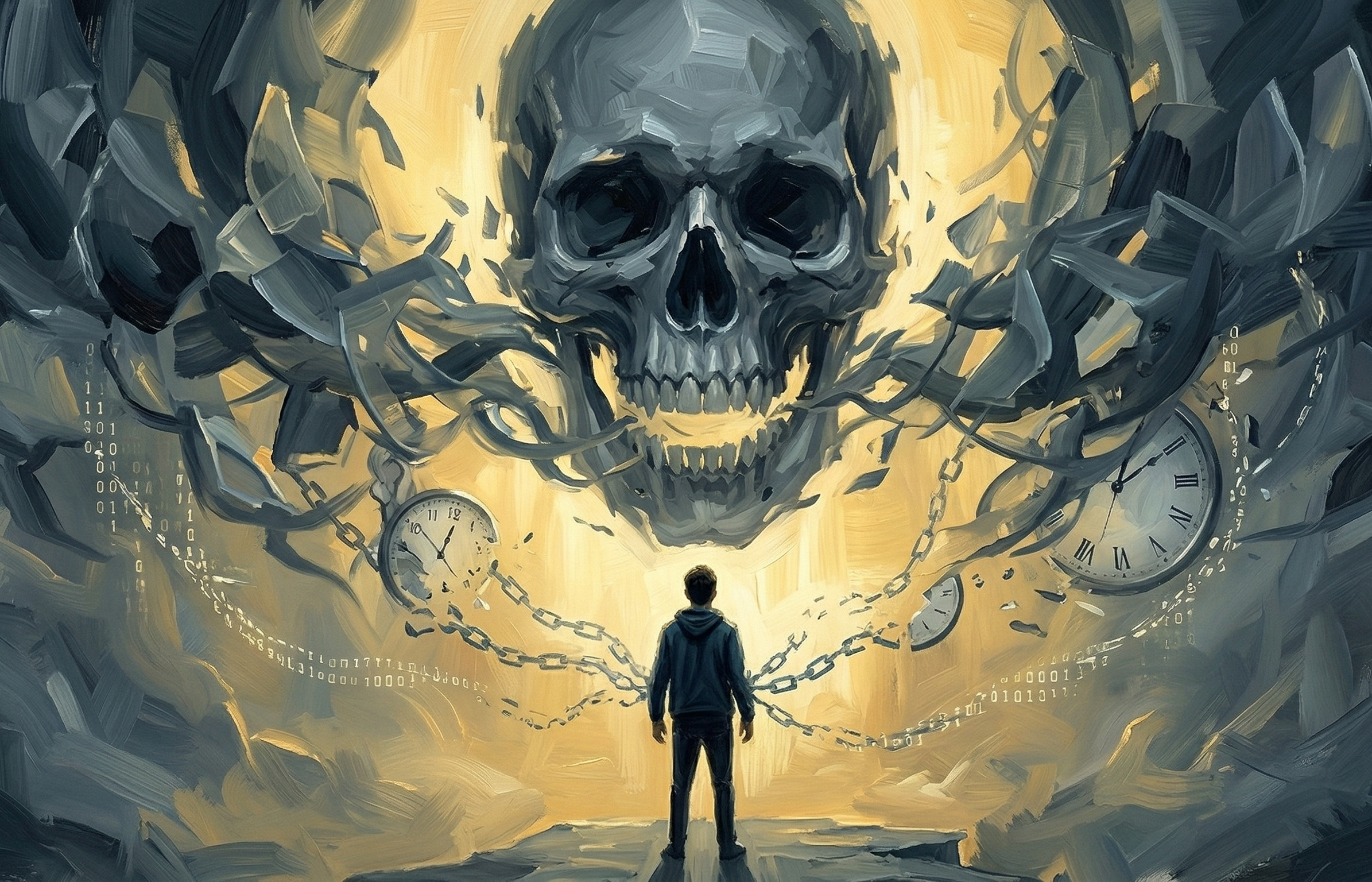
The most haunting question of the modern era is not found in our technological advancements or political shifts, but in the quiet, persistent pulse of our collective psyche
By Syed Mustafa Ahmad
The most haunting question of the modern era is not found in our technological advancements or political shifts, but in the quiet, persistent pulse of our collective psyche: What exactly is fear? We have dissected it through the lenses of psychology, sociology, and theology, yet its core remains elusive.
Fear is a shapeshifter. Its interpretation varies wildly depending on the breadth of one’s mind, the depth of one’s experiences, and the weight of one’s bank account. The rich fear the loss of status and the volatility of markets; the poor fear the literal hunger of tomorrow. While previous generations understood fear as a response to tangible, physical threats, the contemporary human deals with something far more insidious. We must ask ourselves: Is fear an external force acting upon us, or is it a universe created by our own minds, a web we have spun so intricately that we have become its permanent residents?
The Self-Created Ocean
We spend our lives swimming in a vast ocean of anxiety, often forgetting that the salt in this water is the product of our own thoughts. These ominous layers have enveloped our lives so completely that we have accepted fear as an inherent condition of existence. It is no longer just a reaction; it is the atmosphere. The poison of fear is dissolved in the very air we breathe, leaving us to wonder where one can go to find a clean, unburdened breath.
This internal climate dictates the rhythm of our daily lives. From the moment we open our eyes, we encounter fear’s many hues. The professional enters the office haunted by the specter of termination. The student trembles at the thought of a failed exam, eventually becoming terrified of the sensation of terror itself. Parents systematically sacrifice their “now” for the “then,” haunted by their children’s future prospects, never pausing to taste the fruits of their labor. Meanwhile, elderly parents spend the twilight of their lives in a cold sweat, fearing that their children might abandon them or that their decades of sacrifice will be forgotten.
A Master of Disguise
Fear is a master of mimicry. It disguises itself as an economic crisis one day and social alienation the next. It infiltrates our most intimate joys; when we laugh, we simultaneously worry about how long the happiness will last. When we love, the fear of eventual separation drains the sweetness from the connection.
This phantom runs through our veins like blood. It walks on our feet, cutting paths through our choices. At the end of the day, it descends into the inner layers of the soul, inflicting wounds that never truly scab over. Osho, the philosopher, noted that fear is the primary force that drives us into the “herd.” We surrender our individuality because the prospect of being different is too terrifying to bear. We live in a self-imposed prison where the door is wide open, yet we remain inside, shackled by the fear that the world outside the bars is “wrong.”
The Tyranny of Tomorrow
Perhaps humanity’s greatest frailty is the inability to exist without obsessing over the future. Yet, the very concept of the future is impossible to maintain without fear. This “unknown tomorrow” keeps us restless, effectively killing the beauty of the present moment. We treat life as a pursuit of escape, failing to realize that confronting the shadow is the only way to dissolve it.
Can we ever truly escape? The answer is complex. Fear is a darkness, and the only known cure for darkness is light. This light takes the form of knowledge, certainty, and a fundamental belief in one’s own agency. Fear has no independent identity; it is a collection of baseless standards and hollow structures. The moment a person truly understands the mechanics of their fear, it loses its power to govern.
The Modern Amplifier
In the 21st century, fear has found powerful new biological and digital amplifiers. We live in an age of curated identities where the Fear of Missing Out (FOMO) drives a constant, anxious scroll through digital feeds. We compare our “behind-the-scenes” struggles with everyone else’s “highlight reels,” resulting in a permanent sense of inadequacy.
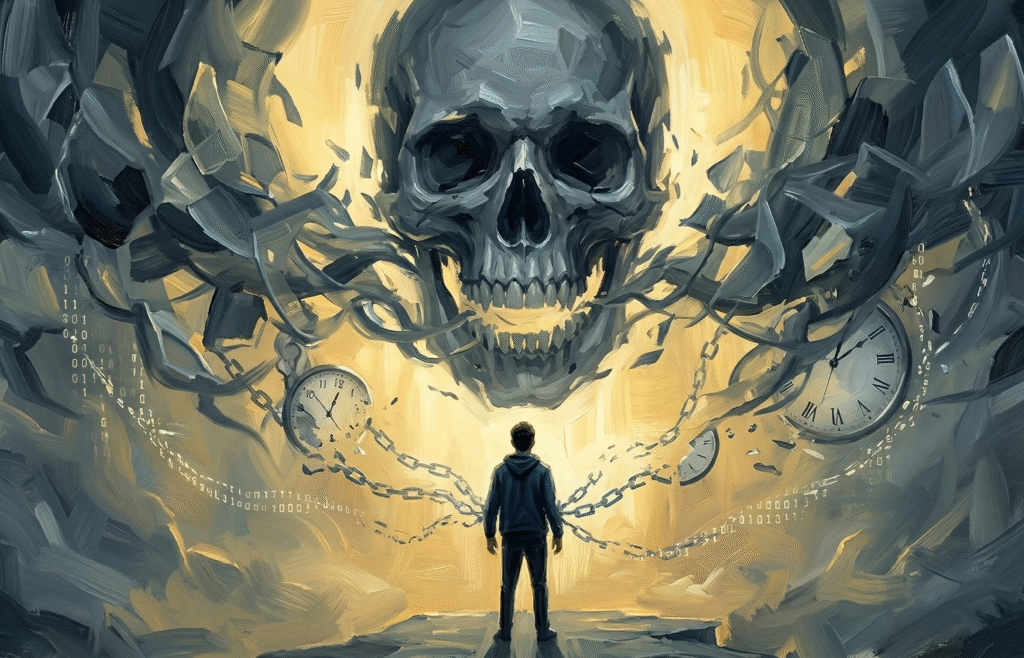
The 24-hour news cycle weaponizes this instinct, keeping us in a state of high alert regarding global pandemics, economic instability, and social collapse. In the workplace, the gig economy and rapid automation have replaced traditional security with a persistent fear of obsolescence. This modern fear often wears the mask of “ambition” or “productivity.” It tells us we must optimize every second of our lives, not for fulfillment, but to avoid being “left behind.” It creates a culture where rest is viewed as a moral failing because silence allows the underlying anxieties to finally be heard.
Breaking the Chains
Entire industries are now built on exploiting these anxieties—from cybersecurity firms preying on our fear of invisibility to wellness brands selling us products to fix our fear of aging. To break free, we must employ the tools of intentionality.
- Digital Minimalism: Setting hard boundaries with devices to limit exposure to manufactured panic.
- Critical Thinking: Deconstructing narratives to ask: “Is this threat real, or is it being sold to me?”
- Community Building: Prioritizing genuine, offline connections to counteract the isolation of digital life.
Until the roots of fear are weakened, we must learn to coexist with it without letting it take the driver’s seat. We should neither treat fear as a friend nor an enemy, but as a teacher. It serves as a reminder that life is greater than our anxieties and that every moment is priceless.
The path to freedom passes through the tavern of our own shadows. When we tire of the darkness and move toward the light of self-awareness, we realize that the web which bound us was made of threads we spun ourselves. Moving from being a passive recipient of fear to an active architect of peace is not just a personal goal—it is the essential challenge of our time. Only by stepping through the fear do we finally begin to truly live.
The views expressed in this article are solely those of the author and do not necessarily reflect the opinions or views of this newspaper
Leave a Reply