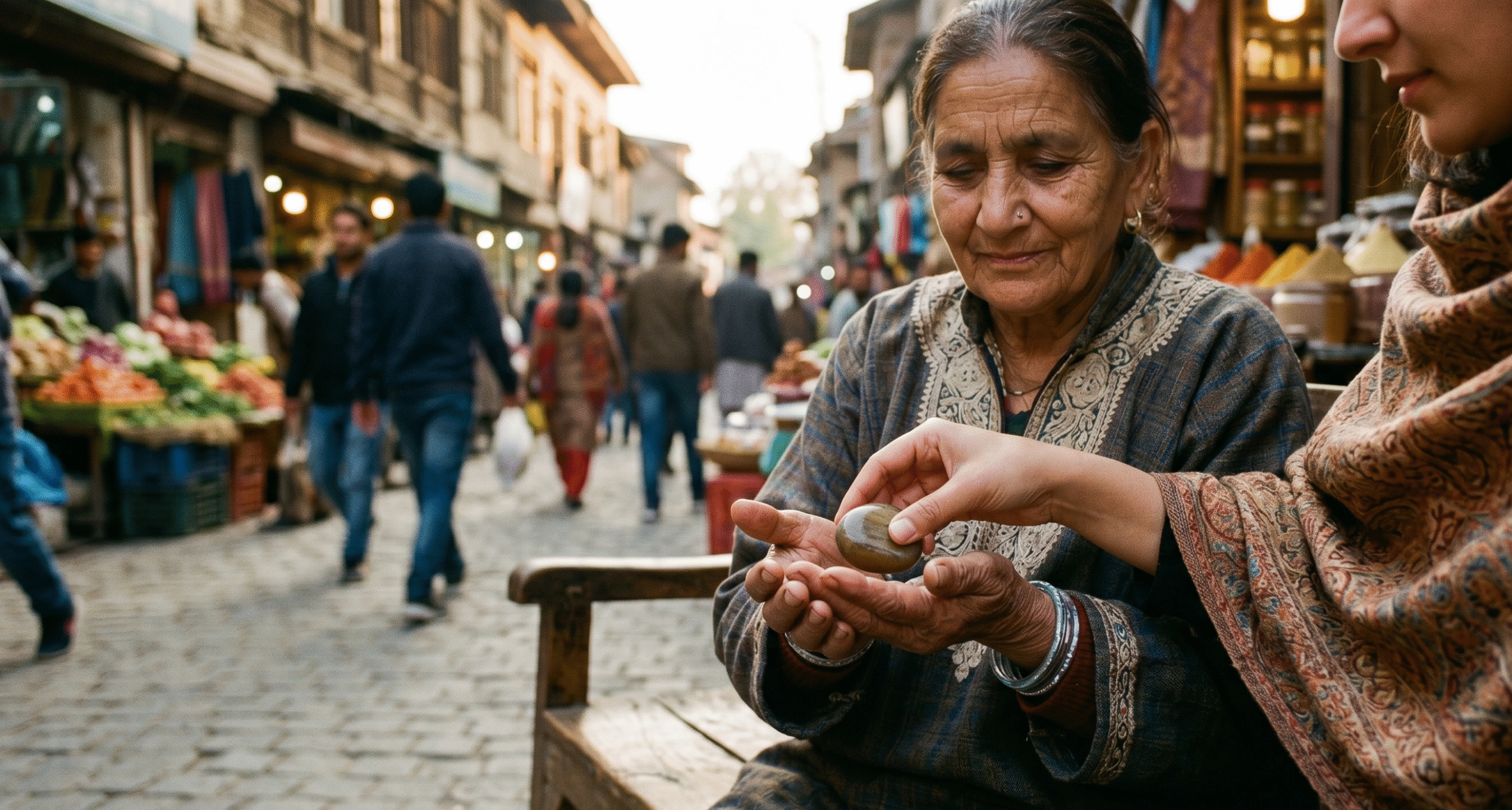
In an era of high-speed digital friction, we explore why a simple act of kindness remains the only language that transcends every barrier.
By Tabiya Mukhtar
Mark Twain once observed that “Kindness is the language which the deaf can hear and the blind can see.” In our modern era defined by the relentless friction of digital discourse and the high-velocity demands of the “hustle”, Twain’s sentiment feels less like a poetic observation and more like a necessary survival strategy. We are currently living through a paradox: we are more “connected” than ever, yet the fundamental bridge of human empathy often feels under construction, if not entirely closed for repairs.
The modern narrative of “making a difference” has been hijacked by a focus on scale. We are led to believe that to impact the world, one must launch a non-profit, donate a fortune, or spearhead a viral movement. While these are noble pursuits, this perspective creates a barrier to entry for the average person. It suggests that if you cannot change the world, you shouldn’t bother changing someone’s afternoon.
The reality is far more grounded. Impact isn’t always measured in volume; it is measured in depth. A simple act of kindness, a genuine smile to a retail worker, a brief moment of active listening, or a word of encouragement to a struggling colleague functions like a pebble dropped into a still pond. The initial splash is small, but the ripples extend far beyond the point of impact. Life is an arduous solo journey for many; a momentary bridge of kindness can be the difference between someone giving up or finding the strength to carry on.
At its core, kindness is an exercise in radical selflessness. It is distinct from mere politeness, which is often a social performance governed by etiquette. True kindness requires no audience and expects no ROI (Return on Investment). It is the act of providing support simply because it is needed, not because it is earned or because it will be reciprocated.
Consider the scarcity of this behavior. In a world optimized for personal branding and “What’s in it for me?” logic, helping someone for no reason other than their humanity is a subversive act. It challenges the cynical assumption that everyone has an angle. When we speak caring words to someone in distress, we aren’t just offering comfort; we are reaffirming their worth in a world that often treats individuals as data points or obstacles.
Perhaps the most profound form of kindness is that which is extended by those who are themselves suffering. There is a common misconception that one must be “at capacity” or “problem-free” to give to others. On the contrary, the most resonant kindness often comes from the broken.
When you are navigating your own “dark night of the soul” and yet manage to speak gently to a stranger or show patience to a child, you are demonstrating the pinnacle of human character. This brand of kindness proves that your spirit is not dictated by your circumstances. You don’t need a surplus of wealth or perfect health to be a source of light; you only need the intention to be so. A few words of genuine validation can echo in a person’s memory for decades, long after the speaker has forgotten the exchange.
In a landscape that frequently feels dominated by negativity and division, kindness serves as a practical tool for emotional regulation, both for the giver and the receiver. It possesses a unique healing property: it can de-escalate anger and bridge the distance created by political or social silos.
There is a psychological phenomenon often referred to as the “Helper’s High.” While we shouldn’t be kind solely for the selfish benefit, it is an undeniable truth that the more kindness we distribute, the more internal peace we cultivate. It reminds us of our shared humanity in an age of hyper-competition. It suggests that the “secret” to a meaningful life isn’t found in what we accumulate, but in what we release.
If kindness is a language, we must practice it to remain fluent. It should not be reserved for emergencies or holidays; it must be a daily habit, integrated into our routine as firmly as our morning coffee or our commute.
As we move forward into an increasingly automated and AI-driven future, the “human touch” will become our most valuable commodity. We will not be remembered for our LinkedIn headlines, our bank balances, or the efficiency of our workflows. When the noise of life finally fades, the legacy that remains is the emotional footprint we left on others.
Kindness is a quiet strength. It doesn’t shout, but it is heard. It doesn’t shine with the harsh glare of a spotlight, but it brightens the room. In the end, we are defined not by what we took from the world, but by the grace we gave to it. Choose to be the person who makes the world feel a little less heavy one small, quiet act at a time.
The views expressed in this article are solely those of the author and do not necessarily reflect the opinions or views of this newspaper
Leave a Reply