Widely regarded as the backbone of Adbi Markaz Kamraz, Nishat Ansari’s influence extended far beyond his own poetry, shaping the very institutions that safeguard Kashmir’s cultural heritage today
By Rayees Ahmad Kumar
In the constellation of eminent litterateurs, poets, and scholars, Nishat Ansari remains a towering figure whose intellectual shadow stretches across generations of Kashmiri and Urdu letters. Born Ghulam Mustafa Ansari on December 23, 1930 (though 1928 remains his official record), he adopted the pen name “Nishat,” a moniker that would eventually become synonymous with meticulous scholarship and poetic grace. His professional journey began in the Cooperative Department, but a profound lack of interest in bureaucracy led him toward his true calling: education. For 23 years, he served as a teacher across the Valley, earning the J&K Government’s Best Teacher Award for a career defined by paternal care and academic rigor.
Ansari was a rare literary polymath, a man who viewed literature not as a hobby, but as a sacred trust. As the author of more than two dozen books, he moved with effortless ease between the roles of poet, critic, researcher, and translator. His poetic output was both prolific and profound; during his lifetime, he published five major collections: Gulnar, Nawan, Ablag, Aokus Boukus, and Souz. Of these, Gulnar secured him the Best Book Award from the J&K Academy of Art, Culture and Languages in 1981, marking him as a premier voice in modern Kashmiri verse.
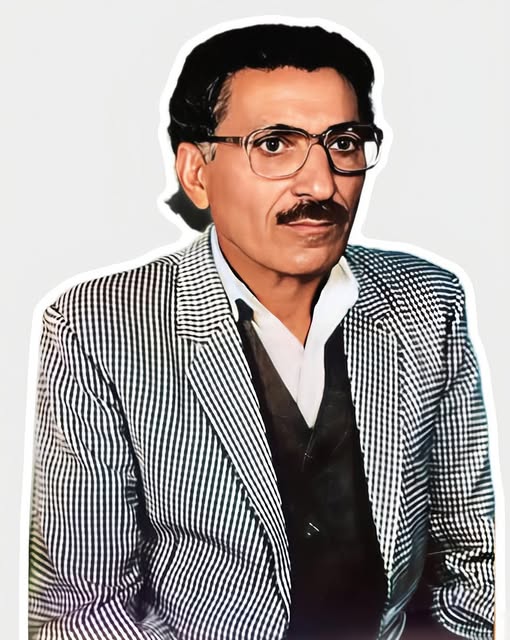
His contribution to the Sahitya Akademi, New Delhi, further cemented his status as a bridge between cultures. He authored critical research monographs on literary giants like Prof. Mohiuddin Hajini and Gh. Nabi Dilsoz, but perhaps his most spiritual undertaking was Salsabeel—his Urdu translation of the Shruks of the revered saint Sheikh Noor-ud-Din Noorani (RA). By translating the works of Dr. Zakir Hussain and the legendary Jigar Muradabadi into Kashmiri, he enriched his mother tongue with the finest nuances of Urdu literature, earning a posthumous Sahitya Akademi Award for his dedication.
Beyond the written word, Nishat Ansari was a formidable institutional architect. He was the foundational force behind Dayira Adab Delina Baramulla and served as the longtime General Secretary of Adbi Markaz Kamraz (AMK), the Valley’s largest literary federation. For three decades, he was the heartbeat of AMK, managing its records and organizing landmark conferences that shaped the contemporary literary landscape. His influence extended to the University of Kashmir, All India Radio, and the National Council for Promotion of Urdu Language (NCPUL), where his counsel was sought on matters of curriculum and cultural preservation.
Even decades after his passing on May 25, 2000, his legacy continues to expand. With nearly 300 research-based essays published across India and Pakistan, his critical insights remain essential reading for scholars of South Asian literature. As his extensive 300-page autobiography prepares to reach the public, it promises to provide a definitive window into the life of a man who was, in every sense, a living institution. Nishat Ansari did not merely write literature; he lived it, leaving behind a void that remains unfilled in the heart of Kashmir’s intellectual heritage.
The views expressed in this article are solely those of the author and do not necessarily reflect the opinions or views of this newspaper
Leave a Reply