As Jammu and Kashmir positions itself as a premier destination for eco-spiritual tourism, Mansar Lake stands at the forefront of this transformation.
Tucked within the emerald folds of the Shivalik range, Mansar Lake remains the undisputed crown jewel of the Duggar region, serving as a living testament to the harmony between nature and divinity. Located in the Samba district of Jammu and Kashmir, approximately 62 kilometers from the bustling hub of Jammu city and 19 kilometers from Samba town this sprawling body of water is far more than a mere geographical feature. It is a vibrant tapestry of Vedic mythology, ecological significance, and the resilient cultural spirit of the Dogra people. In 2026, as the global travel landscape shifts toward “slow travel” and spiritual grounding, Mansar Lake has evolved into a sophisticated destination that bridges the gap between ancient legend and modern sustainability.
The lake’s very existence is inextricably linked to the Indian epic, the Mahabharata, lending it a sanctity that earns it the prestigious title of the “Mansarovar of the Duggar region.” Local tradition vividly recounts the aftermath of the Kurukshetra war, when the warrior Arjuna performed the Ashwamedha Yagna. In a twist of fate, Arjuna’s sacrificial horse was intercepted by Babruvahana, the ruler of this land who was, unbeknownst to him, Arjuna’s own son. The ensuing battle saw the fall of the legendary Pandava, a tragedy that triggered a desperate quest for redemption. Overcome with grief upon discovering his lineage, Babruvahana sought the Mani, a divine jewel, from the serpent king Sheshnag in the underworld to revive his father. Tradition holds that he pierced the earth with a single arrow to create a tunnel—the entrance of which became Surinsar Lake—and eventually emerged at the spot where the earth split and water gushed forth to form Mansar.
To this day, the Sheshnag Temple on the eastern bank stands as a silent sentinel of this history, where the air is often thick with the scent of incense and the sound of bells. Devotees flock here not just for ritual, but to feel the weight of a story that has survived millennia, offering milk and prayers to the serpent deity. The spiritual atmosphere is further enriched by the presence of the Durga and Umapati Mahadev temples, which complete a sacred circuit anchoring the lake’s identity. Mansar is truly the heartbeat of local social customs; it is a common sight to see newly married couples performing the Parikrama, or circumambulation, of the lake’s four-kilometer perimeter to seek blessings for a long and harmonious union. Similarly, families gather on the banks for the Mundan ceremony, the first ritualistic tonsuring of a child, believing that these sacred waters ensure a prosperous and protected future.
Beyond its divine reputation, Mansar is a biological marvel that demands conservation. Since its designation as a Ramsar Site in November 2005, the Surinsar-Mansar wetland complex has gained international recognition for its critical role in biodiversity. As part of the Mansar-Surinsar Wildlife Sanctuary, the lake provides a sanctuary for a diverse array of fauna, including spotted deer, nilgai, and various species of monkeys that play among the surrounding forests. For birdwatchers, the lake is a seasonal paradise; the waters host both resident species and migratory guests that fly in from the far reaches of Siberia during the winter months. Below the surface, the lake is famous for its thriving population of fish and its ancient, large tortoises, which have become a star attraction for children and nature enthusiasts alike.
Recent conservation efforts in 2024 and 2025 have focused on sophisticated desilting and eco-restoration projects, ensuring that the underground springs feeding the lake remain unclogged and vibrant. The introduction of solar-powered aeration systems has further improved oxygen levels for aquatic life, showcasing a commitment to 21st-century stewardship that protects the lake’s ecological integrity for future generations. For the casual visitor, Mansar offers a serene escape from the stifling heat of the northern plains. The well-maintained walking path that circles the lake is perfect for morning meditation or a peaceful evening stroll, where the calm water beautifully reflects the shifting colors of the sky.
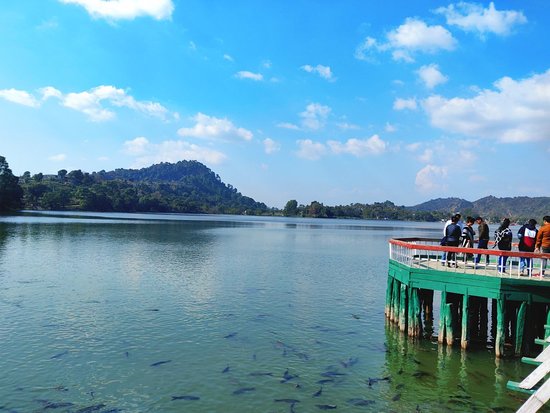
The tourism experience has become increasingly diverse, with boating remaining a primary attraction; paddle and row boats allow visitors to drift into the center of the lake for a unique perspective of the Shivalik foothills. The culinary landscape around Mansar has also seen a delightful revival. While standard fare is readily available, there is a growing movement to promote authentic Dogra cuisine, particularly during the Food and Craft Melas held in late autumn. Visitors can sample the famous Kalari, a dense and stretchy traditional cheese often called the “mozzarella of the mountains,” alongside spicy Kimb salads and sweet-and-sour Ambal. The lake truly comes alive during the Baisakhi Festival in April, an explosion of Dogri folk songs, Kud dances, and local handicrafts that draws thousands of tourists and showcases the region’s rich intangible heritage.
As Jammu and Kashmir positions itself as a premier destination for eco-spiritual tourism, Mansar Lake stands at the forefront of this transformation. Significant investments in infrastructure, including better road connectivity from the new expressway corridors and the introduction of battery-operated transport around the site, have made the lake more accessible than ever without compromising its inherent tranquility. This careful balance of growth and preservation ensures that Mansar remains a symbol of Jammu’s history, faith, and natural beauty. It is a location where the arrow of Babruvahana still resonates in the quiet lapping of the waves, and where the modern traveler can find a rare sense of belonging to both the earth and the heavens. Whether one visits for the deep-rooted mythology, the vibrant wildlife, or the simple joy of a sunset over the water, Mansar Lake fills the heart with a profound sense of peace. It remains, as it has for centuries, a shining and indispensable jewel of the Duggar region, reflecting the soul of its people in its crystal-clear depths.
The views expressed in this article are solely those of the author and do not necessarily reflect the opinions or views of this newspaper
Leave a Reply