Why Society Fears Eggs but Embraces Addiction
By Aubaid Ahmad Akhoon
In the modern theater of public discourse, society is performing a dangerous paradox. We have entered an era of “selective panic,” where staple foods that have nourished humanity for millennia, eggs, milk, and meat are dragged into sensationalist debates and subjected to rigorous, often performative, scrutiny. Meanwhile, substances that demonstrably dismantle lives, families, and healthcare systems continue to enjoy a comfortable, legalized seat at the table of commerce.
Tobacco and alcohol, despite a mountain of clinical evidence linking them to a litany of catastrophic health outcomes, remain normalized. They are taxed, indirectly advertised, and consumed openly, as if their familiarity has somehow neutralized their toxicity. This contradiction isn’t just a quirk of modern living; it is a profound ethical failure in public health governance. We obsess over the trace contaminants in our protein while ignoring the literal poisons in our lungs and bloodstream.
Data vs. Denial
Cigarettes and alcohol are not misunderstood; they are the most studied public health hazards in history. As of 2026, global health data continues to paint a grim picture. Tobacco remains a leading cause of preventable death, responsible for millions of fatalities annually through lung, oral, and throat cancers. Alcohol, conversely, acts as a multi-pronged weapon, driving liver cirrhosis, cardiovascular decay, and a host of mental health crises.
Beyond the biological toll is the sociological wreckage: domestic violence, road fatalities, and the slow-motion collapse of the family unit. Yet, the regulatory gaze remains strangely soft. In many jurisdictions, a street vendor selling eggs faces more immediate bureaucratic hurdles and “hygiene audits” than the licensed outlets selling carcinogens.
This disparity is a calculated convenience. Addiction is a reliable revenue stream for the state and a growth engine for the industry. When disease becomes a byproduct of a legal economy, silence is often purchased with tax revenue. The real danger to the public often lies not in what we eat, but in what we are encouraged to inhale and drink because it is profitable.
The Demonization of Natural Nutrition
Consider the regional shifts in places like Kashmir. For generations, organic living wasn’t a lifestyle brand; it was a necessity. Domestic poultry was a household staple, providing fresh, hormone-free eggs and meat. Today, these “complete foods”—rich in protein, essential vitamins, and brain-supporting antioxidants—are often viewed with more suspicion than a pack of cigarettes.
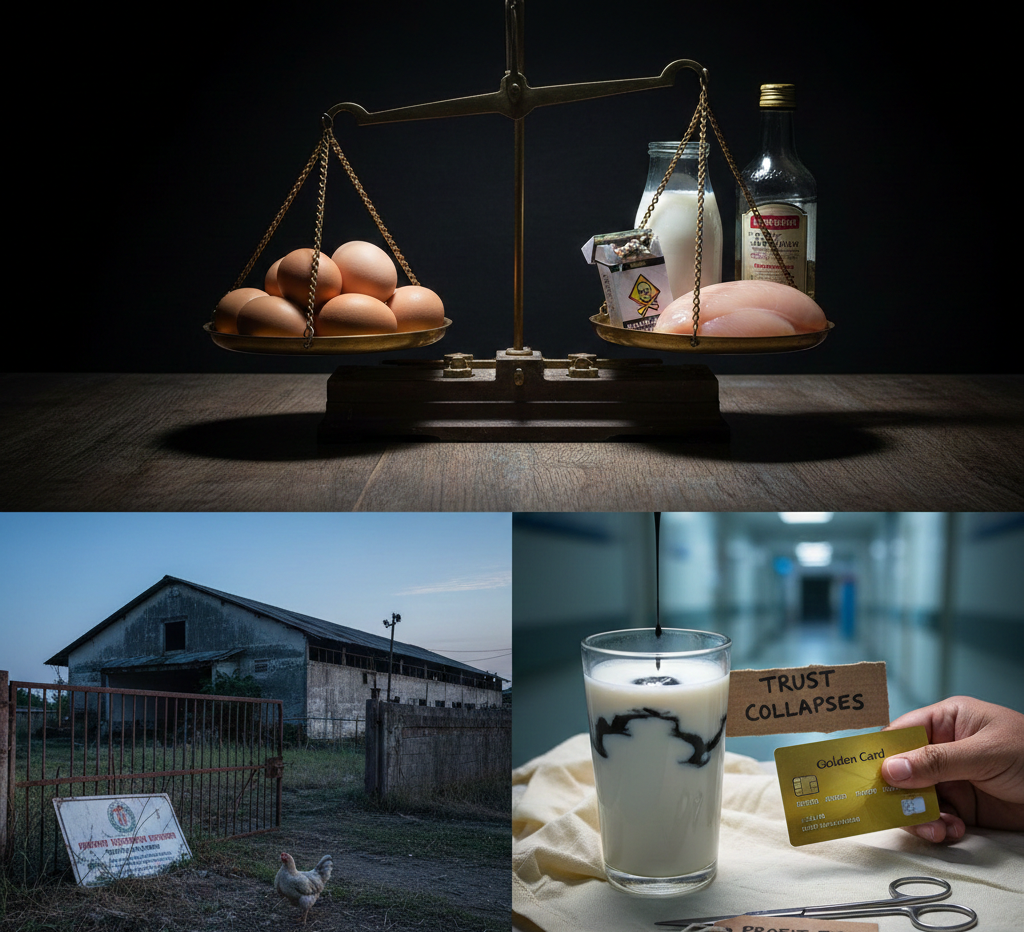
While we debate the cholesterol in an egg, we ignore the fact that chicken, when sourced responsibly, is a vital pillar of metabolism and muscle repair. This reversal of concern suggests a society that has lost its clinical north star. We have replaced the logic of natural nutrition with the anxiety of the “unregulated” farm, all while walking past the regulated liquor store without a second thought.
Infrastructure Without Accountability
Governments often possess the requisite infrastructure—poultry departments, food safety wings, and land—yet the output is frequently symbolic. Public poultry farms often fail to meet market demands, leaving consumers reliant on external, unregulated sources.
Furthermore, enforcement against unhygienic practices in the meat industry remains reactive. We see “raids” and “seizures” only after public outrage or a localized disease outbreak. True public health cannot thrive on sporadic optics; it requires a shift from reactive policing to preventive, consistent regulation. When a shop is sealed one day and reopens the next without a fundamental change in its supply chain, the “safety” is merely a performance.
Milk
Milk was once the ultimate elixir of health, the primary source of nutrition for infants and the elderly. Today, it is a source of acute anxiety. Adulteration with synthetic enhancers, urea, and detergents has turned a staple into a risk.
The crisis is exacerbated by a lack of accessible, district-level testing facilities. Without the ability for a common citizen to verify the purity of their milk, trust collapses. When the state fails to provide the tools for verification, it becomes complicit in the fraud. Silence in the face of food adulteration is not just a regulatory lapse; it is a betrayal of the most vulnerable members of society.
Life-Saving or Profit-Driving?
The introduction of the Ayushman Bharat “Golden Card” was a landmark achievement in healthcare equity, providing up to ₹5 lakh in cashless treatment to millions. It is, in principle, a revolutionary lifeline. However, in practice, it has revealed a dark underbelly of medical ethics.
There are growing reports of “surgical inflation”—where unnecessary procedures are recommended simply because the insurance covers them. When a surgery becomes a guaranteed payout, the ethical incentive to pursue conservative, non-invasive treatments can diminish.
- The Victim: The patient, who undergoes unnecessary physical trauma.
- The Beneficiary: Private facilities that view the “Golden Card” as a blank check.
Healthcare should never be a transaction where the provider’s profit is tied to the invasiveness of the intervention. When healing is commodified, the sanctity of the doctor-patient relationship is the first casualty.
Reclaiming the Moral Compass
The patterns of our current health crisis are clear: weak regulation of the powerful, selective outrage toward the small-scale, and institutional silence where profit is involved. To fix this, we must move beyond “selective panic.”
- Ethical Audits: Healthcare insurance programs need rigorous oversight to ensure surgeries are a last resort, not a financial strategy.
- Parity in Regulation: If we are to scrutinize the hygiene of a milk vendor, we must apply the same moral and regulatory weight to the sale of addictive substances.
- Decentralized Testing: Food safety should not be a “city-only” luxury. District-level labs must be available to the public to restore trust in basic staples.
- Performance-Based Governance: Government poultry and agricultural departments must be judged by their contribution to the market, not just their existence on paper.
The greatest threats to our collective health are not hidden in a carton of eggs; they are embedded in systems that reward addiction and profit from unnecessary illness. When a society fears nutrition more than intoxication, it has lost its way.
Protecting public health requires more than just “checking boxes” or conducting raids for the evening news. It requires the courage to challenge profitable vices and the integrity to ensure that the tools meant to save us—like health insurance—are not used to exploit us. Health is a gift, but its preservation is a matter of conscience.
The views expressed in this article are solely those of the author and do not necessarily reflect the opinions or views of this newspaper
Leave a Reply