Scientists are now detecting microscopic plastic shards in human blood, reproductive organs, and even brain tissue. What began as an environmental crisis has quietly crossed our biological borders, threatening human fertility and health from before our very first breath
Begin the morning like millions of others across the globe: reach for a plastic-bristled toothbrush, squeeze out a ribbon of paste, brew a cup of tea using a synthetic mesh bag, and grab a bottled drink before stepping out into the city air. None of these routine gestures feel dangerous. Yet, with every sip, breath, and bite, an invisible migration is underway. Microscopic synthetic shards, so minuscule they evade the naked eye are silently crossing our biological thresholds, slipping past cellular defenses, and embedding themselves into the very organs that keep us alive.
For decades, plastic pollution was framed largely as an external ecological tragedy: a crisis of choked rivers, suffocating marine wildlife, stray cattle scavenging on polythene-wrapped waste, and birds tangled in discarded packaging. In an earlier column, I examined documented evidence of microplastic fibers contaminating commercial fish across numerous lakes and rivers in India, including the fragile aquatic ecosystems of Jammu and Kashmir. Today, however, that external environmental menace has turned inward. Groundbreaking discoveries by scientific teams worldwide have sent shockwaves through the medical community, confirming that microplastics and even smaller nanoplastics have breached the human body. They are circulating in our bloodstream, disrupting hormonal and menstrual cycles, driving down male fertility, and even penetrating the protective barrier of the human brain, where researchers warn they could contribute to severe neurological events, including paralytic attacks.
The sheer pervasiveness of this contamination is staggering. In a comprehensive examination of microplastics and human health by Katia Savchuk from the Stanford School of Medicine and adult and pediatric health care delivery systems, the reality of our modern environment was laid bare: “Microplastics are in the water we drink, the food we eat, the clothes we wear and the air we breathe. They’ve pervaded every ecosystem in the world, from coral reefs to Antarctic ice. And they’ve infiltrated the human body, lodging themselves in everything from brain tissue to reproductive organs.”
Defined as plastic fragments measuring less than five millimeters in length, microplastics have become an inescapable feature of the modern biosphere. Global plastic commercialization took off during the Second World War, and within less than a century, annual production has exploded to more than 359 million tons. According to the United Nations Environment Programme (UNEP), single-use plastics account for 36 percent of this global output, and a staggering 85 percent of it is mismanaged. As a result, an estimated 10 to 40 million metric tons of microplastics are released into the environment every single year, a figure projected to double by 2040 if current trajectories remain unchecked.
What makes plastic uniquely insidious is its near-immortality. “Plastic never goes away; It stays in environment between 500 to 1000 years it just breaks down into finer and finer particles,” explained Desiree LaBeaud, MD, a pediatric infectious diseases physician at Stanford Medicine who co-founded the university’s interdisciplinary Plastics and Health Working Group. Unlike organic matter, synthetic polymers do not biodegrade; they merely fragment under sunlight, friction, and weather into microscopic and nanoscopic dust. At the same time, primary microplastics are intentionally manufactured for everyday consumer goods from facial cleansers and toothpastes to paints, synthetic textiles, cigarette filters, and the thin plastic films stretched over sweet boxes.
Because these particles are so fine, they travel effortlessly through wind, surface runoff, and wastewater, infiltrating both terrestrial and aquatic food webs. As a team of Indian researchers Vaishali Bhatt, Ashish Bahuguna, Tirthankar Banerjee, and Jaspal Singh Chauhan noted in their study, Finding gaps and solutions to combat microplastic pollution, “Once released into the environment, plastics degrade into microplastics (less than 5 mm) and nanoplastics, entering terrestrial and aquatic ecosystems through air transport, surface water runoff, and wastewater effluents. Microplastics originate either as primary plastics, intentionally manufactured at microscopic sizes (e.g., microbeads and industrial pellets), or as secondary plastics, formed through fragmentation of larger plastic debris. These small particles may release toxic chemicals and act as adsorbents for heavy metals and toxic chemicals in the environment, thereby posing potential ecological and human health risks. These particles may also be ingested by organisms with the potential for bioaccumulation and trophic transfer”.
In essence, microplastics act as microscopic Trojan horses, ferrying heavy metals and endocrine-disrupting toxins directly into living tissues. Scientists now estimate that the average adult ingests the equivalent of one credit card’s worth of plastic every week through contaminated seafood, meat, tea bags, and bottled water. Once inside the human body, the consequences are profound. Dr. LaBeaud noted that microplastic particles have been discovered across multiple organs and bodily fluids, including the brain, testicles, heart, stomach, lymph nodes, placenta, urine, breastmilk, semen, and even meconium, a newborn’s very first stool. “We’re born pre-polluted,” LaBeaud warned.
The clinical implications of this internal accumulation are increasingly alarming. A major review of existing medical literature by scholars at the University of California, San Francisco, concluded that exposure to microplastics is suspected of harming reproductive, digestive, and respiratory health, while pointing to potential links with colon and lung cancers. Parallel research has connected plastic particle exposure to cardiovascular disease, heart attacks, chronic kidney failure, and birth defects.
Perhaps most troubling is the quiet assault on human fertility. A comprehensive review of cellular and molecular effects conducted by Mohammad Karimian and Sahar Yaqubi of the Department of Molecular and Cell Biology at the University of Mazandaran in Babolsar, Iran, highlighted how microplastics disrupt vital reproductive mechanisms such as gametogenesis the biological process by which sperm and egg cells are formed. Their findings indicate that in men, microplastics actively damage testicular structure and function by accelerating cellular aging, triggering chronic inflammation, and provoking severe oxidative stress. Combined with rising reports of menstrual irregularities and placental contamination, the microscopic invasion poses a direct threat to human reproduction itself.
Recognizing the gravity of this crisis has sparked a wave of international policy momentum, including a landmark 2022 resolution by UN Member States to forge a legally binding treaty to end plastic pollution. In India, the campaign against disposable plastics has been elevated to a national priority. During his 2019 Independence Day address, Prime Minister Narendra Modi issued a call to free the nation from single-use plastics, and on World Environment Day in 2025, he reaffirmed that commitment, stating, “We are resolute in our efforts to reduce single-use plastic and microplastic pollution for sustainable development.”
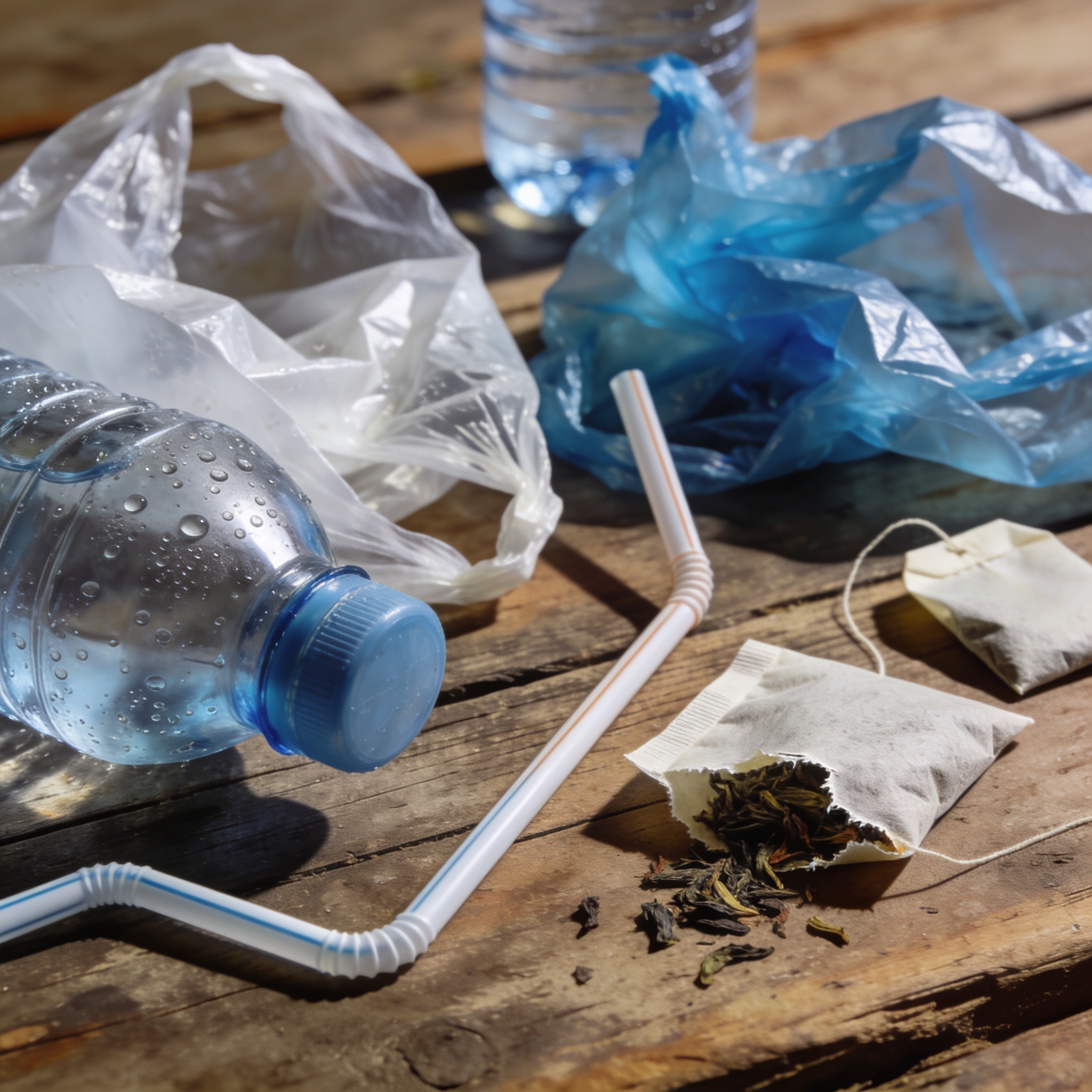
Yet, experts at Stanford Medicine and environmental policy analysts worldwide agree that current pledges from governments and corporations fall short of what is required. Solving a crisis of this magnitude demands dismantling our linear “produce, use, and discard” model in favor of a truly circular economy, where materials are kept in productive loops and toxic disposables are phased out at the source. Governments must deploy bold fiscal tools imposing heavy taxes on unnecessary single-use plastics while offering tax breaks, grants, and subsidies to industries manufacturing genuinely biodegradable alternatives and robust waste-management infrastructure.
While systemic reform is indispensable, everyday civic and institutional choices carry immediate power to curb our exposure. Changing daily habits can dramatically shrink the plastic footprint entering our homes and bodies. Travelers can carry purified water in reusable steel, glass, or traditional earthen bottles rather than buying disposable PET bottles. Hotels, restaurants, and banquet halls should return to serving water in glassware, while civic authorities install public water ATMs and drinking fountains at short intervals across towns and cities. Government offices and official functions must strictly enforce bans on plastic crockery, cutlery, and bottled water. Even nostalgic practices deserve a modern revival such as replacing flimsy plastic milk pouches with reusable glass bottles, cracking down on thin polythene bags in bustling local markets, and halting the widespread use of plastic films over sweet boxes.
The evidence is no longer buried in distant ocean trenches or remote landfill sites; it is pulsing through our arteries and resting within our brains. Reversing this invisible invasion requires treating plastic not as a harmless convenience, but as an urgent public health emergency before the synthetic world we built permanently rewrites the biology of life itself.
Leave a Reply