A catastrophic glacial collapse high in the Himalayas has triggered a devastating cross-border torrent, leaving hundreds dead and thousands missing across Nepal and Tibet. Search-and-rescue teams continue to scour submerged hydropower tunnels and wiped-out settlements as experts point to critical failures in real-time transboundary warnings.
By Ajaz Rashid
In the high, razor-sharp ridges of the central Himalayas, the disaster did not arrive with the slow swelling of a monsoon river. It occurred as physics compressed into catastrophic velocity.
In the early morning hours of August 26, 2026, a massive slab of glacier and fractured bedrock sheared off from the upper peaks flanking Langtang Lirung at an altitude exceeding 5,200 meters. Falling more than a vertical kilometer into the remote Lhende Khola gorge near the Nepal-China frontier, millions of tons of ice, boulders, and glacial till violently choked the river. The sheer kinetic shock logged across global seismological monitors as a magnitude-5.2 seismic event.
Behind this spontaneous, unstable embankment, billions of liters of meltwater and river discharge backed up into a volatile reservoir. When the natural barricade inevitably burst, it unleashed an estimated 150-to-190-kilometer-per-hour slurry of liquid concrete, pulverized rock, and ice down the Lhende Khola and Bhote Koshi-Trishuli river systems.
Six days later, the scale of destruction across northern Nepal and the Tibet Autonomous Region has solidified into one of the deadliest high-altitude flash flood disasters in modern Himalayan history. Regional authorities report a combined confirmed death toll surpassing 955 with at least 939 dead in Nepal and 16 confirmed dead in Tibet. More than 4,400 people remain missing, swallowed by riverbanks, submerged inside inundated hydropower tunnels, or buried under ten-meter deposits of dense alpine silt.
The Epicenter of Carnage
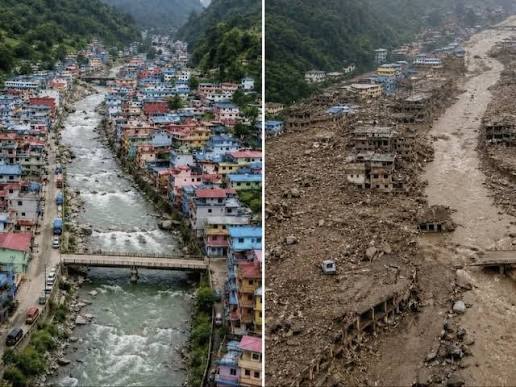
The torrent carved a path of total devastation along a 100-kilometer corridor, annihilating settlements, border customs facilities, arterial highways, and cascading energy projects.
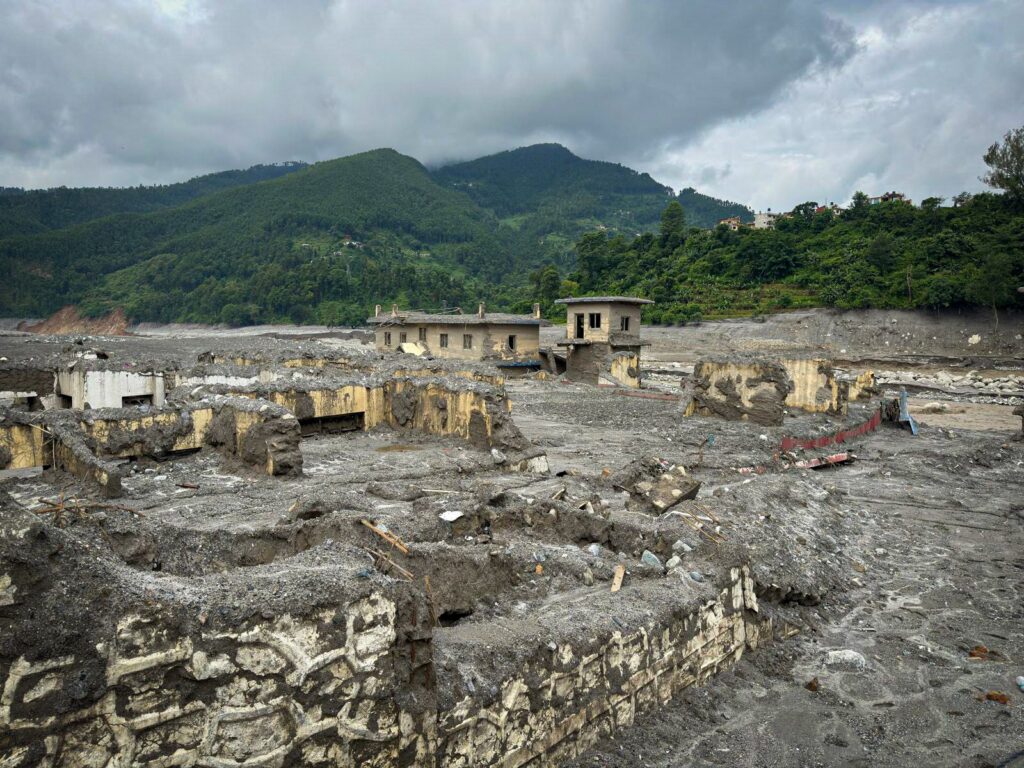
In Nepal’s Rasuwa and Nuwakot districts, entire hamlets were scrubbed from their foundations within seconds. At the Rasuwagadhi border crossing—where the historic Gyirong Port anchors Nepal-China commerce—customs offices, immigration compounds, and transport yards were obliterated.
Dozens of security personnel stationed at frontier posts were caught entirely unawares; disaster management rosters list 45 Nepali Army soldiers, 38 police personnel, and 18 border officials among the missing.
The human tragedy extends across continents:
- Trekking & Pilgrimage Corridors: Over 590 foreign nationals from more than 20 countries are unaccounted for. Hundreds of Indian pilgrims en route to Mount Kailash in Tibet, alongside international trekking parties from the United States, Britain, Malaysia, Ukraine, and Australia, were traversing the Langtang and Gyirong trailheads when the deluge struck.
- Hydropower Tunnel Traps: The Trishuli and Bhote Koshi basins house a dense cluster of Nepal’s primary hydroelectric dams. When the surge crashed through headworks and intake conduits, hundreds of engineering crew and tunneling laborers were trapped underground. While frantic rescue operations have brought several dozen survivors to safety, over 630 power project personnel remain missing.
What Caused the Burst?
Initial alerts attributed the catastrophic surge to a localized tectonic earthquake. However, forensic analysis by the U.S. Geological Survey (USGS) and satellite imagery from the International Centre for Integrated Mountain Development (ICIMOD) revealed a far more sinister mechanism: a Landslide-Dammed Outburst Flood (LDOF) triggered by high-altitude permafrost degradation.
|
Stage |
Mechanism | Impact / Observation |
| 1. Destabilization | Accelerated melting of sub-surface permafrost at 5,200m elevation. | Structural rock buttresses lost cohesion beneath hanging ice tongues. |
| 2. Mass Failure | Catastrophic collapse of millions of cubic meters of hanging glacier and rock. | Seismic networks registered an acoustic/vibrational signature equal to a magnitude-5.2 tremor. |
| 3. River Blockage | Fallen debris completely dammed the narrow Lhende Khola gorge. | River flow downstream plummeted momentarily, creating an ephemeral reservoir behind unconsolidated till. |
| 4. Hydrostatic Rupture | Rapid meltwater pooling overtopped and liquefied the loose rubble dam. |
Catastrophic structural burst released a hyper-concentrated debris flow moving at up to 190 km/h. |
“The Hindu Kush Himalaya is warming at more than twice the global average,” explained an ICIMOD glaciologist reviewing the event. “What held these high-altitude walls together was permafrost—the frozen mortar of the peaks. As that mortar liquefies, mass slope detachment is no longer a century-scale anomaly; it is an active seasonal reality.”
What Went Wrong?
In the wake of the devastation, field investigators, hydrologists, and emergency responders point to systemic vulnerabilities across scientific, infrastructural, and geopolitical lines.
- The Fatal Blind Spot in Real-Time Cross-Border Monitoring
Although international seismic sensors detected the initial rock-ice collapse, there was no automated, shared hydrological communication network linking high-altitude sensors on the Tibetan plateau with downstream communities in Nepal. The critical interval—the 40 to 90 minutes when the river was choked and the lake was rapidly filling—passed in near-total operational silence.
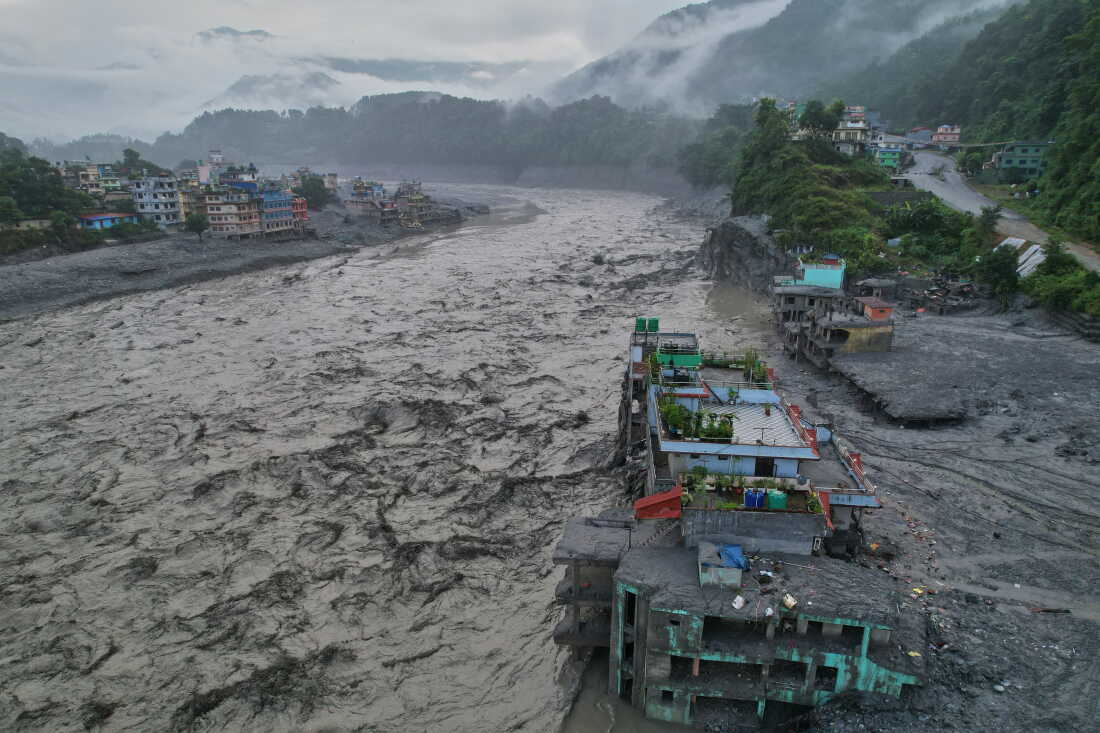
- Infrastructural Blindness in Run-Out Zones
Over the past decade, the Trishuli and Bhote Koshi gorges have witnessed an unprecedented infrastructure boom. Cascading run-of-the-river hydropower facilities, road expansions, and commercial worker encampments were constructed within historical flood run-out paths. Siting heavy civil infrastructure directly in high-velocity gorges without deep-seated outburst armor turned high-value energy plants into deadly choke points.
- Reliance on Monsoonal Historical Baselines
National civil defense systems in the Himalayas were designed around predictable monsoon precipitation and slow-onset river rises. The sudden, mechanical release of hundreds of millions of cubic meters of water, carrying massive densities of sediment and boulders, rendered standard flood barriers and early-warning sirens obsolete within minutes.
On the Record: Official Statements and Geopolitical Tensions
The disaster has triggered diplomatic friction, urgent international rescue appeals, and intense scientific debate over Himalayan resource exploitation.
Government of Nepal:
“The scale of destruction along the northern border is unprecedented. Entire settlements and strategic infrastructure have been erased from the map. Our immediate priority remains reaching our citizens and foreign workers trapped in flooded hydropower tunnels and isolated mountain pockets. We have formally requested specialised disaster victim identification teams, LiDAR reconnaissance, tunnel excavation machinery, and forensics assistance from the international community.”
Lok Bahadur Chhetri, Spokesperson for Nepal’s Ministry of Foreign Affairs, speaking at a press briefing in Kathmandu.
Government of the People’s Republic of China:
“We have noted assessments by technical institutions in both China and Nepal regarding the disaster. The debris flow was triggered by the sudden collapse of high-altitude glacial terrain. Claims attempting to link this natural catastrophe to upstream Chinese hydroelectric projects are groundless and constitute malicious speculation. China is actively managing recovery efforts in Gyirong and remains committed to providing humanitarian and disaster management assistance to Nepal.”
Guo Jiakun, Spokesperson for the Ministry of Foreign Affairs of the People’s Republic of China, responding to media inquiries in Beijing.
United Nations & International Response:
“This disaster is a horrifying manifestation of the climate emergency across the ‘Third Pole.’ The glaciated peaks that sustain billions of lives are destabilizing rapidly. The loss of life in Nepal and Tibet must serve as a stark global alert: early warning systems can no longer stop at political boundaries.”
Joint Statement from the UN Office for Disaster Risk Reduction (UNDRR) and regional humanitarian partners.
The Future Course: Re-Engineering Himalayan Resilience
As multinational search-and-rescue teams deploy forensic experts, search dogs, and ground-penetrating radar across the mud-caked valleys of Rasuwa, Nuwakot, and Dhading, experts argue that the disaster must permanently reshape Himalayan governance and engineering.
┌────────────────────────────────────────────────────────────────────────┐
│ PILLARS FOR FUTURE TRANSBOUNDARY RESILIENCE
├────────────────────────────────┬───────────────────────────────────────┤
│ 1. Unified Space-Radar Alert │ Direct Synthetic Aperture Radar (SAR) │
│ Networks │ data-sharing to detect valley-choking │
│ │ dams within minutes. │
├────────────────────────────────┼───────────────────────────────────────┤
│ 2. Moratorium on Fragile Gorge │ Revising environmental clearances for │
│ Hydropower │ mega-dams in high-velocity GLOF/LDOF │
│ │ corridors. │
├────────────────────────────────┼───────────────────────────────────────┤
│ 3. Automated Seismic-Acoustic │ Installing low-latency acoustic wire- │
│ Tripwires │ break sensors along primary high- │
│ │ altitude headwaters. │
├────────────────────────────────┼───────────────────────────────────────┤
│ 4. Transboundary Risk Treaties │ Binding multilateral data-sharing │
│ │ pacts between China, Nepal, and India │
│ │ that transcend geopolitical stalemates│
│ │. │
└────────────────────────────────┴───────────────────────────────────────┘
The Himalayan valleys cannot rely on historical weather models in an era of rapid cryogenic destabilization. Unless real-time transboundary data sharing moves at the speed of mountain physics rather than the speed of diplomacy, the razor-thin corridors beneath the world’s highest peaks will remain vulnerable to sudden, catastrophic collapse.
Leave a Reply