Amidst a surge in spinal deformities, India grapples with manifold reasons contributing to this growing health concern. From accidents and social violence to nutrition deficiencies and post-polio complications, the impact is profound.
Dr Ayush Sharma
India, for various reasons, has emerged as the country with the highest number of cases of spinal deformities. These cases stem from a multitude of factors, ranging from accidents and social violence to nutritional deficiencies, post-polio complications, and congenital issues. Slipped Disc: A Silent Epidemic Affecting All Age Groups in India
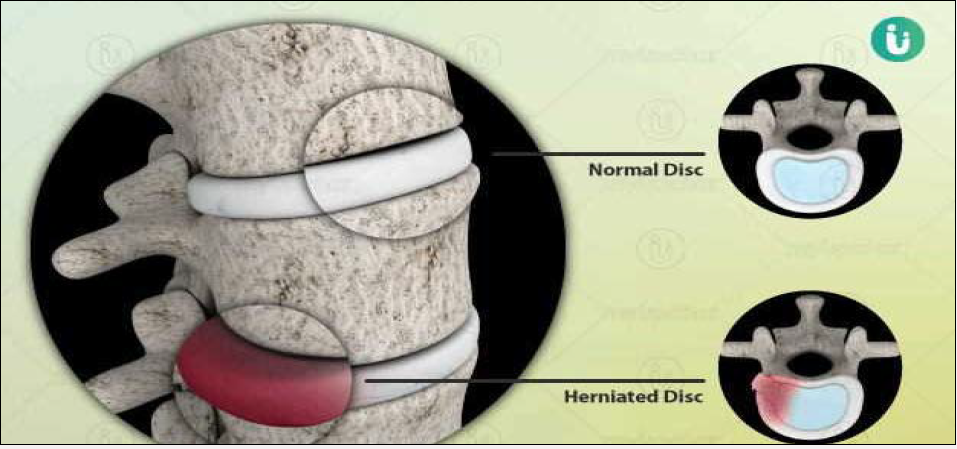
Among the prevalent spinal problems, slipped discs stand out as a common ailment, affecting approximately 1% of the population at any given time. Typically, this condition strikes individuals between the ages of 30 to 50 years, yet the landscape has evolved, and it now transcends age groups and gender.
The burden of slipped discs weighs heavily on those engaged in occupations requiring frequent bending and the lifting of heavy objects. However, it is essential to recognize that backaches and leg pain can have diverse origins, extending beyond slipped discs to encompass ailments like spinal tumors, infections, tuberculosis, cancer metastasizing to the spine, osteoporosis, arthritis, spinal stenosis, fractures, and congenital diseases.
Advancements in neuroscience have been remarkable over the past few years, propelling the field to a position of strength on par with other leading nations. India, in particular, has historically been a pioneer in nurturing master neurosurgeons, and with the integration of cutting-edge techniques and robotic surgery, the nation now stands at the forefront of medical innovation.
The modern approach to spinal surgery has undergone a revolutionary transformation, with procedures conducted through a tiny incision of approximately 1.5 centimeters in the back, facilitated by an endoscope. This minimally invasive technique not only accelerates the recovery process but also allows patients to return home within 12-24 hours post-surgery. Moreover, they can resume their daily activities, such as walking and using the restroom, on the same day, with a swift return to office duties expected in just a few days.
Despite the remarkable progress in medical science, the prospect of undergoing spinal surgery often evokes trepidation among patients due to concerns surrounding the risk of paralysis or dependency on others. Consequently, some individuals opt to endure the pain rather than seeking medical intervention. However, it is vital to note that the adoption of modern surgical techniques has significantly mitigated the occurrence of such complications, making them exceedingly rare.
Today, many major cities in India have fully equipped neurosurgical centres capable of performing high-end complex procedures. Similar to other medical fields, neurosurgery is also moving towards sub-specialization and various branches have mushroomed over the years which deal with a specific area like Skull Base, Functional and Stereotactic, Neuro-oncology, Spine, Vascular and Neuro interventional, Paediatric, Peripheral Nerve Surgery, Neurotrauma and Minimally Invasive Neurosurgery.
With the rapidly growing advancements in the field of neurosciences, endoscopic spinal procedures have completely changed the treatment modalities even for the most complex spinal complications.
While many patients fear the complications of open and traditional surgeries, with recent advancements, spinal surgeries have become minimally invasive and 100% safe with minimal blood loss and quicker recovery. Keyhole surgeries include ‘Micro-endoscopic decompression’ surgery wherein an incision is made around 1.5 cm to 2 cm without damaging the adjacent soft tissues. While the cosmetic appeal is one of the major advantages, there is no trauma to the bone or muscles, keeping the contours well intact and the patient recovery time are also minimal in comparison to an open surgery.
This type of surgery is highly beneficial to minimize the pain and nerve irritation and patients suffering from spondylitis, Disc Herniation, or PIVD (prolapsed disc) can be highly benefited. As the procedure involves preventive and safe measures, it is one of the safe and sound surgeries for people with a variety of spinal ailments irrespective of the age bracket. The materials used along with the screws are flexible and do not cause rigidity of the spine with time thereby maintaining its mobility.
Due to the technological advancements in the field of NeuroSurgery, the quality of life post spinal surgery has significantly improved. Therefore, in planned Brain and Spine surgeries, with the help of a comprehensive team, precise outcomes can be expected rather than on leaving the outcomes on chances.
Until a few years ago, one had to travel overseas for the best medical treatment. However, the scene has completely reversed now and we have International Medical Tourism at its highest with patients from other countries visiting India for better healthcare facilities.
(The author is founder and director, Laser Spine Clinic)
Leave a Reply