By Mool Raj
Engaging in playtime is undeniably advantageous for your child, but the misconception that extensive hours of interactive horseplay are required to foster their development needs to be dispelled. Juggling the demands of a long workday can make it challenging to summon the energy needed for quality play with your little ones. Beyond its surface-level enjoyment, play assumes a significant role in a child’s overall health and developmental journey, encompassing a myriad of activities ranging from classic games like peek-a-boo and pat-a-cake to the more complex hide-and-seek and hopscotch.
Delving into the insights offered by “The Power of Play: A Pediatric Role in Enhancing Development in Young Children,” it becomes apparent that engaging in play, both with parents and peers, stands as a pivotal factor in constructing robust brains, bodies, and social bonds—an imperative in today’s dynamic world. Extensive research underscores the transformative impact of play on children’s abilities, enhancing skills such as planning, organization, interpersonal relations, and emotional regulation. Moreover, play proves instrumental in honing language, mathematical prowess, and social acumen, providing children with valuable tools to navigate stressors.
Despite the manifold benefits associated with play, disconcerting statistics reveal a consistent decline in the time children allocate to this essential activity over the decades. Factors such as tightly regimented family and school schedules, diminishing safe play spaces, and the burgeoning prevalence of media and screen time contribute to this worrisome trend.
In a bid to preserve the integral role of play in childhood, pediatricians are contemplating the incorporation of a “prescription for play” during every well-child visit up to the age of two. They further advocate for parents to seek out high-quality child care or preschool programs that integrate playful methodologies into the learning process.

Recognizing that learning is most efficaciously fueled by tapping into a child’s inherent inclination to play, as opposed to relying solely on external metrics like test scores, is crucial. Actively engaging with and joyfully discovering their surroundings, children acquire 21st-century skills essential for collaboration and innovation.
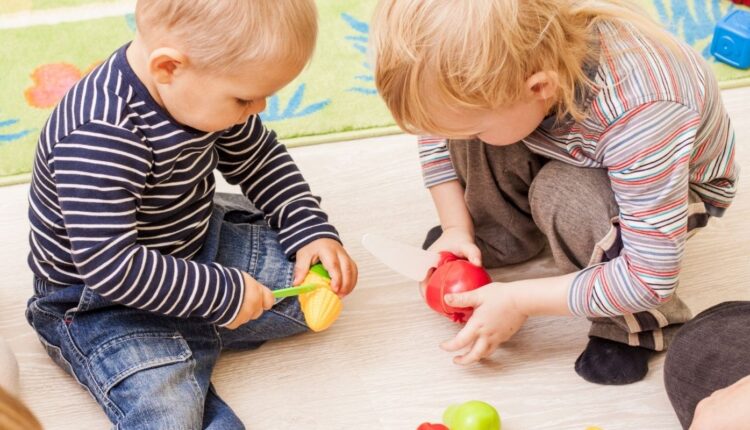
Analogously, when children engage with objects during play, they metamorphose into little scientists, utilizing sensory-motor skills to experiment and explore properties. Preschool-age children, in turn, leverage objects to cultivate abstract thinking, symbolism, and social skills.
The physical dimension of play, such as unstructured recess activities, emerges as a cornerstone in developing children’s motor skills, preventing obesity, and fostering emotional intelligence. Whether navigating the gentle thrill of a playground slide or participating in games like duck-duck-goose, children learn valuable socio-emotional skills, including empathy and teamwork.
Outdoor play, in particular, assumes paramount importance, allowing children to harness all their senses to refine skills like spatial awareness and balance. Studies even suggest a positive correlation between increased recess time and subsequent academic success in older children.
Encouraging play that involves experimenting with diverse social roles contributes to the development of cooperation, creativity, and complex negotiation, communication, and language skills. Activities like dress-up, make-believe, and imaginary play form a crucible for nurturing these cognitive abilities.
Even the simplest play activities, such as passing a rattle from one hand to another, wield profound developmental impacts. This seemingly uncomplicated act aids in coordinating the nervous system’s hearing, hand and arm muscles, and eye impulses, embodying a rich tapestry of learning.
As toddlers engage in play, they embark on a journey of developing coordination, muscle strength, and balance through activities like climbing, running, falling, and resolutely getting back up. These experiences facilitate the management of emotional surprises, minor pain, and the cultivation of resilience.
The creative prowess of school-age children is unleashed when they are left to concoct their own fun. Make-pretend play, snow fort building, art projects, and tag-type games empower kids to set rules, assign roles, and hone negotiation skills—all of which involve more physical activity than sedentary TV watching.

Older children, when involved in team sports or organized group activities, glean lessons that extend beyond the playing field. Team membership imparts the values of hard work, dedication, resilience in the face of failure, and the understanding that persistence pays dividends in improved performance.
Participation in team sports also engenders a sense of belonging crucial to self-esteem. The camaraderie fostered in the realm of team sports lays a foundation for future success in both the workplace and family life.
To ensure your child truly reaps the benefits of play, it becomes incumbent upon parents to provide a safe space and time for this essential activity. While supervision is necessary, allowing children to unfurl their imaginations proves most advantageous for their holistic development. Facilitating play to unfold organically and redirecting only when necessary promotes a wholesome play experience.
Drawing a clear distinction between creative play and screen time is imperative in the contemporary landscape where children spend considerable hours in front of screens. While technology can offer educational benefits, excessive screen time is correlated with pediatric obesity, disrupted sleep, and behavioral issues. Adhering to the American Academy of Pediatrics’ recommendations on screen time limits becomes crucial for maintaining a healthy balance.
The specter of overscheduling looms large, with children finding themselves ensnared in a web of school, homework, lessons, and sports. The resultant dearth of free playtime can lead to heightened stress levels, adversely impacting mental well-being and potentially precipitating anxiety and depression in children.
Striking a delicate balance between structured activities and unstructured playtime, free from screens, is essential. Recognizing that each child has unique needs is paramount, yet the universal need for unstructured playtime remains a constant. The onus is on parents to navigate this delicate equilibrium, fostering an environment where their children can flourish, both cognitively and emotionally.
The views expressed in this article are solely those of the author and do not necessarily reflect the opinions or views of this newspaper