
By Rayees Ahmad Kumar
Dr Gulzar Ahmad Wani, a Lecturer in the school education department, is not only an esteemed academic but also a distinguished literary figure in the valley. His expertise encompasses a wide range of genres in Urdu literature. Hailing from the picturesque Tengpuna village in Pulwama district, Dr Gulzar Wani has generously gifted the world of Urdu literature with fifteen meticulously compiled books. Besides being a popular critic and researcher, he is also recognized as a prominent essayist. Additionally, he actively participates in poetry sessions organized by various literary bodies, showcasing his skills as a versatile poet. Having had the opportunity to review several books authored by Dr Gulzar, I now present my assessment of his latest work, ‘Gard-e-Safar,’ a captivating collection of 73 beautifully written poems that explore diverse themes and central ideas. Book Review: ‘Gard-e-Safar’ by Dr Gulzar Ahmad Wani
‘Gard-e-Safar’ spans across 112 pages and is published by Adeeb Publications Pulwama. The book’s cover page is tastefully designed, and the superior quality paper used inside adds to the overall aesthetic appeal. Dr Gulzar, with heartfelt devotion, dedicates this exquisite creation to Prof Manzar Hussain, an esteemed builder, litterateur, and Urdu critic. The proem of the book, penned by Dr Mohd Ashraf of Ghorakhpur, Uttar Pradesh, lauds Dr Gulzar as an exceptionally sensitive individual who has an innate ability to empathize with those around him. He possesses an acute understanding of their pain, agony, and moments of bliss. To express his solidarity and provide solace during times of misfortune or predicament, Dr Gulzar employs his remarkable skills and talent to craft prose and poetry pieces that give these moments a literary form. Indeed, it is a task that falls within the realm of an ordinary literary figure, and Dr Gulzar exemplifies this role with great finesse. In his foreword, titled ‘Apni Baat,’ Dr Gulzar writes on page 12, “Poetry is one of the precious gifts and blessings from the Almighty. In these poems, I have depicted various aspects of my past, reflecting the ups and downs I have experienced from 1995 until the present. To recall these events and use them as reminders to lead a successful life ahead, I have endeavored to encapsulate them in my poetry.”
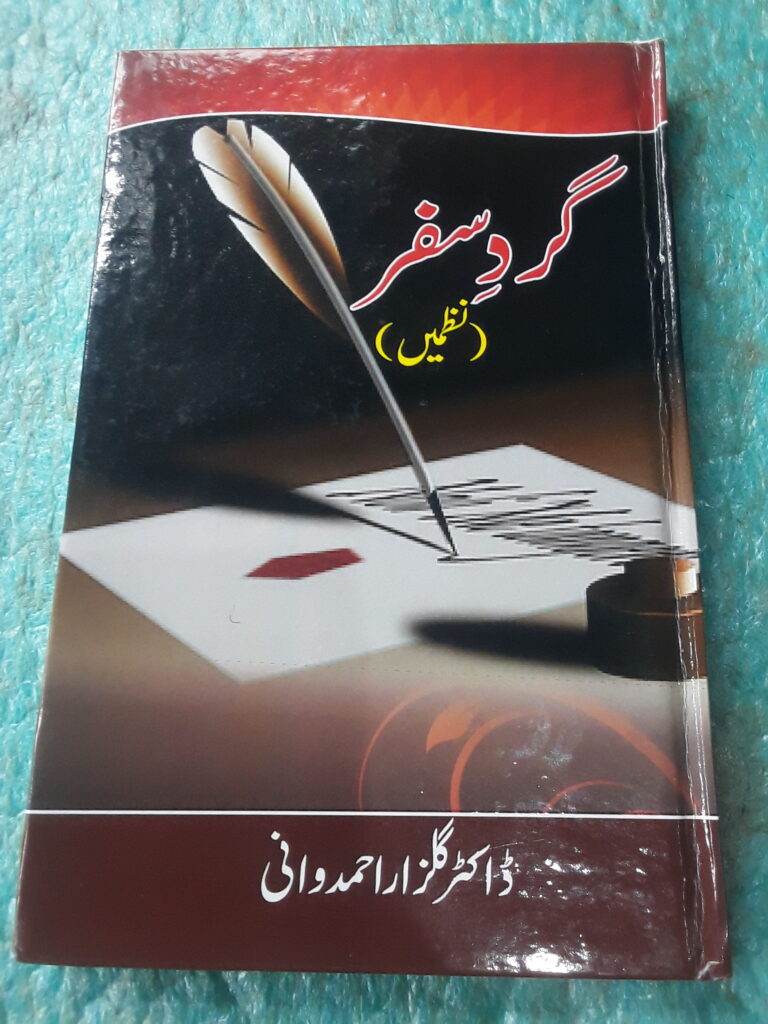
The book opens with the poem ‘Bahar Aane Tak’ on page 15, where Dr Wani writes, “Mosam Dave pawoun aate aur aakar chale Kate gain, Par koi apni zardi bikhra kar jata hai.” This verse reflects Dr Gulzar’s unique technique of composing poems in a comprehensive language, accessible to all. Another captivating piece, ‘Zindagi ae Zindagi,’ on page 20, presents Dr Gulzar’s ability to describe objects and ideas through the lens of a poet. He writes, “Titliyon ki bas ik chamak hai, kya aarzouan kya walwale hain,” painting a vivid picture in the reader’s mind. The poem ‘Zadi Rah’ on page 23 is intricately woven, evoking empathy in every conscious mind, as it beautifully portrays the plight of a traveler devoid of all possessions. Reflecting on the sorry state of the valley and its ever-worsening conditions, Dr Gulzar eloquently compiles a poignant poem titled ‘Jane Khuda ab Aage’ on page 32.
‘Muhabat,’ found on page 37, showcases one’s love with such finesse that it is compared to the moon, which, as one tries to reach for its ethereal beauty, slips away, leaving the admirer in solitude. Highlighting the resplendent beauty of Kashmir and its ever-flowing crystal-clear water bodies, Dr Gulzar presents an excellent poem titled ‘Sarzamini Abshar’ on page 53. On page 62, Dr Gulzar weaves an endearing poem, ‘Sadak,’ reflecting upon the beauty of a road that has stood the test of time, guiding travelers towards their destinations, with trees on its sides providing respite from the scorching heat of the sun during hot summers. ‘Meri Manzil Kahan,’ on page 75, depicts a sense of loneliness, wherein one finds oneself in a dilemma while fast asleep, contemplating whether to awaken in the darkness of the night or continue resting in bed.
The poem ‘Gulab’ on page 82 is composed with such grace that the fragrance of this king of flowers seems to permeate the very pages of the book. The Chinar tree holds great cultural significance in Kashmir. Dr Gulzar admirably reflects its role in providing pleasant relief to people seeking respite under its shade, especially during hot summer days. His poem, ‘Saye Chinar ke,’ on page 84 magnificently highlights the glory of this majestic tree found abundantly throughout the valley, gracing gardens, parks, religious sites, and roadways. There is a common saying that words never die. Every word spoken or written has the potential to endure and resurface in its original form, one way or another. Hence, it is crucial to exercise caution when expressing oneself. Dr Gulzar echoes this sentiment in ‘Lafz kabi marte nahi’ on page 88.
‘Hosla Rakhna,’ found on page 94, is a testament to Dr Gulzar’s intellectual prowess, as he imparts wisdom to those desperate souls who have lost all hope and are trapped in melancholy. ‘Naguzir Sach’ on page 99 is a beautifully crafted piece that vividly illustrates how the passage of time breathes new life into once barren and lifeless lands. The final poem, ‘Aitraaf,’ on page 109, is an exquisite and endearing composition that compels readers to revisit it multiple times. It showcases the author’s vulnerable existence before his Lord, the omnipotent, omnipresent, and all-sovereign. Dr Gulzar humbly yearns for repentance and forgiveness for his past misdeeds in this beautifully penned piece.
Dr Gulzar Wani has skillfully utilized his intellectual and literary abilities to make a significant contribution to Urdu literature. He is an exceptional writer who possesses a deep understanding of how to create delightful literary masterpieces. ‘Gard-e-Safar’ is a prime example of his profound talent. I highly recommend this book to every Urdu enthusiast, urging them to delve into its pages and provide their valuable feedback. It will undoubtedly serve as a heartfelt appreciation to the author for his remarkable work.
Leave a Reply