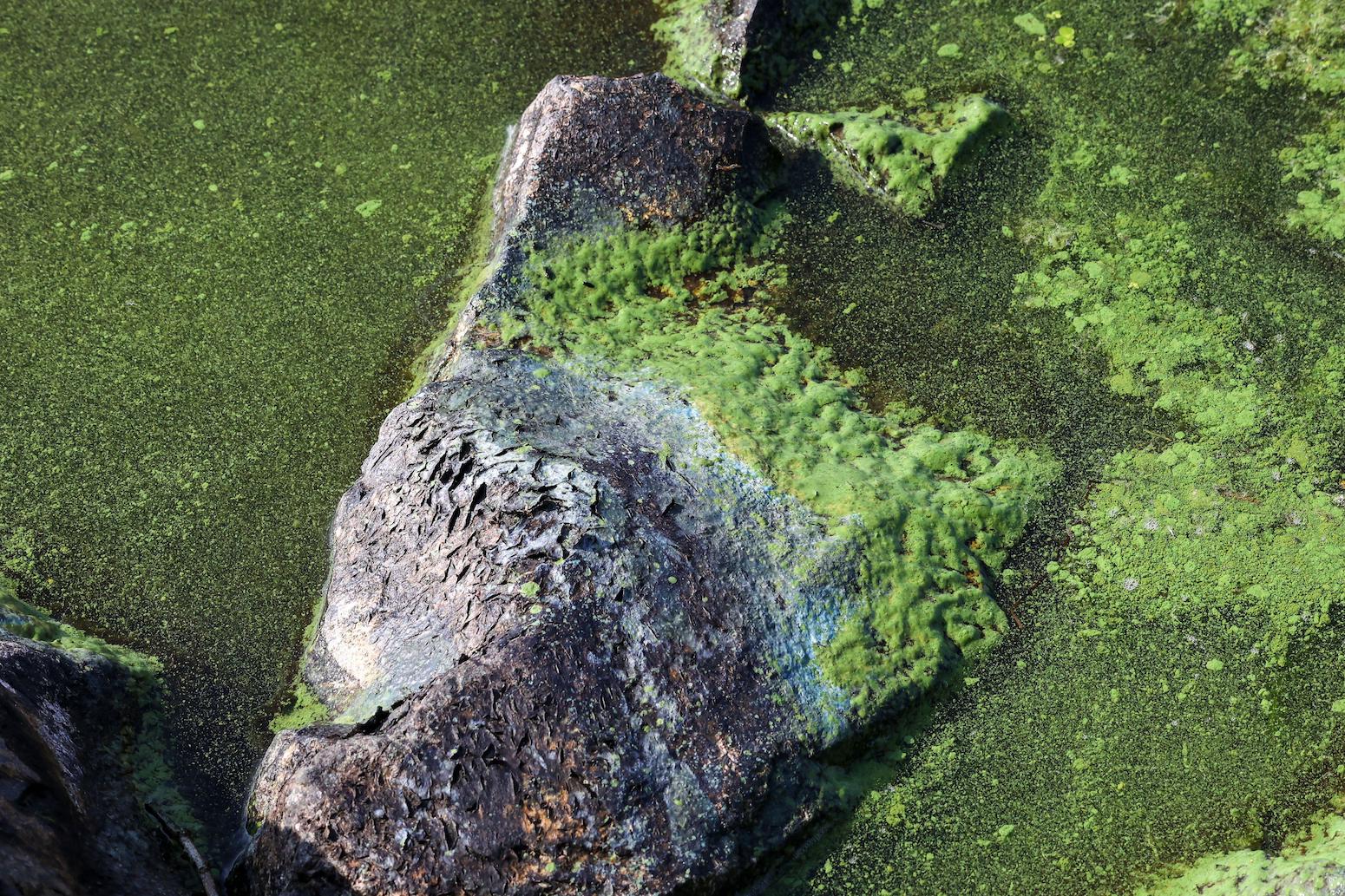
From ancient oceans to modern farms, algae may hold the key to cutting carbon and methane while feeding the planet.
Algae are not just pond scum or seaweed washed up on the beach; they are among the most ancient and adaptable life forms on Earth and may hold the key to solving some of humanity’s most urgent problems: climate change, pollution, food security, and sustainable materials. More than 3.5 billion years ago, long before plants or animals existed, cyanobacteria — a group of algae sometimes called blue-green algae — began the slow transformation of our planet. Through photosynthesis, these microbes converted carbon dioxide and water into oxygen, triggering the Great Oxygenation Event and creating an atmosphere capable of sustaining complex life. Since then, algae, from microscopic microalgae to larger macroalgae or seaweeds, have quietly maintained Earth’s carbon and oxygen balance. Like land plants, they use sunlight to convert CO₂ into biomass while releasing oxygen, but many species grow faster, reproduce more rapidly, and are often far more efficient at converting carbon than trees.
Under optimal conditions, algae can sequester as much as 1.8 kilograms of CO₂ for every kilogram of algal biomass produced. The world’s oceans, home to vast expanses of marine algae, absorb roughly 2 to 3 billion tons of CO₂ annually, amounting to around 6 to 8 percent of global human-driven emissions. The implication is clear: expanding algae growth, whether in the oceans or controlled farms, could meaningfully boost the planet’s natural carbon sinks. All algae capture carbon, regardless of whether they are used for food, feed, or industrial products, making them a versatile tool in the fight against climate change.
Humans have long depended on algae in various forms. Coastal and island communities across the world have farmed seaweed or harvested wild algae for food, medicine, and traditional uses. Seaweeds like Irish moss have been used for centuries and are still widely employed as food additives. Today, algae are being reimagined for a wide range of modern applications, including cosmetics, pharmaceuticals, biofertilizers, animal feed, and biodegradable plastics. Growing algae captures CO₂ in biomass, and when that biomass is used for durable materials or soil amendment, carbon remains locked away instead of returning to the atmosphere. Some algae naturally produce a bioplastic called PHB, which can replace polypropylene, one of the world’s most widely used plastics. Unlike conventional plastics, PHB breaks down in normal household compost without releasing harmful pollutants.
Perhaps the most dramatic recent development in algae research involves its potential to cut greenhouse-gas emissions from livestock. Methane released by ruminants such as cows and sheep is a potent greenhouse gas, with a much stronger warming effect than CO₂ over short to medium timescales. Several studies, including trials conducted in the early 2020s, found that adding small amounts of red seaweed, specifically Asparagopsis taxiformis, to cattle feed reduced methane emissions by as much as 82 percent. More recent research has shown that using whole dried seaweed, rather than isolated compounds, can cut methane emissions by up to 95 percent with just half a percent of the diet. These compounds appear to stop methane from forming in the first place, dramatically lowering agricultural emissions and offering a powerful, near-term climate solution. A 2023 study estimated that farming and sinking just two percent of the ocean for seaweed could offset global agricultural emissions, highlighting the enormous potential of this approach.
Yet, despite these promising findings, large-scale adoption of algae-based solutions faces significant challenges. Global seaweed production currently totals around 30 million wet metric tons per year, far below what would be needed to supplement the diets of the planet’s roughly 1.5 billion cattle and 1.2 billion sheep. Scaling up requires sustainable cultivation systems in oceans or land-based farms, careful management to avoid ecological disruption, and monitoring of potential side effects from bioactive compounds. Without investment in infrastructure, research, and incentives, algae’s potential as a climate solution cannot be fully realized. Governments, private companies, and communities must collaborate to develop large-scale, sustainable algae farming, both for human use and as a tool to draw down carbon emissions.
Algae are nothing less than a foundational life form that shaped Earth’s atmosphere billions of years ago and continues to influence it today. Their rapid growth, high carbon capture efficiency, and versatility make them a powerful candidate for climate mitigation. They offer a unique combination of benefits, from food and feed to materials and medicine, while simultaneously removing CO₂ from the atmosphere and reducing methane from livestock. However, algae are not a silver bullet. Expanding their use responsibly requires careful planning, sustainable cultivation, and life-cycle assessments to avoid unintended environmental consequences.
As greenhouse-gas emissions from fossil fuels persist and agricultural methane remains a stubborn problem, algae offer a hopeful, though complex, path forward. By combining ancient biology with modern innovation, humanity can harness the power of these ancient organisms, reconnecting with Earth’s earliest climate regulators. With research, investment, and sustainable practices, algae could become an essential tool in shaping a lower-carbon, more sustainable future for the planet.
Algae are not just pond scum or seaweed washed up on the beach; they are among the most ancient and adaptable life forms on Earth and may hold the key to solving some of humanity’s most urgent problems: climate change, pollution, food security, and sustainable materials. More than 3.5 billion years ago, long before plants or animals existed, cyanobacteria — a group of algae sometimes called blue-green algae — began the slow transformation of our planet. Through photosynthesis, these microbes converted carbon dioxide and water into oxygen, triggering the Great Oxygenation Event and creating an atmosphere capable of sustaining complex life. Since then, algae, from microscopic microalgae to larger macroalgae or seaweeds, have quietly maintained Earth’s carbon and oxygen balance. Like land plants, they use sunlight to convert CO₂ into biomass while releasing oxygen, but many species grow faster, reproduce more rapidly, and are often far more efficient at converting carbon than trees.
Under optimal conditions, algae can sequester as much as 1.8 kilograms of CO₂ for every kilogram of algal biomass produced. The world’s oceans, home to vast expanses of marine algae, absorb roughly 2 to 3 billion tons of CO₂ annually, amounting to around 6 to 8 percent of global human-driven emissions. The implication is clear: expanding algae growth, whether in the oceans or controlled farms, could meaningfully boost the planet’s natural carbon sinks. All algae capture carbon, regardless of whether they are used for food, feed, or industrial products, making them a versatile tool in the fight against climate change.
Humans have long depended on algae in various forms. Coastal and island communities across the world have farmed seaweed or harvested wild algae for food, medicine, and traditional uses. Seaweeds like Irish moss have been used for centuries and are still widely employed as food additives. Today, algae are being reimagined for a wide range of modern applications, including cosmetics, pharmaceuticals, biofertilizers, animal feed, and biodegradable plastics. Growing algae captures CO₂ in biomass, and when that biomass is used for durable materials or soil amendment, carbon remains locked away instead of returning to the atmosphere. Some algae naturally produce a bioplastic called PHB, which can replace polypropylene, one of the world’s most widely used plastics. Unlike conventional plastics, PHB breaks down in normal household compost without releasing harmful pollutants.
Perhaps the most dramatic recent development in algae research involves its potential to cut greenhouse-gas emissions from livestock. Methane released by ruminants such as cows and sheep is a potent greenhouse gas, with a much stronger warming effect than CO₂ over short to medium timescales. Several studies, including trials conducted in the early 2020s, found that adding small amounts of red seaweed, specifically Asparagopsis taxiformis, to cattle feed reduced methane emissions by as much as 82 percent. More recent research has shown that using whole dried seaweed, rather than isolated compounds, can cut methane emissions by up to 95 percent with just half a percent of the diet. These compounds appear to stop methane from forming in the first place, dramatically lowering agricultural emissions and offering a powerful, near-term climate solution. A 2023 study estimated that farming and sinking just two percent of the ocean for seaweed could offset global agricultural emissions, highlighting the enormous potential of this approach.
Yet, despite these promising findings, large-scale adoption of algae-based solutions faces significant challenges. Global seaweed production currently totals around 30 million wet metric tons per year, far below what would be needed to supplement the diets of the planet’s roughly 1.5 billion cattle and 1.2 billion sheep. Scaling up requires sustainable cultivation systems in oceans or land-based farms, careful management to avoid ecological disruption, and monitoring of potential side effects from bioactive compounds. Without investment in infrastructure, research, and incentives, algae’s potential as a climate solution cannot be fully realized. Governments, private companies, and communities must collaborate to develop large-scale, sustainable algae farming, both for human use and as a tool to draw down carbon emissions.
Algae are nothing less than a foundational life form that shaped Earth’s atmosphere billions of years ago and continues to influence it today. Their rapid growth, high carbon capture efficiency, and versatility make them a powerful candidate for climate mitigation. They offer a unique combination of benefits, from food and feed to materials and medicine, while simultaneously removing CO₂ from the atmosphere and reducing methane from livestock. However, algae are not a silver bullet. Expanding their use responsibly requires careful planning, sustainable cultivation, and life-cycle assessments to avoid unintended environmental consequences.
As greenhouse-gas emissions from fossil fuels persist and agricultural methane remains a stubborn problem, algae offer a hopeful, though complex, path forward. By combining ancient biology with modern innovation, humanity can harness the power of these ancient organisms, reconnecting with Earth’s earliest climate regulators. With research, investment, and sustainable practices, algae could become an essential tool in shaping a lower-carbon, more sustainable future for the planet.
The views expressed in this article are solely those of the author and do not necessarily reflect the opinions or views of this newspaper
Leave a Reply