By Manzoor Akash
Kashmir, serves as the perfect backdrop for the creation of traditional grass-woven items. The region boasts a rich diversity of grasses, flourishing in fields and along the edges of water bodies, playing integral roles in ecology, economy, and cultural heritage since ancient times. Indigenously crafted handicrafts and commonly used traditional grass items contribute significantly to the unique allure of this scenic place. The presence of these traditional grasses in meadows, wetlands, and agricultural fields underscores their diverse significance.
As this picturesque region grapples with modern challenges, it becomes crucial to acknowledge the value of these grasses, skillfully utilized by artisans in crafting various items. Preserving and conserving these grasses is essential for future generations to appreciate and derive benefits from them. Unfortunately, the influx of modern and trendy flooring items in the markets has led to a rapid decline in this traditional craft. Artisans, facing low returns, are abandoning the trade.
In the past, our ancestors, the best artisans, ingeniously fashioned daily-use, easily accessible, cost-free, and eco-friendly items from grasses. Once an indispensable aspect of our culture, especially in rural areas, these items have now been supplanted by contemporary devices in Kashmir. The centuries-old tradition of grass-made products, known for their sustainability and biodegradability, is becoming a fading heritage. The intricate weaving of such grass items traditionally commenced with the onset of winter.
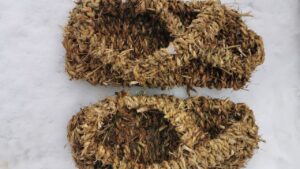
Common items included Patij (grass mat), Changij (small circular mat), Pulhore (grass-made slipper), Wagoo (grass mat woven by women), and more. Ropes, locally known as Gassuv Razh, were first woven from paddy grass (Dhaan Gasse) for various purposes, such as tying domestic animals and bundling harvested crops.
Following rope weaving, men engaged in crafting Patij and Pulhore, while women focused on Changij and Wagoo. Changij served as a sitting mat, especially in front of traditional hearths (Dambur), and was also offered to guests. Women in villages utilized Changij for sun-drying traditional vegetables.
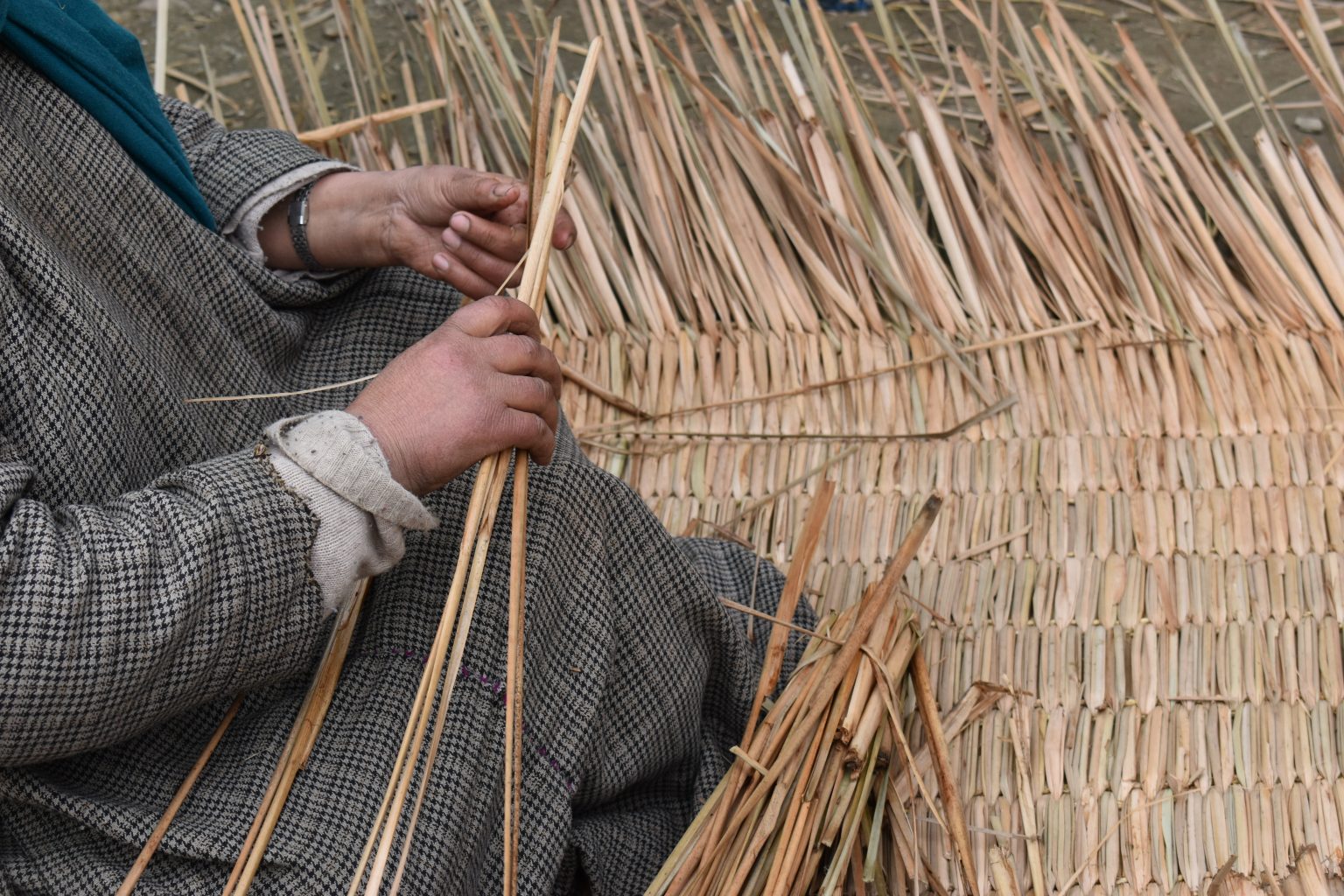
Patij weaving, typically done during heavy snowfall, involved coiling grass ropes around a wooden entwined wheel (Karr). The mat’s breadth was determined by the Karr’s size. The weaving process, led by skilled artisans, continued for several days until the cylindrical shape of desired length was achieved. Patij, a significant part of rural Kashmir’s cultural heritage, was used at home and also generated income when placed on balconies during winter.
Wagoo, a smoother, more comfortable, durable, and warmer variation of grass mat, was crafted in the city by lake dwellers (Haenz). It served as an alternative to Patij, which was more prevalent in villages due to the abundance of hay grass.
Traditional footwear, Pulhor, made from paddy grass, offered protection against the lack of modern footwear availability. Woven by both men and women, Pulhor provided a non-slip option for muddy or snowy terrain.
In addition to these skillfully woven artifacts, grass served as roofing material (thatch), locally known as Cheye Pash, for houses, providing a nostalgic glimpse into old Kashmir. However, contemporary roof construction has shifted towards colorfully designed tin-metal sheets.
Although these heritage artifacts are no longer commonly used, some individuals in remote areas continue to practice these traditional crafts to preserve their culture. It’s worth noting that this craft received appreciation and support even during the reigns of King Zain-ul-Abideen Budshah (1420-1470) and Mirza Haider (1470-1543). Despite this rich history, there is a pervasive lack of care today. It is incumbent upon us to preserve this invaluable legacy of our ancestors for the benefit of future generations.
Background
The art of grass weaving in Kashmir is a time-honored tradition that traces its roots back centuries, deeply embedded in the rich cultural tapestry of the region. Renowned for its exquisite craftsmanship, grass weaving has played a significant role in shaping the artistic heritage of Kashmir.
The practice of weaving with grass, has been passed down through generations, with artisans refining their skills and techniques over the years. The craft is primarily associated with creating a variety of utilitarian items, including mats, baskets, and other household essentials.
Historically, the use of grass weaving in Kashmir can be linked to the region’s geographical and climatic conditions. The abundance of grasses, which grows abundantly in the wetlands of Kashmir, made it a readily available and sustainable material for local artisans. This natural resource became the raw material for creating an array of functional and aesthetically pleasing items.
Kashmiri grass weaving gained prominence during the reign of various dynasties, including the Mughals and the later Dogra rulers. The craft became an integral part of everyday life, with finely woven grass mats adorning homes and providing a touch of traditional elegance. Over time, artisans began incorporating intricate patterns and designs into their creations, showcasing the artistic evolution of grass weaving in Kashmir.
The beauty of Kashmiri grass weaving lies not only in its utilitarian aspect but also in the cultural symbolism woven into each piece. The craft reflects the harmony between nature and human creativity, as artisans skillfully transform humble grass into objects of both practicality and beauty.
The views expressed in this article are solely those of the author and do not necessarily reflect the opinions or views of this newspaper. The author can be reached at [email protected]