By Mool Raj
Kashmir Valley, a name that evokes beauty and serenity, remains one of the most enchanting landscapes in the world. With its lush green forests, snow-clad mountains, sprawling meadows, crystal-clear waters, cascading waterfalls, and countless natural springs, the valley stands as a living painting crafted by nature itself. Blessed with unmatched bounty, this region has always captivated travelers, poets, and nature lovers alike. Beyond its breathtaking landscapes, Kashmir is equally known for its people—humble, soft-spoken, and unmatched in their hospitality. Visitors often say that it’s not just the scenery that stays with them, but the warmth of the Kashmiri people.
The valley’s weather, however, has a charm of its own—unpredictable and ever-changing. A sunny morning can easily turn into a rainy afternoon, adding an element of surprise to every day spent here. This whimsical climate enhances the valley’s mystery and allure, drawing photographers and writers from around the world to capture its fleeting moods.
Kashmir’s spiritual dimension is as deep as its natural beauty. The valley is home to several revered religious sites, including the sacred Amarnath Cave in South Kashmir, which attracts thousands of Hindu pilgrims every year. The ancient Shankaracharya Temple overlooking Srinagar’s Dal Lake adds to the spiritual and historical depth of the region. Alongside these temples, Kashmir is dotted with shrines, mosques, and monasteries that speak of its centuries-old tradition of harmony and devotion.
Nature’s rhythm in Kashmir is defined by its distinct four seasons, each carrying its own beauty, emotion, and purpose. Summer, from late June to September, brings life to the gardens and pastures, while autumn, stretching from late September to December, paints the valley in shades of amber and gold. Winter, from December to March, covers the region in a thick white blanket, transforming it into a wonderland. Spring, although short, is perhaps the most magical of all—when tulips, almonds, and mustard fields burst into bloom, signaling nature’s rebirth.
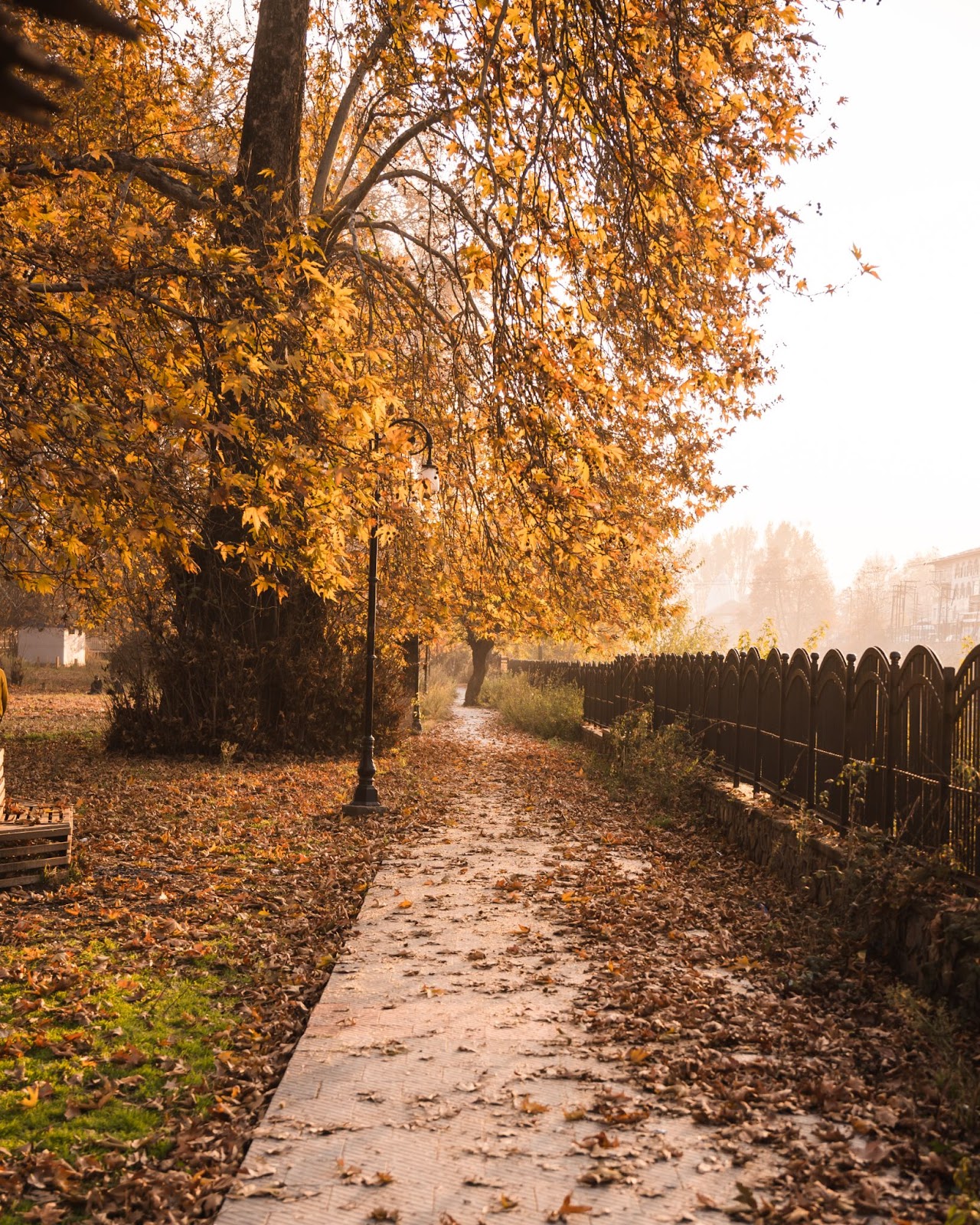
Among all these seasons, autumn holds a special place in the Kashmiri heart. Locally called “Harud,” it marks the season of harvest and gratitude. As the chinar trees—emblems of Kashmir’s identity—turn crimson and shed their leaves, the entire valley takes on a poetic charm. Their fiery foliage carpets the ground, turning gardens like Nishat Bagh and Chinar Bagh into breathtaking canvases of gold and red. The cool, gentle breeze that flows through the valley makes autumn one of the most beloved times of the year.
For the farming community, autumn is not merely about beauty—it is a season of hard work and reward. This is the time when farmers reap what they have sown through the year. Apple orchards, which form the backbone of Kashmir’s economy, come alive with activity as families and laborers pick, pack, and ship apples across India and abroad. The harvest of rice and maize also peaks, filling the granaries and marking the completion of another agricultural cycle. In rural areas, people begin to store fodder for their cattle and stock essential supplies—vegetables, pulses, dried fish, and firewood—to endure the long winter months ahead.
The horticulture industry thrives in this period. With apples, walnuts, almonds, and saffron ready for harvest, the economy of the region bustles with trade and hope. Markets overflow with the fragrance of fresh produce and the golden hues of saffron threads, while the lanes of downtown Srinagar echo with traders’ calls and the rustle of dry leaves underfoot. Dry fruits from Kashmir—renowned for their taste and quality—are exported to distant markets, serving as ambassadors of the valley’s richness.
Tourism, too, reaches a vibrant phase in autumn. Mughal gardens like Shalimar, Nishat, and Chashme Shahi draw thousands of tourists who come to witness the spectacular foliage and capture photographs with the crimson chinars in the background. The Department of Tourism organizes several cultural festivals and fairs to celebrate the season, showcasing local music, crafts, and cuisine. These initiatives help sustain the region’s tourism-based livelihoods, which are vital for thousands of families.
Beyond its economic importance, autumn carries a deep emotional resonance in Kashmiri culture and literature. Poets and writers have long romanticized its melancholic beauty—the way life prepares for winter, how the vibrant colors fade, and yet the valley never loses its grace. This poetic reflection finds expression in local songs, paintings, and folklore that view autumn as both an ending and a promise of renewal.
As autumn slowly yields to winter, the first snow begins to crown the surrounding mountains, forming glaciers that sustain the valley’s rivers and streams throughout the year. The chill in the air deepens, fires crackle in kangris (traditional earthen fire pots), and families gather indoors, recounting memories of the harvest and preparing for the cold months ahead.
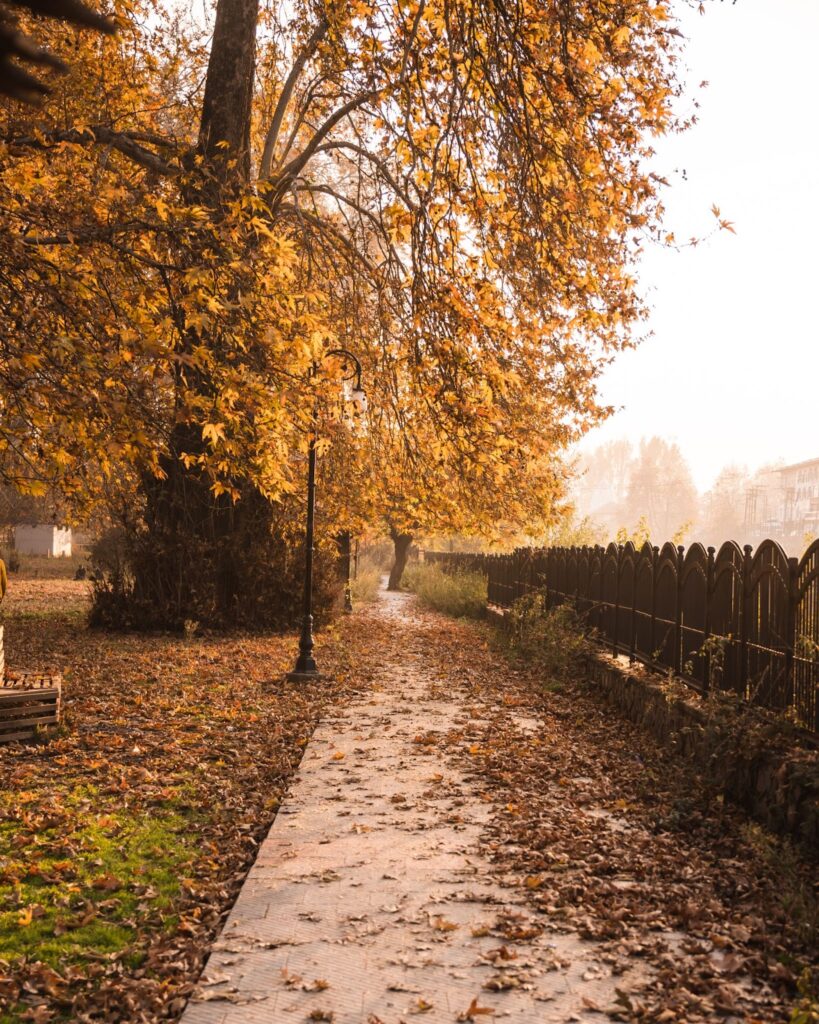
For visitors, this transition is nothing short of mesmerizing. The charm of Kashmir lies not just in its beauty but in the rhythm of its seasons—the way each one transforms the land and its people. Whether it’s the blazing chinars of autumn, the tranquil snows of winter, the blooming tulips of spring, or the emerald pastures of summer, Kashmir remains a timeless portrait of nature’s artistry and human resilience.
In every season, the valley whispers a new story, and autumn, with its blend of labor and poetry, abundance and nostalgia, remains its most eloquent chapter—a reminder that even in the fading of leaves, there is beauty, hope, and the eternal cycle of life.
The views expressed in this article are solely those of the author and do not necessarily reflect the opinions or views of this newspaper
Leave a Reply