Overcoming decades of instability, Jammu and Kashmir is experiencing a measurable administrative and economic shift. With a focus on youth empowerment and infrastructure, the region is laying the groundwork for lasting dignity and peace.
By Syed Mustafa Ahmad
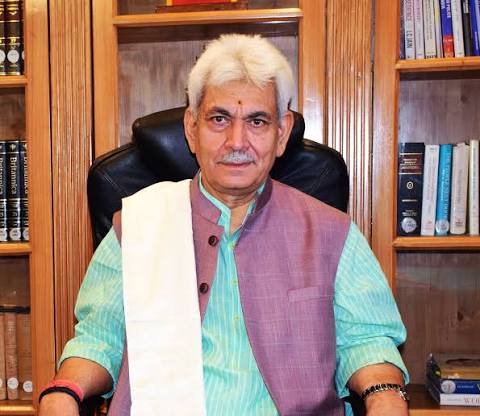
Constantly revisiting the past serves little purpose; the imperative of the present moment is to concentrate on measures that contribute directly to the progress and betterment of society. As a citizen of the world’s largest democracy and an adherent to the cherished ideals of the Constitution of India, I write to acknowledge the deliberate efforts of Lieutenant Governor Manoj Sinha and his administration in executing visible, structural transformations across the Union Territory of Jammu and Kashmir.
While considerable ground remains to be covered, substantial work has been carried out for the welfare of the average citizen. Since assuming office in August 2020, Lieutenant Governor Sinha has pursued a sustained administrative drive aimed at upgrading basic infrastructure, tightening governance, and revitalizing the local economy. Naturally, as with any administrative framework, governance limitations exist; nonetheless, the ongoing interventions reflect consistency, clear direction, and public service intent.
Over the past six years, ground realities have shifted perceptibly. From macro-economic initiatives to grassroots social development, notable progress has been registered in administrative efficiency, digital service delivery, and youth empowerment. Having observed these changes firsthand, the contrast with previous eras is hard to ignore.
It remains an indisputable fact that the erstwhile state of Jammu and Kashmir traversed decades of severe political unrest and instability. That prolonged cycle of violence inflicted a heavy toll on civilian lives, leaving deep sociological and psychological scars. However, under the present administration, those long-standing wounds have finally begun to heal. The substantial decrease in active conflict marked by sharp declines in stone-pelting incidents, civilian casualties, and strike calls coupled with targeted opportunities for the youth, has provided tangible relief to a society long affected by psychological strain.
There was a time when violence was an omnipresent reality of daily existence, depriving citizens of basic stability. Today, the security climate and general civic atmosphere have stabilized significantly. On the political and governance front, public access to administrative mechanisms has expanded. The historical distance between officialdom and the common citizen has narrowed, reinforced by initiatives like the ‘Block Diwas’ and public grievance portals that bring officers directly to rural populations. In the economic arena, major structural foundations are being laid. Under the New Industrial Policy, Jammu and Kashmir has attracted investment proposals running into tens of thousands of crores, backed by major infrastructure projects including the expansion of the rail network connecting the valley to the rest of the national grid, key highway tunnels, and urban renewal projects under the Smart Cities Mission. Resources are being deployed with greater transparency, and a distinct economic transition is underway.
Regarding employment generation and skill development, focused interventions have been introduced. Speaking from personal experience as an average student, the environment created under the current administration offers renewed incentive to strive for academic and professional growth. While public sector recruitment and private job creation naturally take time in a region rebuilding its economic base, several critical milestones have been achieved, including merit-based transparency in recruitment drives and widespread self-employment schemes under Mission Youth that were glaringly absent in earlier decades.
In the social sphere, community cohesion and a sense of shared belonging are steadily taking root, reflecting the core spirit of India’s diversity. A short while ago, I spoke with a visiting couple from another Indian state while in Srinagar. They expressed immense gratitude for the hospitality shown by local residents and the supportive environment maintained by the administration. During our conversation, they shared their prior perceptions of the region, and I was struck by how unfairly the peace-loving majority of Jammu and Kashmir had often been portrayed in external popular media.
Such inter-regional interactions carry profound value, fostering mutual trust and optimism. Prior to 2019, such seamless cultural exchanges were severely constrained by frequent unrest, security shutdowns, and instability. Local residents long desired to engage with fellow citizens from across the country, but the volatile security situation created formidable barriers. While geopolitical disputes and political differences are common across the international landscape, in our region, sane, moderate, and progressive voices were routinely drowned out under the shadow of conflict. Today, with tourist arrivals breaking historical records—reaching over two crore visitors annually the economic and social bridge between the region and the rest of the nation stands firmer than ever.
We continue to place our faith in democratic processes, trusting that the administration will sustain its focus on public welfare, institutional accountability, and equitable development. I recognize that diverse political perspectives exist regarding these developments, and I respect those differing viewpoints. I do not claim expertise in formal political analysis, but these observations stem directly from lived experience and on-the-ground reality.
The people of Jammu and Kashmir have endured decades of emotional hardship and socioeconomic uncertainty. Yet, despite those historical burdens, the desire for lasting peace, institutional integrity, and economic stability remains unwavering. Sustained progress in quality education, transparent employment, modern infrastructure, and social harmony is the surest path toward ensuring that future generations live with dignity, security, and equal opportunity.
While ultimate providence guides human destiny, the role of an efficient, responsive, and citizen-centric administration in shaping a prosperous society remains indispensable. Let us continue working collectively to build a peaceful, progressive, and resilient Jammu and Kashmir.
Disclaimer: The views expressed in this feature article are solely those of the author and do not necessarily reflect the official editorial stance or opinions of this publication.
Leave a Reply