Converting ancient forest meadows into makeshift cricket grounds threatens endangered wildlife habitats and accelerates critical soil erosion. Protecting these vulnerable mountain landscapes requires stricter regulatory enforcement and a collective shift toward responsible wilderness ethics.
By Sahil Manzoor Bhatti
Our society possesses immense vigilance and potential to drive progress across diverse disciplines, from science and technology to agriculture, horticulture, and sports. Yet, while human ambition flourishes across multiple frontiers, environmental preservation remains an absolute, non-negotiable imperative. We cannot survive without intact ecological systems. Every issue concerning our natural world demands immediate, uncompromised attention at every societal tier. Today, we confront escalating environmental threats, starkly illustrated by severe flash floods that disrupt the region during peak monsoon months. Across Jammu and Kashmir, tragic losses of human life and severe infrastructural devastation demonstrate the catastrophic consequences that unfold when ecological balance is systematically undermined.
Nature has bestowed upon humanity a rich, magnificent, and protective living canopy, yet our collective attitude remains short-sighted and reckless. Blinded by unsustainable consumption, we are hurtling toward severe ecological degradation without grasping the full extent of the harm we inflict. Our daily habits reflect an alarming disregard for the habitats that sustain us. Irresponsible picnicking, littering, and alcohol consumption deep within pristine wilderness zones reflect an unsettling lack of accountability. A pervasive culture of indifference allows individuals to treat ecologically sensitive retreats as open dumping grounds, leaving toxic residues behind with little regret for the long-term damage inflicted upon vulnerable ecosystems.
The forests of Kashmir are undeniably among the Valley’s most vital natural treasures. They do far more than enhance breathtaking vistas; they regulate regional climate, secure watersheds, prevent catastrophic soil erosion, and shelter countless endemic and endangered species. These forests are not merely arbitrary clusters of timber, but complex, living ecosystems that sustain biodiversity and human survival alike by sequestering carbon, releasing oxygen, recharging groundwater, and preserving hydrological equilibrium. They serve as nature’s foundational lifeline, anchoring the survival of every organism within their perimeter.
Kashmir remains blessed with dense forest canopies dominated by majestic conifers, including deodar, kail, fir, spruce, and pine. These woodlands shelter rare and threatened wildlife, notably the endangered Hangul, Himalayan black bear, common leopard, musk deer, red fox, Himalayan monal, and koklass pheasant, alongside diverse assemblages of birds, reptiles, and beneficial insects. Every ancient tree, pristine stream, and alpine meadow constitutes a delicate thread within an ecological tapestry refined over millennia. Any disruption to this equilibrium invariably triggers a cascade of unintended, compounding consequences.
Recently, an alarming pattern has surfaced across several forested zones in the Valley. Pristine alpine meadows and tranquil forest clearings are increasingly converted into informal cricket grounds, particularly on weekends and public holidays. While athletic pursuits and physical culture are indispensable for public health, sports must not encroach upon fragile habitats. Engaging in athletic disciplines builds physical fitness, mental resilience, teamwork, discipline, and offers constructive channels for youth away from substance abuse. The substantial investments made in sports infrastructure by authorities deserve full appreciation. However, athletic promotion should never occur at the expense of environmental integrity; recreational activities belong in dedicated municipal stadiums, school grounds, and sports complexes, rather than protected wilderness zones.
During a visit to Haijjan Branwar in early July, the immediate toll of this unregulated trend became unmistakably clear. Large groups had turned the forested meadows into an active sports arena. Discarded plastic bottles, single-use cups, snack wrappers, and beverage cans littered the verdant landscape. Wooden stumps had been hammered deep into the fragile turf, dense crowds had trampled the surrounding vegetation into bare patches, and loud cheering echoed across the valley. What ought to have been a serene ecological sanctuary was transformed into a chaotic, noisy stadium, underscoring the unsustainable pressure placed on these fragile highland environments.
The cumulative ecological degradation resulting from persistent sporting events is consistently underestimated. Relentless foot traffic severely compacts forest soils, choking their permeability and severely curtailing their capacity to absorb rainwater. This compaction stunts the growth of native grasses, medicinal herbs, and fragile alpine flora. Wildflowers are crushed before their reproductive cycles can yield seeds, preventing natural forest regeneration. Over successive seasons, ground cover degrades, stripping the earth bare and leaving vulnerable topsoil utterly exposed to severe erosion, landslides, and torrential runoff during heavy rains and snowmelt.
Wildlife experiences severe distress amid this encroaching disturbance. Forest fauna depend heavily on undisturbed habitats to forage, breed, and rear their offspring. The relentless intrusion of human crowds, loud shouting, whistles, and blaring music forces birds and mammals to abandon their historic territories, pushing them into marginal terrains where food and cover are scarce. Ground-nesting birds remain exceptionally vulnerable, as active foot traffic across meadows effortlessly crushes nests and eggs hidden within the grasses. When animals are forced to alter their natural migration and feeding patterns to avoid human interference, their chronic stress increases and long-term survival rates plummet.
Compounding this crisis is the widespread accumulation of non-biodegradable waste. Synthetic plastic packaging, disposable tableware, and discarded bottles do not break down; they persist for decades, polluting pristine mountain streams, degrading soil chemistry, and posing lethal choking hazards to foraging wildlife. Responsible wilderness travel demands leaving behind nothing but footprints, yet these unregulated recreational gatherings consistently leave behind festering heaps of refuse.
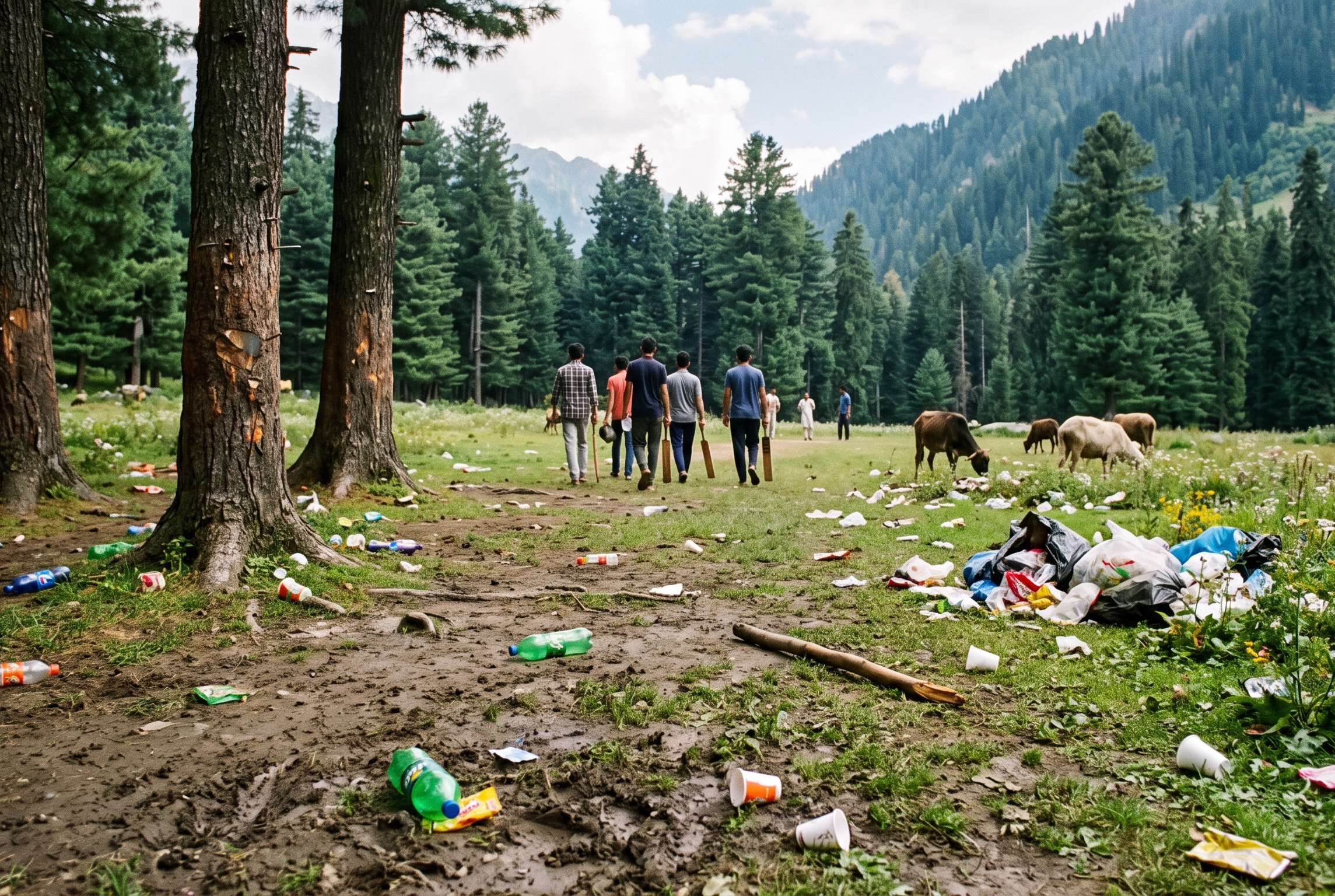
Furthermore, these highland meadows have served as traditional grazing grounds for generations of pastoralist communities, including the Gujjars and Bakarwals. Their seasonal migrations and livelihoods rely on intact, unpolluted grazing corridors. The historical equilibrium maintained by these traditional guardians must not be compromised by reckless, commercialized, or unregulated recreation. Sustainable natural management must honor both regional biodiversity and the traditional pastoral rights of communities that have coexisted with these landscapes for centuries.
Mountain ecosystems across the region already face heightened vulnerability under the strain of climate change, enduring unseasonal temperature spikes, erratic snow cycles, extended dry spells, and intense weather events. Under these mounting ecological stresses, every conservation effort must prioritize reducing human disturbance across sensitive habitats. Organized recreational events must be restricted from vulnerable meadows like Haijjan, Palmaidan, and Sotchalpathri through rigorous administrative monitoring, strict regulatory enforcement, and coordinated conservation initiatives involving the Forest Department, civil society, and local institutions. Concurrently, educational outreach must encourage strict leave-no-trace outdoor ethics, while social media influencers and content creators pivot toward promoting environmental stewardship rather than showcasing unsustainable activities within fragile forest biomes. Once degraded, ancient forest ecosystems require centuries to recover. Safeguarding Kashmir’s pristine forests directly protects the air, water, and ecological heritage that guarantee the Valley’s long-term future.
Disclaimer: The views expressed in this feature article are solely those of the author and do not necessarily reflect the official editorial stance or opinions of this publication.
Leave a Reply