By Rayees Ahmad Kumar
Hazrat Baba Ji Sahib Larvi (RA), whose real name was Ubaidullah, was born in Sanjoda Sharif, located in the Balakote tehsil of Hazara district, now part of Pakistan, in 1200 AH (approximately early 19th century). His birth was not merely an event in a family lineage but a moment foreseen by several revered saints and pious men of the time. They had predicted that a spiritually gifted son would be born in the noble Bijran family, a soul destined to illuminate the hearts of countless seekers in the years to come. Among those who foretold his arrival was the venerated saint Hazrat Mian Noor Mohammad (RA).
Before his birth, Baba Ji’s mother fell seriously ill, which caused great distress to his father, Mian Fazal Gull. Seeking divine intervention, Fazal Gull approached Hazrat Hafiz Mian Gull, a saintly figure renowned for his piety and spiritual insight. Hafiz Mian assured him that not only would his wife recover, but that their household would soon be blessed with the birth of a virtuous son — a friend of God, destined to guide others on the path of light. Soon after, Hazrat Baba Ji Sahib Larvi was born.
Tragedy, however, struck early in his life. At the tender age of four, he lost his father, becoming an orphan. Yet, divine guidance surrounded him from the beginning. A devout scholar, Molvi Dada Sahib, advised his mother to raise the child with patience and gentleness — not to reprimand or vex him over trivial matters, as he was no ordinary child but one chosen for a higher purpose.
From childhood, Baba Ji Sahib displayed a temperament distinct from other children. He showed no interest in games, idle talk, or worldly pleasures. Instead, he gravitated towards solitude, silence, and spiritual reflection. He ate little, spoke sparingly, and spent long hours in prayer and remembrance of God. Days were devoted to labor and service, while his nights were immersed in devotion — a hallmark of saints whose aim is not fame or power, but to purify hearts and connect people to the Divine.
Baba Ji Sahib received his early spiritual training under Hazrat Baba Nizamuddin Kiyanvi (RA), a towering saint of the Naqshbandi-Mujaddadi Sufi order. Through years of disciplined guidance, he attained high spiritual ranks. In 1892, when he was about thirty, his mentor directed him to travel to Babanagri Wangat in Kashmir’s Kangan region — a valley destined to become his final abode and a thriving centre of spirituality for generations.
Obeying his guide’s command, Baba Ji Sahib journeyed to Kashmir. During one of his early visits, he stopped by a large rock on the banks of a mountain stream at present-day Babanagri and offered his Asr (afternoon) prayers there. After completing his prayers, he noticed a dark stain on his woollen cloak (chadar) that would not wash away. Troubled, he returned to his spiritual mentor for an explanation. Baba Nizamuddin Kiyanvi revealed that the mark was a divine sign — an indication that Babanagri was the sacred land destined for him. It was there, his guide said, that he must settle permanently to spend the rest of his life in worship and in guiding the faithful. Though initially hesitant due to linguistic and cultural differences among the local people, he ultimately obeyed his mentor’s will.
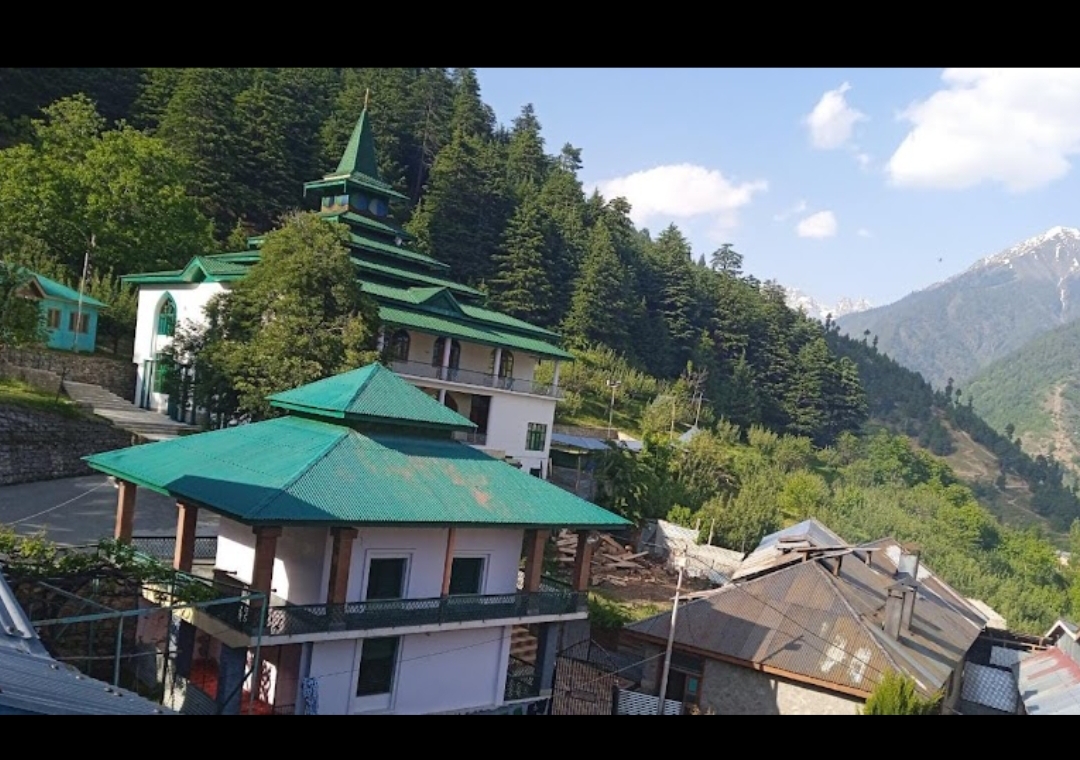
What followed was the transformation of a quiet mountain valley into a spiritual sanctuary. Over time, Babanagri Wangat became a magnet for devotees from all corners of Kashmir, the Pir Panjal region, and even beyond borders. Baba Ji’s followers, now numbering in lakhs, continue to visit his shrine in unbroken devotion.
During his lifetime, Baba Ji Sahib obtained formal permission from his mentor to celebrate his annual Urs on June 7, a tradition that endures to this day. On this occasion, devotees from Pir Panjal, Chenab, and far-flung parts of the subcontinent gather in overwhelming numbers. During the Urs, vehicles are often parked from Preng, Kangan, all the way to the main Dargah, as the valley resonates with zikr, qawwali, and collective remembrance of God.
Baba Ji Sahib was not only a spiritual guide but also a man of letters. His works, including “Malfoozat-e-Nizamia” and “Asrar-e-Kabeeri,” remain masterpieces of Sufi mysticism, offering profound insights into spiritual discipline, divine love, and human purpose. His poetry reflects both divine ecstasy and prophetic awareness — he even hinted in his verses about his own departure from this world, which came at the age of sixty-three on the sacred night of Shab-e-Barat.
Among his many disciples, the foremost was Hazrat Haji Nooran Shah (RA), while his beloved son Hazrat Mian Nizamuddin Larvi (RA) was his last and spiritual successor. Baba Ji Sahib was blessed with three sons and three daughters. Two of his daughters passed away in childhood, while Mian Nizamuddin Larvi, born in Babanagri Wangat on March 25, 1896, carried forward his father’s legacy until his passing on August 10, 1972.
After Baba Ji’s passing, the custodianship (Sajjada Nashini) of the Khanqah-e-Babanagri was entrusted to Mian Nizamuddin Larvi (RA), who was succeeded by Mian Bashir Ahmad Larvi (RA). The spiritual lineage continues today under Mian Altaf Ahmad Larvi, the present Sajjada Nashin. The sacred tradition of Langar (community kitchen) — serving food freely to visitors year-round — remains one of the most cherished features of the shrine, symbolising service, humility, and divine compassion.
Even today, Babanagri Wangat stands as a radiant spiritual hub in Jammu and Kashmir, drawing seekers and devotees from across the world — a living testament to the legacy of Hazrat Baba Ji Sahib Larvi (RA), the saint who turned a quiet mountain valley into a luminous centre of divine love.
The views expressed in this article are solely those of the author and do not necessarily reflect the opinions or views of this newspaper
Leave a Reply