Twenty-seven years after reclaiming the frozen peaks of Ladakh, the nation remembers the extraordinary valor of the soldiers who defended its frontiers. From solemn ceremonies in Drass to nationwide tributes, their enduring sacrifice continues to inspire generations.
By Ajaz Rashid
High among the jagged, windswept peaks of the Trans-Himalayas, where the air grows thin and the silence is broken only by the mountain breeze, the battlefields of 1999 stand as enduring sentinels of national resolve. Marking the 27th anniversary of Kargil Vijay Diwas, the nation turned its eyes once again to the cold heights of Drass, Batalik, and the Mushkoh Valley. Beyond a ceremonial tribute to 527 fallen soldiers, this milestone underscores a dramatic quarter-century evolution tracing a path from the desperate high-altitude warfare of Operation Vijay to a modern, technologically integrated, and self-reliant defense power.
At the foot of Tololing, where the tide of the war turned in June 1999, solemn commemorations brought together defense leaders, war veterans, and grieving families whose memories remain etched in the rugged landscape.
Tributes at the Frostbitten Frontier
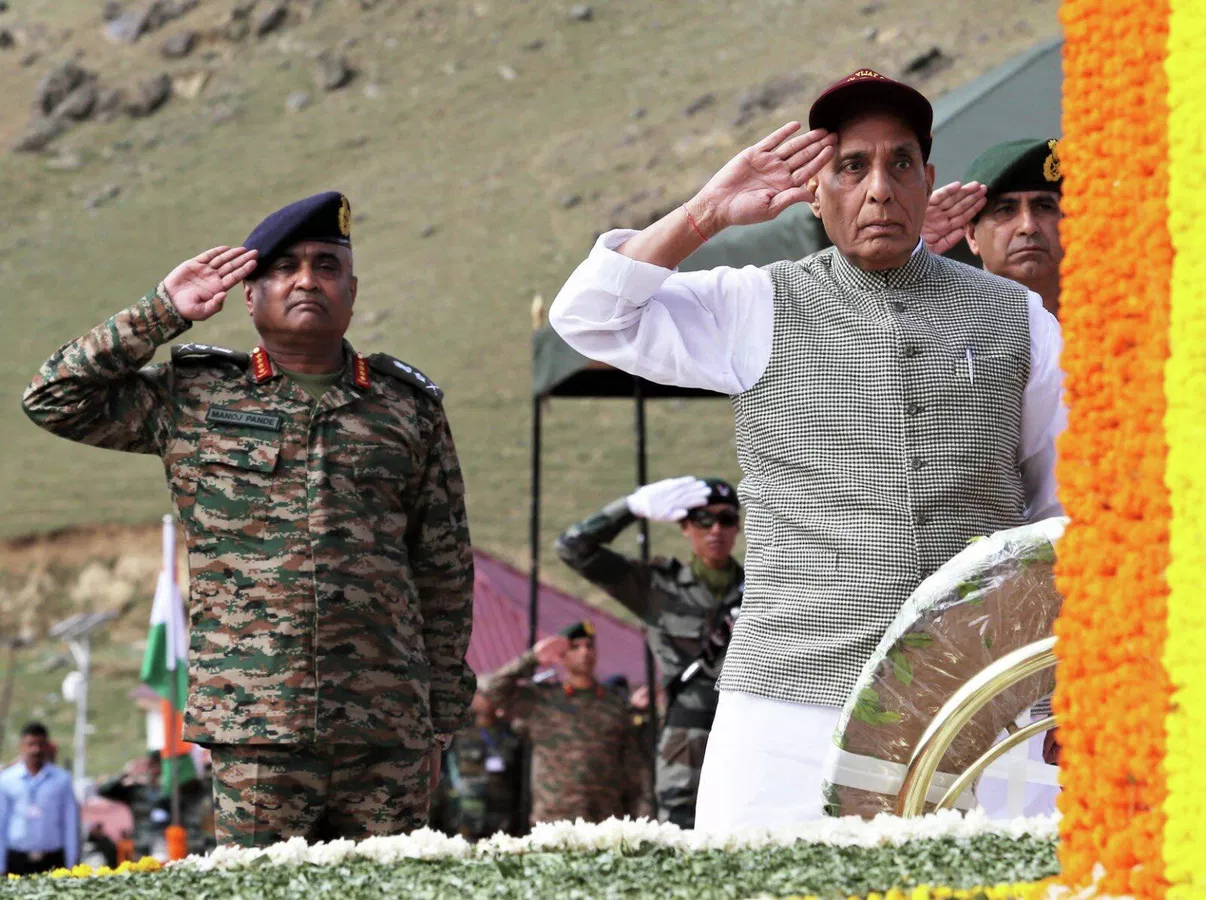
Paying rich tributes to the heroes of the 1999 conflict, Defence Minister Rajnath Singh laid a wreath at the Kargil War Memorial in Drass, honouring the supreme sacrifice of the soldiers who reclaimed India’s territorial integrity under treacherous conditions.
The commemorative events kicked off with the solemn Shaurya Sandhya programme, an evening dedicated to military valour attended by top leadership, including Lieutenant Governor of Ladakh Vinai Kumar Saxena, Chief of Army Staff General Dhiraj Seth, Northern Army Commander Lieutenant General Pratik Sharma, and the General Officer Commanding of 14 Corps.
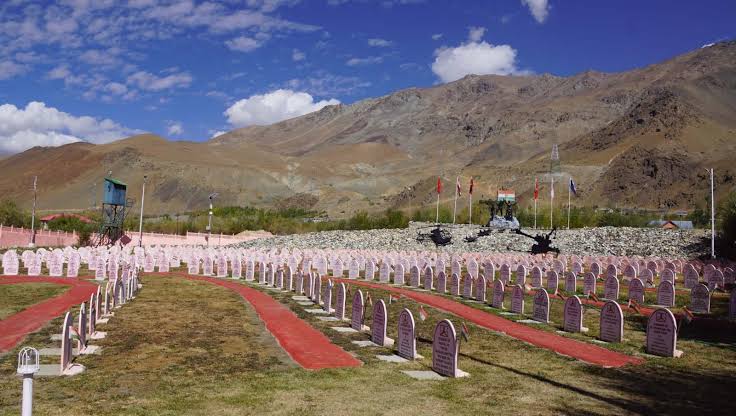
“The Kargil War Memorial stands as a lasting symbol of the courage and sacrifice of our soldiers,” said a senior Army officer present at the ceremony. “Every year, this occasion renews our commitment to uphold the values for which these brave hearts laid down their lives.”
For the families of the martyrs attending the ceremony, the event was both painful and deeply comforting. “Seeing the nation remember our loved ones with such respect and dignity gives us strength,” shared a family member of a fallen soldier. “Their sacrifice has not been forgotten, and that is our greatest source of pride.”
Across the mountains in Srinagar, Lieutenant Governor Manoj Sinha paid homage to the martyrs on the eve of the historic day, emphasizing the generational impact of their valour.
“On Kargil Vijay Diwas, I bow to our martyrs who made supreme sacrifice to safeguard the sovereignty and honor of Maa Bharti during Operation Vijay,” Sinha said in his message. “The extraordinary courage of our Armed Forces will forever inspire generations to come. I also bow in deep reverence to the families of our fallen heroes. Their selfless dedication remains an enduring symbol of our ultimate national pride.”
The Battles that Redefined High-Altitude Warfare
The conflict erupted in May 1999 when Pakistani troops and state-backed infiltrators executed Operation Badr, occupying vacated winter posts along the Line of Control (LoC). Their strategic objective was clear: sever the vital Srinagar-Leh highway (NH-1D) and isolate Indian forces stationed on the Siachen Glacier.
India’s response, Operation Vijay was an uphill battle against daunting odds. Fought at altitudes exceeding 16,000 feet, Indian soldiers climbed sheer rock faces under relentless enemy artillery and machine-gun fire.
The recapture of Tololing on June 13 marked the war’s critical breakthrough, shattering the illusion of enemy invincibility. It was followed by the epic storming of Tiger Hill on July 4, along with ferocious battles across Batalik, Kaksar, and Point 4875—where Captain Vikram Batra and three fellow heroes earned India’s highest wartime gallantry award, the Param Vir Chakra.
By July 14, 1999, then Prime Minister Atal Bihari Vajpayee announced the successful eviction of all intruders, leading to the official declaration of victory on July 26.
From Lessons of 1999 to Modern Doctrine
The hard-won victory in Kargil exposed critical operational gaps, serving as the catalyst for the most comprehensive overhaul of India’s national security architecture in modern history.
The subsequent Kargil Review Committee recommendations led to structural transformations, including the creation of the Chief of Defence Staff (CDS) and the Department of Military Affairs to foster jointness across the Army, Navy, and Air Force. Personnel policies were modernized through initiatives like the Agnipath recruitment scheme, alongside the establishment of dedicated Defence Industrial Corridors.
Crucially, the nature of border conflict has changed dramatically since 1999. Where soldiers once relied heavily on manual reconnaissance and high-altitude infantry assaults, today’s posture leverages precision intelligence, satellite surveillance, loitering munitions, and drone swarms.
This technological leap was demonstrated during Operation Sindoor in 2025 and subsequent border standoffs, where multi-layered, integrated air defense networks successfully intercepted retaliatory drone and missile strikes in May 2025. Features that were non-existent during the 1999 conflict such as real-time tactical data feeds, airborne early warning systems, and long-range air defense now safeguard the northern borders.
Parallel to operational reforms, India’s drive toward Atmanirbharta (self-reliance) in defense manufacturing has yielded historical records
Leave a Reply